
Lieferung heute & morgen

Qualitätsgarantie

Willkommens-Angebote freischalten: KOSTENLOSE Lieferung | Bis zu 80 % RABATT | Kostenlose 30-Tage-JoyPlus-Testphase
App herunterladen
Cordless garden care equipment makes it easier to maintain gardens, driveways and lawns when there’s no power socket nearby. However, high speeds, large battery capacity figures or terms such as ‘Turbo’ don’t automatically mean a product is right for you. Homeowners, older people and property managers should focus on clear performance specifications, a suitable weight and a realistic assessment of what the equipment can handle.
Figures such as 4,000 or 6,000 mAh describe battery capacity, not actual operating time. Runtime depends on factors including the selected power setting, outdoor temperature, charge level and battery age. So check whether a charger is included and whether replacement batteries are available separately.
A product may also have different battery capacity figures in different places. The GISAM leaf blower is listed with 2 × 4,000 mAh in the product title, but 2 × 6,000 mAh in the description. Check this discrepancy directly on the product page before buying.
A high air speed can help shift wet leaves. But the volume of air, nozzle shape and speed control also affect how much ground you can cover. A narrow nozzle often produces a concentrated airflow, while a wider nozzle can cover larger areas more evenly.
A heavy tool may be fine for a short task, but it can put more strain on your hands and arms when you’re working across a large garden. Check the handle position, weight distribution, adjustable handles and how easy it is to reach the trigger. For older users, a low weight may matter more than maximum speed.
A leaf blower with battery and charger is a practical choice for first-time buyers, as you won’t need to purchase extra components. Also check:
The term 21 V cordless leaf blower refers to the system voltage. On its own, however, it doesn’t provide a reliable indication of airflow or runtime. So also compare air speed, air volume and power settings.
A brushless motor works without conventional carbon brushes. This can reduce wear and maintenance needs in that part of the tool. However, the battery, electronics, bearings and ventilation slots remain important components. A high speed, such as 40,000 or 90,000 rpm, only tells you so much without information about airflow and nozzle design.
An electric leaf blower isn’t automatically suitable for every job. A low setting is often enough for dry leaves, dust and small garden debris. Wet leaves or compacted snow need more airflow and can use up the battery charge more quickly.
For a robotic lawn mower with RTK and GPS, check the stated maximum lawn area, signal conditions and how the boundary or navigation zones are set up. Trees, tall buildings and narrow passages can affect satellite communication.
For an autonomous snow-clearing robot, you should also consider clearing width, obstacle detection, the surface it can handle and whether it returns to the charging station automatically. A smart garden bundle can take care of several jobs, but it needs careful set-up and regular checks, especially when the weather changes.
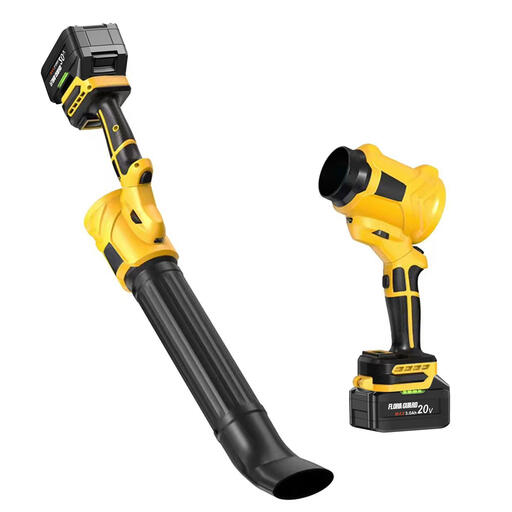
Why it suits this type of user: This tool offers 21 V, six speed settings, two batteries and a charger. It’s a good option if you want to clear leaves, dust and small amounts of snow from a patio, courtyard or garage.
The six settings let you choose a lower speed for delicate areas. The included batteries and charger are clearly specified, although actual runtime will depend on how you use the tool.
600 W motor, air speed of up to 50 m/s, six settings, a 180° rotating handle and two 4,000 mAh batteries, according to the product information.
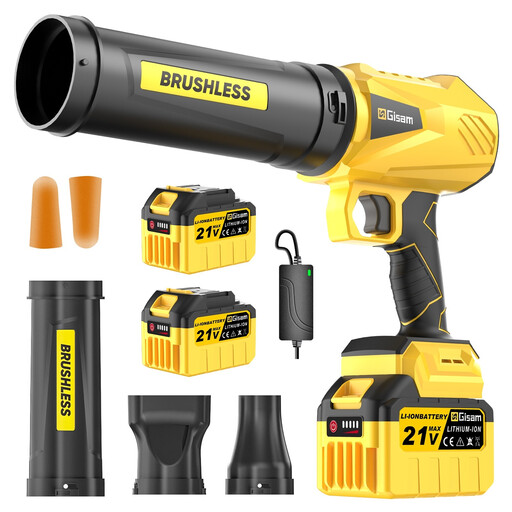
Why it suits this type of user: Three nozzles, a variable-speed trigger and a brushless motor make this a good choice if you want one handheld tool for a range of jobs, from removing dust to clearing leaves.
Variable speed means you don’t have to keep switching between fixed settings. Before buying, check the product page for clarification, as the battery capacity figures differ.
Three nozzles, a brushless motor, variable speed control, a charger and a stated two-year warranty.
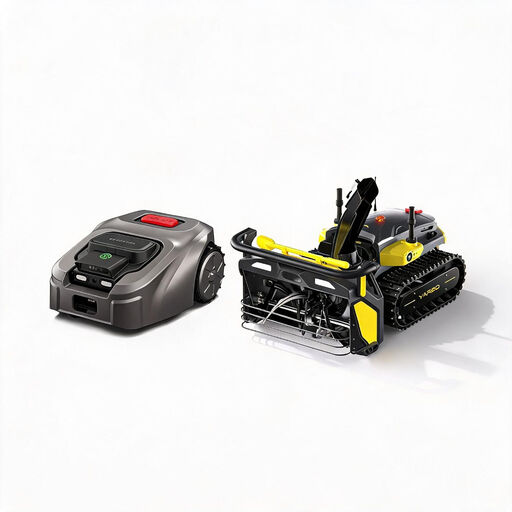
Why it suits this type of user: This bundle pairs a robotic lawn mower with RTK signal and GPS, designed for areas of up to 2,500 m², with a Yarbo snow-clearing machine and automatic recharging. It’s aimed at owners of larger outdoor spaces who are interested in automated garden care.
The stated area, navigation options and automatic return to the charging station are clearly specified. Before set-up, check signal coverage, obstacles and whether the areas you want to clear are suitable.
RTK and GPS support, a stated lawn area of up to 2,500 m², cordless operation and a snow-clearing robot with automatic recharging.
Wear safety goggles and hearing protection when using a cordless leaf blower. Keep people and pets at a safe distance, never point the nozzle at anyone, and check the work area for stones or other loose objects. Remove the battery before cleaning or maintenance.
Replacement batteries, charging cycles and storage conditions all affect running costs. Charge lithium-ion batteries according to the manufacturer’s instructions, and store them in a dry place at a suitable temperature. If you have a large area to cover, a second set of batteries may be more efficient than taking frequent breaks to recharge.
We’ve put together a complete, regularly updated list of products that meet these strict selection criteria and fully comply with the safety regulations in force in the EU.
There’s no reliable way to give a fixed runtime without specific information from the manufacturer and standardised test conditions. Runtime depends on battery capacity, power setting, temperature and the material you’re clearing. Wet leaves and snow usually need more power than dry dust.
It depends on the clearing width, snow depth, surface and available battery charge. For larger areas or places that regularly get snow, check the specifications for snow-clearing capacity and intended use. A cordless leaf blower may be suitable for light snow clearing, according to the product description, but it won’t necessarily replace a tool specifically designed for the job.
Check the stated maximum area, whether the navigation signal has a clear line of sight, and the access routes, slopes and areas with obstacles. You should also make sure the charging station, Wi-Fi or app connection, and automatic return function all work reliably where you plan to use them.