
Lieferung heute & morgen

Qualitätsgarantie

Willkommens-Angebote freischalten: KOSTENLOSE Lieferung | Bis zu 80 % RABATT | Kostenlose 30-Tage-JoyPlus-Testphase
App herunterladen
A cordless handheld vacuum promises quick, uncomplicated cleaning without tangled cords. Whether for crumbs on the sofa, pet hair in the car, or dust in tight corners—the applications are numerous. But the market is flooded with devices making grandiose marketing claims that often fail to deliver in practice. As your Joybuy Product Recommendation Officer, I'll help you identify the crucial features and avoid common purchasing traps.
Many devices look convincing at first glance, but the details often hide weaknesses that severely limit their everyday usefulness. Pay close attention to these three points to make an informed decision.
To objectively evaluate a device's performance, you should focus on measurable technical data. These three criteria are decisive for selecting a suitable model.
Suction power, indicated in Pascals (Pa), describes the negative pressure the device generates. For most everyday tasks like vacuuming dust, crumbs, or hair, a value between 6,000 Pa and 15,000 Pa is sufficient for a small vacuum cleaner. For deep-seated dirt in carpets or removing pet hair, models with over 18,000 Pa are often the better choice. Look for devices with a brushless motor. These are generally more efficient, more durable, and often quieter in operation than conventional brushed motors.
Battery capacity is measured in milliampere-hours (mAh). A higher value doesn't automatically mean a longer runtime, as motor consumption also plays a role. The crucial factor is the manufacturer's stated runtime in the different power modes (e.g., 30 minutes in Eco mode / 15 minutes in Turbo mode). Consider what tasks you will primarily use the vacuum for and choose a model whose runtime in the relevant mode is sufficient for you. A lightweight vacuum is particularly convenient, but the battery size directly affects the weight.
A multi-stage filtration system with a HEPA filter is especially important for allergy sufferers and households with pets, as it filters the smallest particles like pollen and fine dust from the exhaust air. The accessories determine the device's versatility. A crevice tool is standard, but for a cordless car vacuum, an upholstery tool and a flexible hose are very useful. A cordless stick vacuum with a floorhead is also suitable for larger areas. Some models even offer a vacuum with a blower function, ideal for cleaning keyboards or air vents.
Based on objective product characteristics, we have identified several models that represent a suitable solution for specific user profiles.
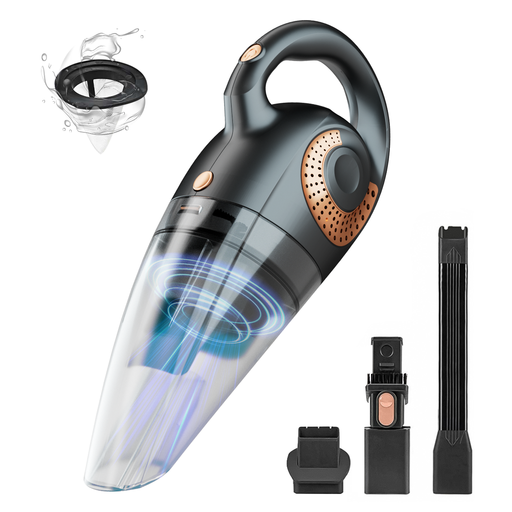
Why it's a good fit: Ideal for students, small apartments, or as a secondary device in the car. It focuses on basic functions and is designed for the quick removal of crumbs or dust without complex extra features.
This model avoids the trap of exaggerated claims. The suction power of 6,000 Pa and a runtime of up to 30 minutes are realistic values for a compact handheld device and are sufficient for its intended tasks.
Compact, lightweight design and a transparent dustbin for easy monitoring and emptying. The washable HEPA filter reduces long-term costs.
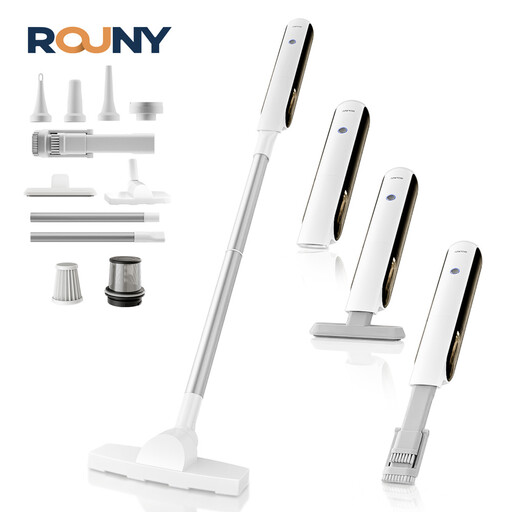
Why it's a good fit: For users who need a versatile tool for the car, workshop, and home. The combination of suction and blower functions, as well as the ability to convert it into a stick vacuum, covers numerous use cases.
This model avoids the trap of unclear performance specs by offering two clearly defined suction levels (9 kPa and 18 kPa) for different tasks. The brushless motor ensures efficient use of battery power.
2-in-1 function (vacuum and blower) and expandability with an extension tube and floorhead. The LED light is especially useful for cleaning dark areas in the car.
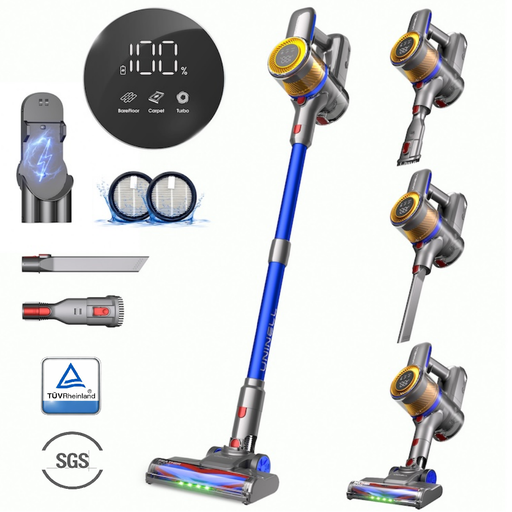
Why it's a good fit: Specifically designed for the challenges of households with pets. The high suction power and special brush roll are engineered for the effective removal of pet hair from various surfaces.
It directly addresses the problem of tangled hair, a common weakness in many vacuums. The V-shaped anti-tangle brush roll is designed to reduce hair wrapping, thus minimizing maintenance.
Powerful 450 W suction, a long runtime of up to 60 minutes, and the special brush for picking up pet hair. The battery is also replaceable.
We've compiled a complete, up-to-date list of products that fully meet these strict selection criteria and German safety regulations.
Most modern devices use washable filters. After each use, tap the filter over a trash can to remove coarse dirt. Depending on the manufacturer's instructions, the filter can be cleaned under running water every few weeks. Important: Let the filter completely air-dry (for at least 24 hours) before reinserting it. A damp filter can impair suction performance and lead to mold growth.
The lifespan of a lithium-ion battery heavily depends on usage and charging cycles. On average, you can expect a lifespan of two to four years before the capacity noticeably decreases. To extend its life, avoid completely draining the battery permanently or storing it in extreme temperatures. On some models, the battery is replaceable, which can extend the device's overall lifespan.
No, not necessarily. A high Pascal rating is a good indicator of a powerful motor, but the actual cleaning performance depends on the entire system. The design of the floorhead, the quality of the brushes, and the airflow within the device are just as crucial. A well-designed nozzle can more effectively lift dirt from the floor and direct it to the suction tube, allowing even a device with a moderate Pascal rating to achieve excellent results.