
Lieferung heute & morgen

Qualitätsgarantie

Willkommens-Angebote freischalten: KOSTENLOSE Lieferung | Bis zu 80 % RABATT | Kostenlose 30-Tage-JoyPlus-Testphase
App herunterladen
A cordless handheld vacuum promises quick and effortless cleaning—whether in the car, around the home, or at your desk. But the market is flooded with devices whose real-world performance often fails to live up to their advertising claims. Before you make a purchase, it's crucial to understand the common pitfalls that lead to disappointment and wasted money.
As your Joybuy Product Recommendation Officer, I'm here to help you separate marketing hype from reality. In this guide, we'll focus on the key features that define a great cordless handheld vacuum and show you what to look for to find a durable and practical device.
Many devices look impressive at first glance but reveal their weaknesses only in everyday use. Pay close attention to these three points to avoid buyer's remorse.
To avoid the pitfalls mentioned above, you should focus on objective technical features. These three parameters are crucial for your device's performance and longevity.
The foundation of consistently high cleaning performance is the motor. Look for models with a brushless motor. These are generally more efficient, quieter, and have a significantly longer lifespan than conventional brushed motors. A good device should also offer at least two suction levels: an Eco mode for light dust and longer runtime, and a Turbo mode for stubborn dirt. This allows you to flexibly adapt the power and battery consumption to the task at hand.
Battery performance determines real-world usability. A realistic runtime for a small cordless vacuum is about 15 minutes in high-performance mode and 30 minutes or more in standard mode. These figures are perfectly adequate for most quick clean-ups, like vacuuming a car or removing crumbs. Also, pay attention to the charging time; modern devices should be fully operational again in under 5 hours.
A thoughtful accessory package transforms a simple mini vacuum into a multi-functional cleaning tool. Various nozzles (crevice tool, brush attachment) for different surfaces are essential. Additional features that expand its range of use are particularly useful:
Based on the criteria above, we present a product that, thanks to its thoughtful design, is suitable for a broad audience.
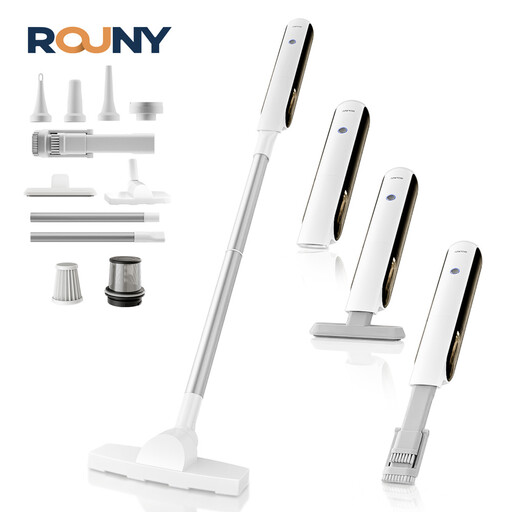
Why It's a Match: Perfect for users who want a single device for multiple tasks—from the car to the desk to small living areas. The combination of a handheld and stick vacuum covers the most common use cases.
The brushless motor with two clearly defined suction modes (9 kPa / 18 kPa) and runtimes (30 min / 15 min) ensures transparent performance. The washable HEPA filter prevents recurring costs, and the comprehensive accessory kit with 7 nozzles, an extension wand, and a floorhead eliminates any lack of flexibility.
The 2-in-1 function (vacuum and blower), integrated LED light, and its ability to convert for floor cleaning make it an extremely versatile tool for the car, office, and home.
We've compiled a complete, up-to-date list of products that meet these strict selection criteria and comply with current regulations.
1. How long does a handheld vacuum's battery really last? The actual runtime heavily depends on the selected suction level. In maximum mode, a runtime of 10 to 15 minutes is typical and intended for short, intensive tasks. In Eco or standard mode, many devices can last 30 minutes or more, which is sufficient for general cleaning. Note that battery capacity will naturally decrease slightly over the years.
2. How do you properly clean the filter of a cordless handheld vacuum? Check if your model has a washable filter, such as a HEPA filter. After each use, tap the filter to remove coarse debris. Depending on frequency of use, wash it every few weeks under running water without any detergent. Important: The filter must be completely dry before you reinsert it to prevent motor damage and mould growth.
3. Is a higher Pascal (Pa) number always better? Not necessarily. While a high Pa rating is an indicator of the motor's maximum suction force, the effective cleaning performance depends on other factors. The design of the nozzle, the seal of the device, and the efficiency of the filtration system play an equally important role. A well-engineered device with a moderate Pa rating can often pick up more dirt in practice than a poorly designed model with a theoretically higher value.