
Lieferung heute & morgen

Qualitätsgarantie

Willkommens-Angebote freischalten: KOSTENLOSE Lieferung | Bis zu 80 % RABATT | Kostenlose 30-Tage-JoyPlus-Testphase
App herunterladen
A cordless handheld vacuum promises quick and effortless cleaning for your car, home, and upholstery. However, the market is flooded with devices whose advertised features often fail to deliver in practice. Many buyers quickly discover that the suction power wanes, the battery dies unexpectedly fast, or the included accessories are useless.
As a Joybuy Product Recommendation Officer, I analyse product data to provide you with objective and practical guidance. This guide will walk you through the most common pitfalls and highlight the technical specifications you should actually focus on to find a suitable and long-lasting device.
Marketing promises can be misleading. Pay close attention to these three points to avoid disappointment:
To find a powerful and reliable cordless handheld vacuum, you should examine three core technical parameters. These will give you a realistic assessment of the device's performance.
Suction power, measured in Pascals (Pa), is an important indicator, but not the only one. For effectively cleaning car seats or removing pet hair from upholstery, a suction power of at least 5,000 Pa in continuous operation is recommended. Models with values over 10,000 Pa offer very high performance for demanding tasks.
Also, pay attention to the motor type. A brushless motor is preferable to a conventional brushed motor. It operates more efficiently, generates less noise, produces less heat, and has a significantly longer lifespan. This makes it the better choice for a durable cordless handheld vacuum.
Battery capacity is specified in milliampere-hours (mAh). A higher value generally means a longer runtime. However, the crucial specification is the runtime on the highest power setting. A good benchmark is 12–15 minutes in turbo mode, which is sufficient for cleaning a car interior or tackling acute messes.
Modern devices feature a USB-C charging port. This allows for flexible charging via power banks, laptops, or in the car, making you independent of proprietary power adapters.
A high-quality filter system is essential. A washable HEPA filter is the standard here. It captures even the smallest particles like pollen, fine dust, and pet dander, ensuring clean exhaust air. The filter's washability reduces running costs and maintains consistently high suction power.
Additional features can significantly enhance usability. For example, a handheld vacuum with a blower function is ideal for clearing dust from car air vents, keyboards, or tight crevices before vacuuming it up. Such a mini cordless vacuum becomes a versatile cleaning tool.
Based on the criteria above, we have selected a few models for different user groups and their specific needs.
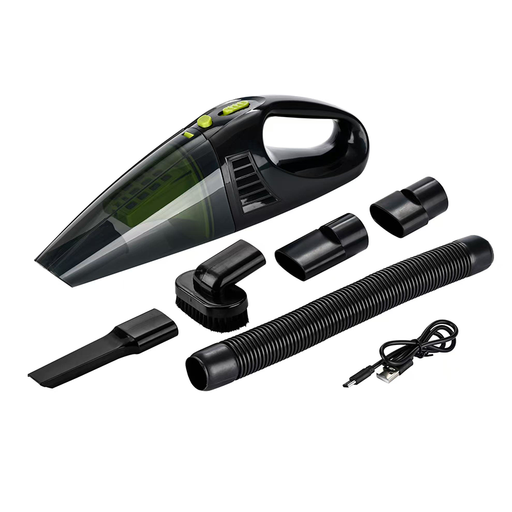
Why This Fits Their Persona: Ideal for users looking for a rock-solid, cost-effective solution for quick, everyday clean-ups. Perfect as a small vacuum for the car or for removing crumbs from the sofa without breaking the bank.
This model avoids the trap of unrealistic performance claims. The stated suction power of 3500–4000 Pa and a runtime of 14–16 minutes are realistic figures for everyday tasks in this price class.
Equipped with a washable HEPA filter and a 0.4-litre dustbin, which is not a given in this price range. The lightweight ABS housing makes it easy to handle.
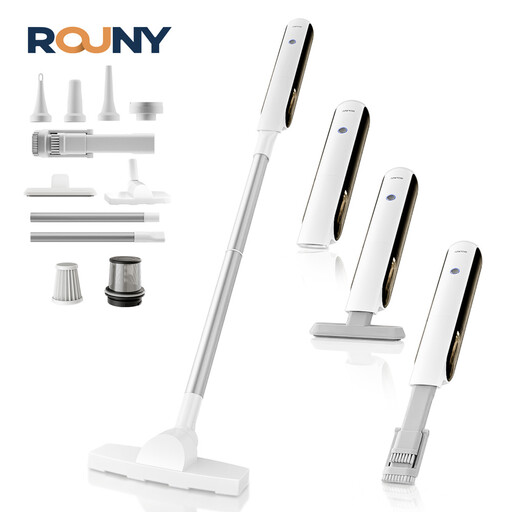
Why This Fits Their Persona: For users seeking a high-performance, versatile car vacuum. The combination of powerful suction, a blower function, and an LED light is ideal for a thorough cleaning of the car interior, even in dark corners.
This model sidesteps the battery trap with transparent specifications: 15 minutes of runtime at high suction (18 kPa) and 30 minutes on the lower setting. The 100,000 RPM brushless motor ensures consistently high performance.
The 2-in-1 function as a handheld and stick vacuum (with extension tube and floor nozzle), plus the integrated blower function, make it a multi-functional tool. The LED light is a practical detail for car cleaning.
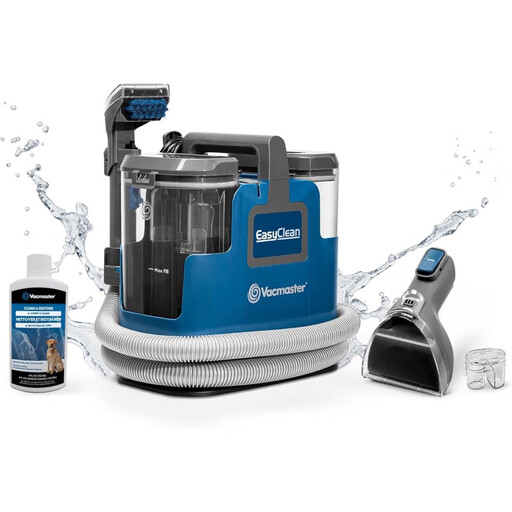
Why This Fits Their Persona: For pet owners and households dealing not just with dry dirt, but also with stains on upholstery, carpets, or car seats. This device is a specialised upholstery and carpet cleaner for wet cleaning.
This device avoids the trap of insufficient power for stubborn messes. A standard cordless vacuum can't remove stains. As a corded wet cleaner, it provides the necessary power for a deep, wet clean.
The dual-tank system separates clean and dirty water, ensuring a hygienic clean. The powerful suction function effectively removes moisture and dirt from textiles. Ideal for targeted spot removal.
We've compiled a complete, up-to-date list of products that fully meet these strict selection criteria and local safety regulations.
1. How long does a handheld vacuum's battery really last? The actual runtime heavily depends on the selected power level. Always check the manufacturer's specification for the highest suction setting, as this is relevant for most cleaning tasks. A runtime of 12 to 20 minutes in turbo mode is a good benchmark for high-quality models.
2. Is a higher Pascal (Pa) number always better? A high Pa number is a good indicator of strong suction, but it's not the sole criterion. The motor's efficiency (brushless is preferable), the nozzle design, and the quality of the filter system play an equally important role in the actual cleaning performance. A well-engineered device with 8,000 Pa can be more effective than a poorly designed model with 12,000 Pa.
3. How often do I need to clean or replace the HEPA filter? For most models with a washable HEPA filter, cleaning is recommended after 3-5 intensive uses. Tap out loose dirt and rinse the filter under running water. It is crucial to let the filter air-dry completely (at least 24 hours) before reinserting it to prevent mould growth and a reduction in suction power. Replacement is typically necessary after 6-12 months, depending on the frequency of use and the manufacturer's instructions.