
Lieferung heute & morgen

Qualitätsgarantie

Willkommens-Angebote freischalten: KOSTENLOSE Lieferung | Bis zu 80 % RABATT | Kostenlose 30-Tage-JoyPlus-Testphase
App herunterladen
A cordless handheld vacuum cleaner is a handy tool when you need to quickly remove crumbs from the sofa, sand from the footwell or pet hair from upholstery. However, battery-powered handheld vacuums differ significantly in suction power, run time, accessories and maintenance requirements. If you only focus on a high Pa number or an especially long list of features, you could end up buying a device that doesn’t suit your everyday needs.
This buying guide explains which specifications actually matter and which product features you should check before purchasing a portable vacuum cleaner.
Figures such as 18,000, 25,000 or 60,000 Pa usually describe the maximum suction pressure under specific conditions. They don’t automatically tell you how well a device performs on carpet, hard floors or upholstery. What’s more, the highest setting is often only supported for a short period.
What really matters is:
The advertised run time often refers to the lowest power setting without a motorised brush. In turbo mode, the usable time can drop significantly. For a cordless vacuum cleaner for car and home, you should therefore check whether the run time matches your floor space and planned cleaning routine.
A comprehensive accessory set is only worthwhile if the attachments suit your intended use. For the car, a crevice tool, a small brush and possibly an extension hose are relevant. For floors, on the other hand, a suitable floor nozzle, good manoeuvrability and an easy-to-empty dust container are what count.
A mini vacuum cleaner with a compact design is mainly suitable for crumbs, dust and light soiling. For carpets, larger areas or pet hair, a 2-in-1 vacuum cleaner with an extension tube and motorised brush is usually a better fit.
Pa figures should always be considered in relation to the design. A handheld device with 6,000 Pa may be sufficient for the car interior, whereas for carpets a stick vacuum with higher power and a motorised brush roller is often more practical.
For a battery-powered handheld vacuum, the following details are particularly important:
A removable battery can be useful in larger households or for regular car cleaning. For occasional use, 15 to 30 minutes of run time is often enough, provided you charge the device after each use.
A washable filter reduces ongoing running costs. However, it must be completely dry before being reinserted. A dust container that is too small will lead to frequent interruptions when dealing with pet hair or coarse dirt.
Be especially careful with moisture: a standard cordless handheld vacuum cleaner should not normally pick up liquids. A wet and dry vacuum cleaner is designed differently for this purpose, but must still be used and cleaned according to the instructions.
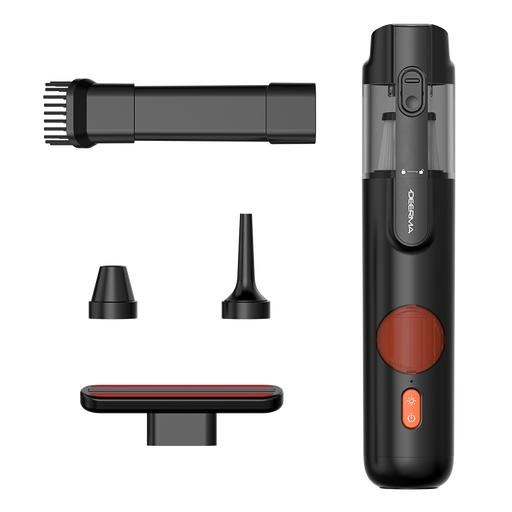
Why this product suits the profile: According to the product specifications, this compact device weighs 434 g and is designed for quick cleaning tasks in the car, home or office.
The specifications state a separate run time of up to 30 minutes, USB-C charging and an accessory set for multiple applications rather than just a single nozzle.
7,500 Pa stated suction power, six functions and a green light to make dust visible in darker areas.
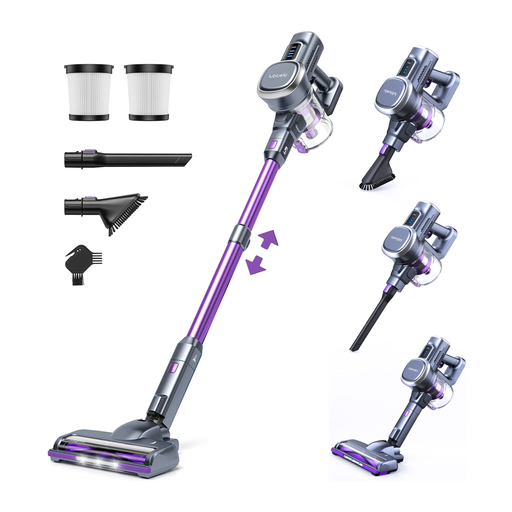
Why this product suits the profile: This stick vacuum cleaner comes with three power levels, a freestanding design and a stated run time of up to 50 minutes.
The run time is combined with multiple modes: 10 kPa in Eco, 17 kPa in medium and 25 kPa in Max mode. This allows you to adjust the power consumption to the task at hand.
Specified at 25 kPa, a 235 W motor, a V-shaped anti-tangle roller and a weight of 2.2 kg.
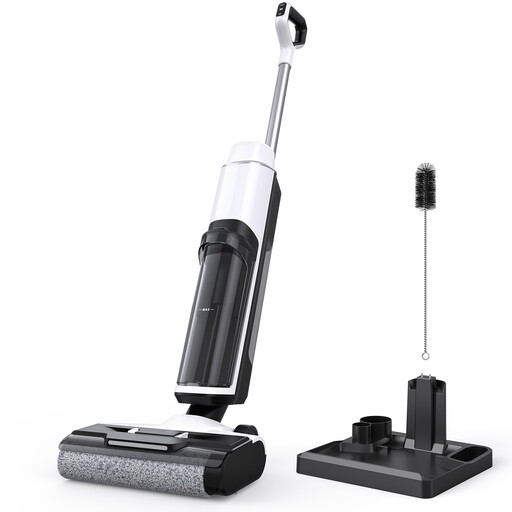
Why this product suits the profile: This wet and dry vacuum cleaner is aimed at households that want to handle dry dirt and suitable damp messes with a single device.
The water and dirty water tanks are listed separately. The stated self-cleaning function still does not replace emptying and rinsing after use.
15,000 Pa maximum suction power, 910 ml water tank, LED display and up to 30 minutes stated operating time.
We have put together a complete, regularly updated list of products that fully meet these strict selection criteria and the safety regulations in force in the EU.
There is no fixed minimum figure, because the design, nozzle and airflow also play a decisive role. For crumbs and car cleaning, compact devices with around 4,500 to 7,500 Pa can be sufficient. For carpets and pet hair, higher power levels and a motorised brush are usually more sensible.
That depends on the mode, the brush and the age of the battery. Manufacturer claims of 30 to 60 minutes often refer to Eco mode. In Max mode, a significantly shorter run time is typical. A replaceable battery can extend the practical lifespan of the device.
The electricity costs for charging are usually modest with small batteries. You should also factor in potential costs for replacement filters, brush rollers and batteries. Washable filters can reduce ongoing expenses, provided they are cleaned properly and dried completely.