
Lieferung heute & morgen

Qualitätsgarantie

Willkommens-Angebote freischalten: KOSTENLOSE Lieferung | Bis zu 80 % RABATT | Kostenlose 30-Tage-JoyPlus-Testphase
App herunterladen
A cordless lamp offers freedom and flexibility—light exactly where you need it, without the limitations of a cable. Whether it's an atmospheric cordless table lamp on the balcony, a rugged camping lantern in a tent, or a reliable rechargeable work light in the workshop. But the selection is vast, and not every product lives up to its advertising promises.
Before you make a decision, it's important to know the most common pitfalls, which often only become apparent after the purchase.
Many lamps look convincing at first glance, but the details often reveal weaknesses that limit their everyday usability.
To make an informed choice, focus on verifiable technical specifications rather than marketing promises.
A battery's capacity is specified in milliampere-hours (mAh). A higher value generally means a longer runtime. A lamp with 4000 mAh provides a solid foundation for many hours of light. Also, pay attention to the charging port. A modern USB-C port is more robust and often allows for faster charging times than older standards. This is particularly advantageous for a rechargeable flashlight or a rechargeable LED lantern that are used frequently.
The IP (Ingress Protection) rating precisely indicates how well a device is protected against the ingress of foreign objects (first digit) and water (second digit).
Brightness is measured in lumens (lm). More isn't always better. For a cosy atmosphere at the dining table, 100-200 lumens are often sufficient, while a rechargeable work light or an emergency light may require 400 lumens or more to effectively illuminate an area. A dimming function is crucial for adjusting the brightness to the situation and maximising battery life.
Here are some models that represent a considered choice for specific user profiles, based on their objective features.
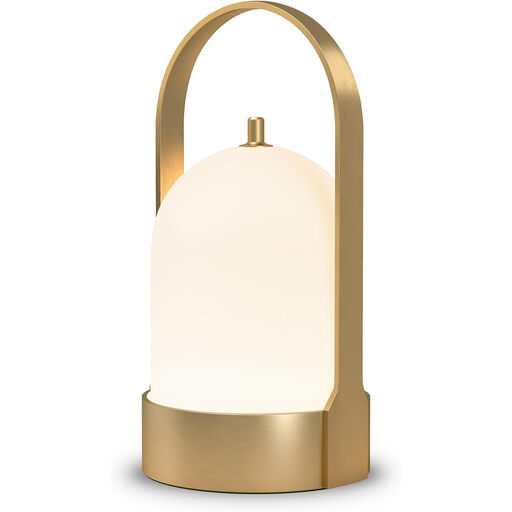
Why it's a good fit: Ideal for users seeking stylish and functional lighting for the living room, bedroom, or a covered terrace. The simple touch controls and elegant design blend seamlessly into modern living concepts.
The lamp has a clear IP44 certification, confirming protection against splashing water from all sides and thus substantiating the vague "weather-resistant" promise. The 4000 mAh battery provides a solid, verifiable basis for its runtime.
The 4-level touch dimming and 360° light distribution create a flexible and pleasant, glare-free atmosphere.
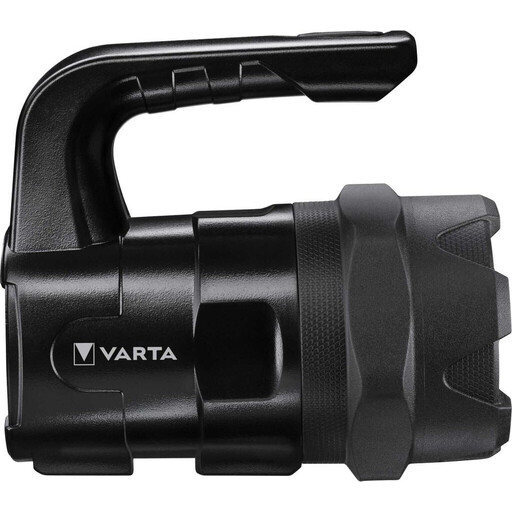
Why it's a good fit: Designed for demanding environments. Perfect as a rechargeable camping lantern, for use in the workshop, or as a reliable emergency light where durability and brightness are paramount.
This model counters the pitfalls of poor construction and weather resistance with a verifiable IK08 shock resistance (drop-proof from 4 m) and an IP67 certification, making it dust-tight and waterproof.
Extreme durability combined with a high brightness of 400 lumens and a beam distance of up to 400 metres (according to manufacturer specifications).
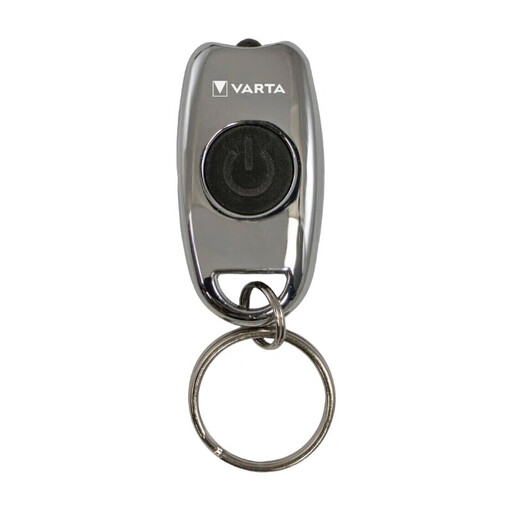
Why it's a good fit: The perfect emergency light for your keychain. It is extremely compact, lightweight, and always on hand to find a keyhole in the dark or light the way to the fuse box.
This product avoids the trap of exaggerated promises by fulfilling a clearly defined purpose. The chrome-plated zinc alloy construction is robust and durable for its size and use case.
Ultra-compact format for daily carry and an automatic shut-off function after 10 minutes to conserve battery life.
We have compiled a complete, up-to-date list of products that fully meet these strict selection criteria and safety regulations.
The actual battery life depends heavily on the selected brightness and the battery capacity (in mAh). Manufacturer specifications often refer to the lowest dimming level. For a realistic estimate, you should consider the runtime at medium brightness, which is often only a fraction of the maximum advertised time. Models with at least 4000 mAh provide a good basis for several hours of bright light.
The IP rating indicates how well a lamp is protected against dust and water. IP44 means protection against splashing water and is sufficient for covered areas. For use in all weather conditions, such as camping, a higher rating like IP67 (protection against temporary immersion) is recommended to ensure the longevity of the electronics.
No. Only lamps with an explicitly stated IP rating suitable for outdoor use (at least IP44) should be used outdoors. Models without this designation are designed for indoor use only and can be quickly damaged by moisture. Always check the product specifications for an appropriate certification.