
Lieferung heute & morgen

Qualitätsgarantie

Willkommens-Angebote freischalten: KOSTENLOSE Lieferung | Bis zu 80 % RABATT | Kostenlose 30-Tage-JoyPlus-Testphase
App herunterladen
A cordless LED lamp with a battery can light up a bedside table, hallway, cupboard or balcony without needing a fixed power point. When buying, though, it’s not just about the design. Some models are marketed as particularly flexible, but they lack either a suitable battery capacity or the right level of protection for where you plan to use them.
Households in the UK should check for three common buying pitfalls before ordering:
For a rechargeable model, the battery capacity, charging time and charging port are the key details. A lamp with a 1,800 mAh battery and a USB-C port can run for several hours depending on the brightness setting. The actual runtime depends on the light output you choose and any extra features.
A USB-C LED lamp can typically be charged using a compatible mains adapter, laptop or power bank. Before buying, check whether a charging cable is included and what charging parameters are specified. For a battery-powered lamp, you’ll need to know the battery type and quantity – for example, two AA batteries.
Lumens (lm) describe the light output. A light with 1 lumen is best for subtle decoration, whereas 210 or 340 lumens can provide much more usable light. The brightness you need depends on where you’ll use it:
Touch control is convenient, but don’t assume it means stepless dimming. Some models have three fixed levels, while others let you adjust from 5 to 100 per cent.
An LED cupboard light with a PIR sensor can switch on automatically when it detects movement. Details such as a detection range of 3 to 5 metres help with planning, but they don’t replace checking the actual mounting spot. The sensor should not be blocked or positioned so that it’s constantly triggered.
For a balcony or patio, the IP rating is essential. IP54 on a given product means protection against dust in harmful amounts and against splashing water from any direction. That’s not a licence for permanent wet conditions or submersion in water. A light with IP20 is intended for dry indoor spaces.
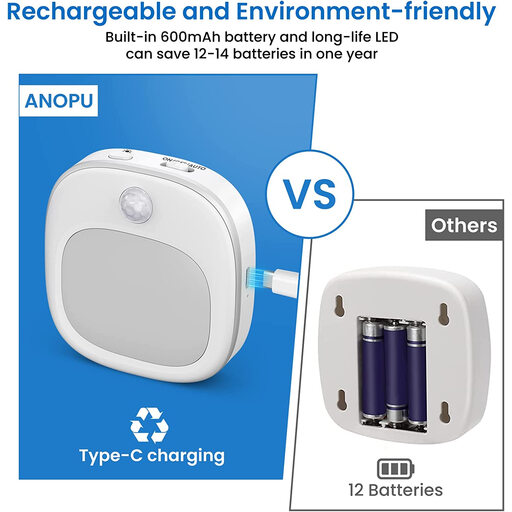
Why this product fits the profile: Two battery-powered lights are ideal for hallways, bedrooms or toilets where there’s no nearby socket and you want a simple installation.
The motion sensor reduces unnecessary manual switching. Five dimming levels and three colour temperatures let you adapt the light to different indoor spaces.
2-pack, motion detection and five brightness levels; according to the product details, suitable for bedrooms, hallways and toilets.
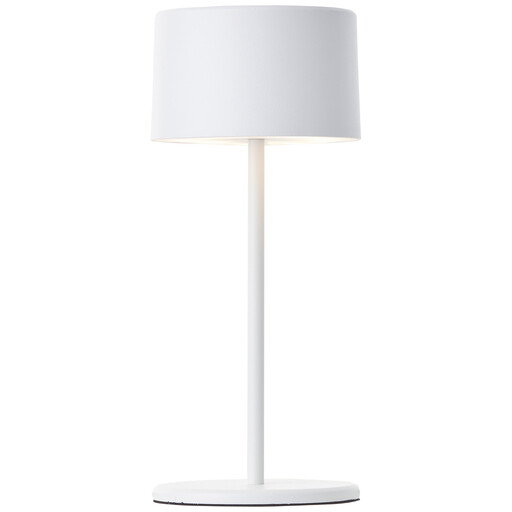
Why this product fits the profile: The 21 cm tall cordless table lamp works on a bedside table, sideboard or desk, combining a metal housing with clear technical specifications for light output.
With 210 lumens, 3,000 Kelvin and a three-level touch dimmer, the key buying data is clearly stated rather than using a vague description of brightness.
Rechargeable battery, 2 W LED power, 210 lm and three touch brightness levels; energy efficiency class F according to the product details.
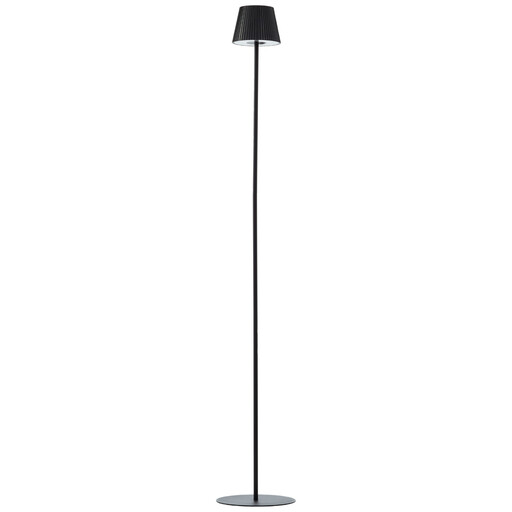
Why this product fits the profile: The 125 cm tall portable lamp for indoor and outdoor use is designed for living areas, balconies, patios or gardens, as long as the stated conditions of use are followed.
The IP54 rating is clearly stated. This makes it easier to judge whether the location is suitable for protection against dust and splashing water.
340 lm, 3,000 K, three touch dimming levels and integrated battery; IP54 plus USB charging cable according to the product description.

Why this product fits the profile: The 2-pack with 30 cm length is ideal for kitchen units, wardrobes, shelves and hallways where a slim, tool-free installation is needed.
The dimensions of 300 × 38 × 10 mm, the PIR sensor and USB charging are all clearly stated. The adhesive tape mounting requires no drilling.
41 LEDs, three colour temperatures, 1,100 mAh battery and motion detection with a stated range of 3 to 5 metres.
We’ve put together a full, regularly updated list of products that fully meet these strict selection criteria and the safety regulations that apply in the UK.
The runtime depends on the battery capacity, brightness setting, sensor operation and any extra features. Figures such as 1,500 or 1,800 mAh describe the capacity, not automatically the usable time. A lamp with a timer or motion sensor may last longer in everyday use than one running at full brightness continuously. Always look at the manufacturer’s runtime claims together with the dimming level used.
Only if the product description states a suitable IP rating. An indoor light with IP20 should stay dry. A model with IP54 is designed to cope with dust and splashing water, but it shouldn’t be left permanently exposed to rain or submerged in water. In frost, heavy rain or during long periods of non-use, it’s best to store it somewhere dry.
That depends on how you use it. A battery-powered lamp can be convenient for occasional use and flexible positioning. With daily use, a rechargeable LED lamp can reduce the ongoing cost of disposable batteries. For a fair comparison, consider the battery capacity, how often you’ll need to charge it, the cost of replacement batteries and the brightness you want.