
Lieferung heute & morgen

Qualitätsgarantie

Willkommens-Angebote freischalten: KOSTENLOSE Lieferung | Bis zu 80 % RABATT | Kostenlose 30-Tage-JoyPlus-Testphase
App herunterladen
For many garden owners and DIY enthusiasts, it's a familiar scenario: a branch is too thick for loppers, but using a large, heavy petrol or corded chainsaw feels like overkill and is simply too cumbersome. The cordless mini chainsaw was developed to fill this exact gap. It offers a handy, cable-free solution for precise cutting tasks in the garden and around the home.
This article serves as your guide. It presents objective product features and technical data to give you a solid foundation for choosing a model that fits your needs.
Selecting the right tool depends on your specific requirements. Three technical features are particularly important.
Modern cordless tools increasingly rely on brushless motors. Choosing a brushless cordless chainsaw offers several advantages:
Many users already own cordless tools from a specific brand. Before buying, check the battery system's compatibility. Models designated as a chainsaw for Makita batteries, for example, allow you to use your existing 18V batteries and chargers. This not only saves money but also reduces the number of different batteries and chargers you need to manage.
The bar length, often specified in inches, determines the maximum cutting depth. A 6-inch chainsaw (approx. 15 cm) is a common standard for mini chainsaws and is perfectly suited for most garden tasks. As a cordless pruning saw, this size is ideal for cleanly cutting branches up to about 10-12 cm in diameter. For cutting firewood or tackling slightly thicker logs, models with longer or interchangeable bars can be advantageous.
Based on the criteria mentioned, we have compiled a selection of models that stand out for their technical specifications and features.

Why It Stands Out: This model combines a powerful motor with an automatic chain lubrication system. The transparent oil tank makes maintenance straightforward, as the oil level is always visible.
Pros:
Who It's For: Users looking for a low-maintenance tool for extended garden work who value consistent chain lubrication without manual intervention.
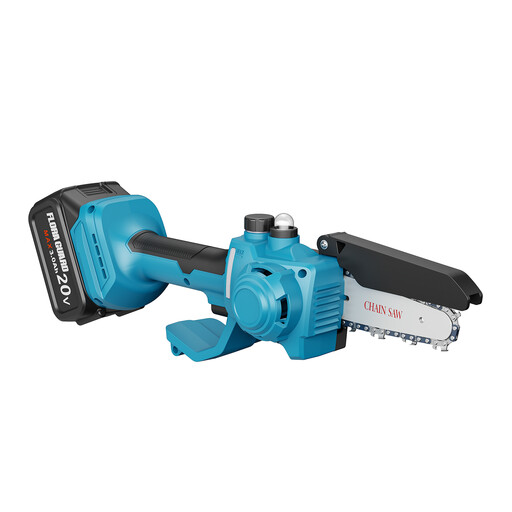
Why It Stands Out: This model focuses on a durable build and simple, controlled operation. Its manual oiling system gives the user full control over oil consumption.
Pros:
Who It's For: Hobby gardeners and DIYers who want a straightforward and robust small chainsaw for occasional to regular cutting and prefer to control the lubrication themselves.

Why It Stands Out: Flexibility is this model's key feature. With included 6-inch and 8-inch bars and chains, the saw can be adapted to different tasks—from fine pruning to cutting thicker firewood.
Pros:
Who It's For: Users who need maximum versatility and want a single tool for various cutting depths and tasks, whether in the garden or for processing firewood.
If these recommendations don't include the perfect model for your needs, or if you're looking for tools with different specifications, you can find a wider selection in our category.
? Discover more power saws here.
Yes, every chainsaw requires bar and chain oil to minimise friction between the chain and the bar. This reduces wear and prevents overheating. Models with automatic oiling dispense the oil on their own, while on manual systems, the oil is applied by pressing a button before or during operation.
The runtime heavily depends on the battery capacity (measured in amp-hours, Ah) and the intensity of the work. Models with 4000mAh (4.0 Ah) batteries can achieve runtimes of up to 100 minutes or more during typical garden tasks, according to manufacturers. Cutting hard or thick wood consumes more energy and will shorten the runtime accordingly.
A brushless motor in a cordless garden saw is more efficient, durable, and lower-maintenance than a conventional brushed motor. It converts more battery power into cutting force, generates less heat, and experiences less mechanical wear, which increases the overall lifespan of the tool.