
Lieferung heute & morgen

Qualitätsgarantie

Willkommens-Angebote freischalten: KOSTENLOSE Lieferung | Bis zu 80 % RABATT | Kostenlose 30-Tage-JoyPlus-Testphase
App herunterladen
A high-quality cordless polisher is the key to a flawless paint finish, free of swirls and minor scratches. But the market is flooded with tools whose marketing promises often shine brighter than the results they deliver. As your Joybuy Product Recommendation Officer, I'm here to help you separate fact from fiction and make an informed decision. Before you invest, you should know the three most common pitfalls that lead to disappointment and unnecessary expense.
To find a cordless polisher that meets your needs, you should focus on three core technical features. These determine the tool's safety, efficiency, and the final result.
The type of movement is the most important distinguishing feature.
These three values are crucial for your machine's power and endurance.
The size of the backing plate determines which polishing pads you can use and for which areas the machine is suitable.
A good polisher kit includes backing plates in various sizes or at least the ability to change them easily.
Here are some recommendations tailored to specific use cases that avoid the pitfalls mentioned earlier.
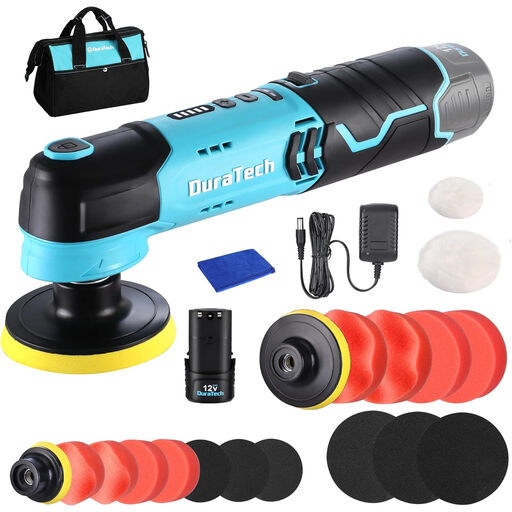
Why This Fits Their Persona: Ideal for users who detail their vehicle 2-3 times a year and are looking for an easy-to-handle solution. Its low weight and compact design improve control and prevent rapid fatigue, which is crucial for beginners.
The kit already includes two backing plates (50 mm + 80 mm) and various accessories, thus avoiding the incomplete kit trap. The low weight of just 810g directly counters the ergonomics trap.
5 speed settings for precise adjustment to the task at hand. The complete accessory kit, including a storage bag, makes it ready to use right out of the box.
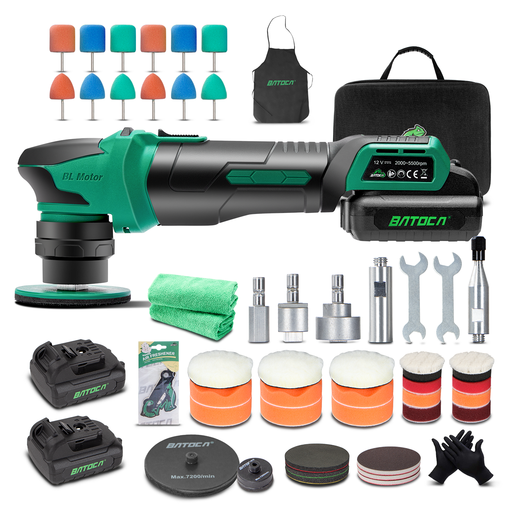
Why This Fits Their Persona: Perfect for professional detailers or ambitious enthusiasts who need a specialized tool for hard-to-reach areas like door handles, spoilers, wheels, or piano black interior trim. Versatility is the key factor here.
This kit bypasses the accessory trap by providing two dual-action drives (3 mm/12 mm orbit), a rotary drive, and an extension shaft. The two included 2.5 Ah batteries directly address the issue of insufficient runtime during intensive use.
Dual-system (rotary + dual-action) in one device. The brushless motor provides more power and a longer service life. Includes 25 mm and 75 mm backing plates for maximum precision.
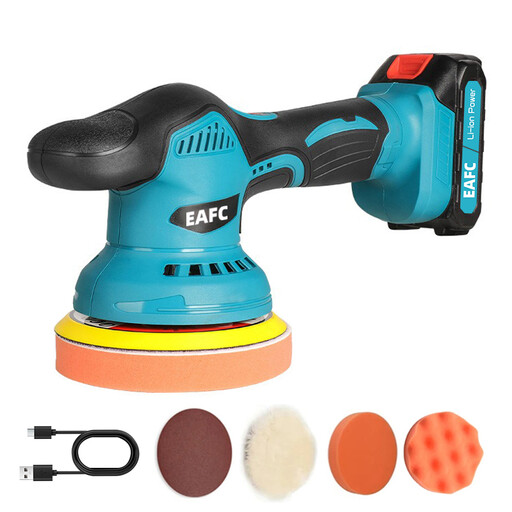
Why This Fits Their Persona: Suitable for DIYers and car enthusiasts looking for one machine for various tasks—from polishing the car to refinishing furniture. The 125 mm plate is a good compromise for larger areas without being unwieldy.
This model comes as a complete kit with various polishing pads (wave, flat, wool) and sandpaper, avoiding the incomplete set trap. The 8-speed adjustment allows for better control over battery life.
8 speed settings (2800-5500 RPM) offer a wide range for different materials. The 5 mm dual-action (DA) orbit is beginner-friendly and ensures a uniform finish.
We've compiled a complete, up-to-date list of products that fully meet these strict selection criteria and rigorous safety standards.
The actual runtime heavily depends on the pressure applied, the selected speed, and the type of polishing pad. A realistic expectation for a 12V battery with 2.0 Ah is about 20-30 minutes of continuous work. Models with 18V or 21V and 4.0 Ah can last 45 minutes or more. For detailing an entire vehicle, a second battery in the kit is almost always a worthwhile feature.
Yes, absolutely. The oscillating motion of a dual-action polisher distributes frictional heat over a larger area and prevents the machine from "digging into" the paint. This significantly reduces the risk of holograms and paint burn, making it the safest choice for anyone starting with machine paint polishing.
A good starter kit should include at least the following: the polisher, at least one battery (two is better), a charger, a backing plate, and 2-3 polishing pads of varying firmness (e.g., a harder pad for scratch removal, a medium one for polishing, and a soft one for finishing or applying wax). Microfibre towels for wiping off polish residue are also essential.