
Lieferung heute & morgen

Qualitätsgarantie

Willkommens-Angebote freischalten: KOSTENLOSE Lieferung | Bis zu 80 % RABATT | Kostenlose 30-Tage-JoyPlus-Testphase
App herunterladen
A glossy, flawless finish is the goal for many vehicle owners. A cordless polisher promises to achieve this result without the hassle of a cord. However, the market is flooded with tools whose technical specs often create more confusion than clarity. As your Joybuy Product Recommendation Officer, I'll help you identify the crucial features and avoid common purchasing traps, so you can make an informed decision for your car care routine.
Before you invest, you should be aware of the common marketing ploys that often lead to an unsatisfactory result or even damage to your paintwork.
To make the right choice, focus on three core parameters that define a machine's performance and suitability for your needs.
The way the polishing pad moves is the most important distinguishing feature.
With a cordless polisher, the battery system is of central importance.
These two measurements determine how the machine operates.
Here are some models tailored to specific needs that avoid the pitfalls mentioned above.
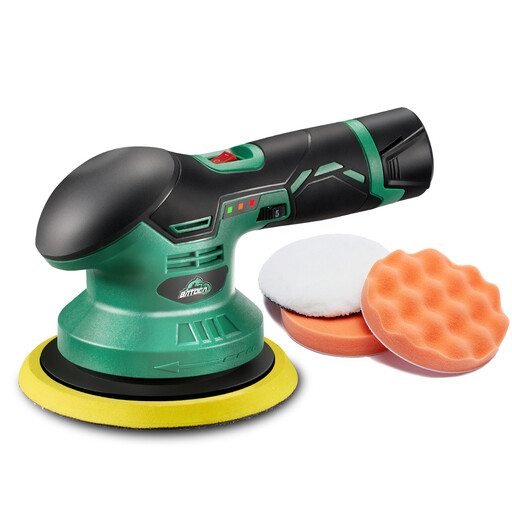
Why This Fits Their Persona: Ideal for users who want to detail their vehicle once or twice a year. The light weight and straightforward dual-action mechanism allow for safe operation without prior experience. Its power is perfectly sufficient for removing light swirl marks and applying wax.
The balanced, lightweight design (approx. 1.4 kg) prevents the fatigue trap. The 5 mm dual-action orbit is forgiving and prevents paint damage that can be caused by overly aggressive machines.
Very beginner-friendly thanks to its safe dual-action motion. The variable speed control (2500-5000 RPM) allows for adjustment to different polishes and work steps.
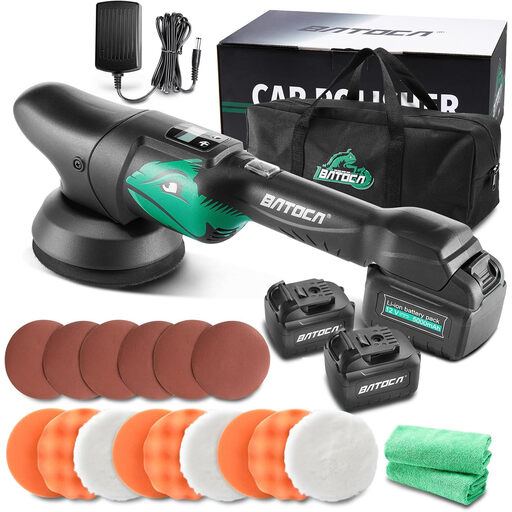
Why This Fits Their Persona: For users who polish regularly, own multiple vehicles, or undertake long, intensive polishing sessions. The two large batteries and constant power electronics enable more professional results and uninterrupted work.
This model directly bypasses the battery trap by including two 5.0Ah batteries. According to the manufacturer, this allows for continuous use, as one battery can be charged while the other is in use. The electronics ensure consistent speed even under load.
Two powerful 5.0Ah batteries included. The LCD for speed and battery level offers precise control over the work process. The 8 mm orbit provides a good balance of cutting power and finishing ability.
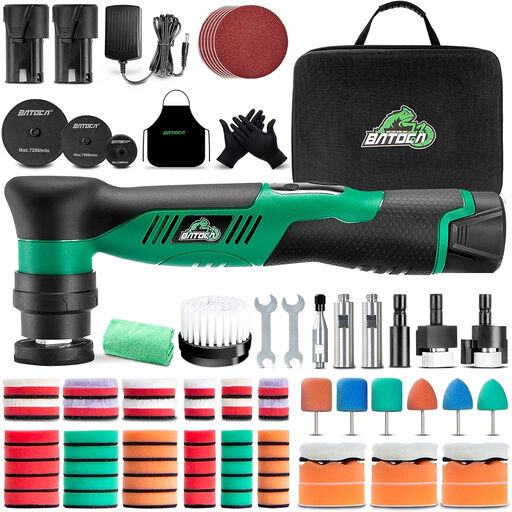
Why This Fits Their Persona: Perfect as a professional **car detailing tool** for precision work. Anyone needing to polish piano black interior trim, headlights, emblems, or complex body shapes like air intakes needs a small, agile tool. This kit is designed exactly for that.
This tool avoids the ergonomics trap by not trying to be a jack-of-all-trades. Its compact form factor is specifically optimised for detail work where a large machine would be cumbersome and ineffective. The different shafts allow for adaptation to each specific task.
Maximum flexibility with a 3-in-1 function (rotary, 3mm & 12mm DA orbit) and three backing plate sizes (25, 50, 75 mm). Two batteries are also included in the kit, which is crucial for professional use.
We've compiled a complete, up-to-date list of products that fully meet these strict selection criteria and safety standards.
The actual runtime heavily depends on the capacity (Ah), the selected speed, and the downward pressure applied. As a rule of thumb, a 2.0 Ah battery will last about 20–30 minutes under load, while a 4.0 or 5.0 Ah battery can reach 45–60 minutes. For polishing a complete mid-size car, a second battery or a single high-capacity one is highly recommended.
Yes, it is the recommended choice. The combined oscillating and rotating motion (dual-action) generates significantly less concentrated heat than a pure rotary machine. This greatly minimizes the risk of burning the paint or creating polishing defects like holograms. It is therefore a very forgiving paint polishing machine for newcomers.
A sensible car polisher kit should include the following, in addition to the machine, at least one battery, and a charger:
Some kits also include microfiber towels or even starter polishes, which makes getting started even easier.