
Lieferung heute & morgen

Qualitätsgarantie

Willkommens-Angebote freischalten: KOSTENLOSE Lieferung | Bis zu 80 % RABATT | Kostenlose 30-Tage-JoyPlus-Testphase
App herunterladen
A clean pool without hours of scrubbing – a cordless pool robot promises exactly that. The freedom from cables makes these devices especially attractive. However, the market is flooded with models making grandiose marketing claims that often fail to deliver in practice. Before you make an investment, it's crucial to understand the common pitfalls that can lead to disappointment and unnecessary expense.
As your Joybuy Product Recommendation Officer, I'll help you find objective criteria for your decision and distinguish marketing hype from genuine performance features.
Many buyers focus on advertised features that later prove to be inadequate. Pay special attention to these three points:
To avoid a bad purchase, you should focus on verifiable technical specifications. An automatic pool cleaner is only as good as its core components.
The specified battery life must always be considered in the context of your pool size and the desired cleaning cycle. A runtime of 90 minutes may sound sufficient at first. But if a full cycle for the floor and walls takes 120 minutes, the robot will have to return to charge mid-program.
The type of navigation determines the cleaning efficiency. A pool robot for floors and walls requires a more advanced system than a floor-only cleaner.
The filter performance, measured in micrometres (?m), determines how clear your water becomes. A coarse filter will catch leaves but let fine sand and dust pass through.
Instead of making a blanket recommendation, we have identified models that are tailored to specific user profiles and their requirements.
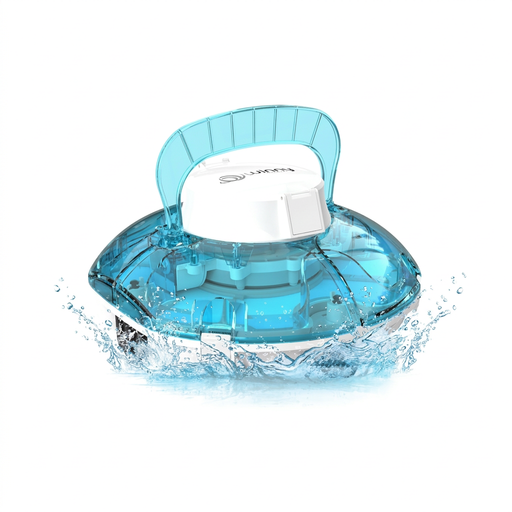
Why it's a good fit: This device is specifically designed for floor cleaning in flat-bottomed pools, which are common for most above-ground models. It focuses on one task and performs it reliably, without costly extra features that would have limited functionality in this type of pool anyway.
It avoids the pitfall of inadequate climbing ability by focusing exclusively on floor cleaning. You don't pay for a wall-climbing feature that likely wouldn't work satisfactorily in an above-ground pool.
The dual filtration system, with a 180?m filter and an additional foam filter, captures both coarse debris and fine particles. Its low weight of 3.5 kg makes it easy to handle.
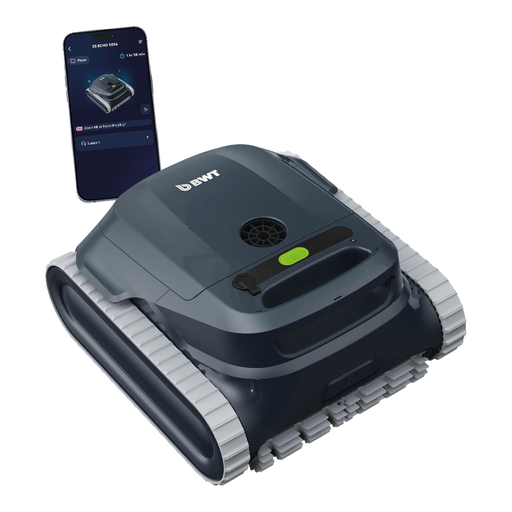
Why it's a good fit: For owners of in-ground pools who want comprehensive and precise cleaning of the floor, walls, and waterline. The combination of advanced navigation and app control offers convenience and efficiency for regular pool maintenance.
This model bypasses the pitfall of aimless navigation. According to the manufacturer, it uses a combination of ultrasonic radar and a gyroscope for optimised path planning, ensuring systematic coverage instead of random wandering.
A key advantage is the replaceable battery (according to the manufacturer), which extends the device's lifespan. The app control allows for the selection of different cleaning modes (floor only, walls only, etc.).
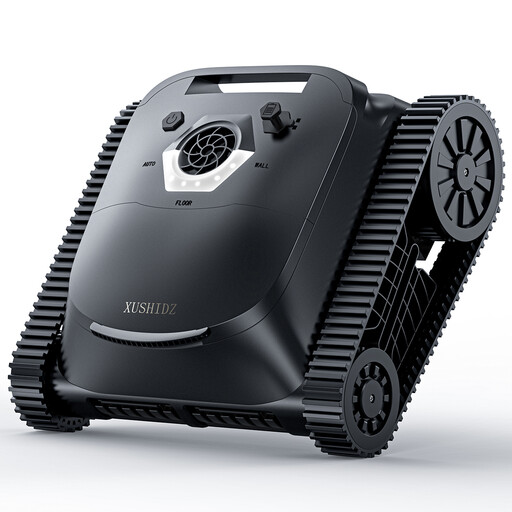
Why it's a good fit: Ideal for owners of large pools (up to 300 m? according to the manufacturer) who need long, uninterrupted cleaning performance. The high battery capacity and various cleaning modes allow for flexible adaptation to large areas and different levels of dirt.
This model directly addresses the problem of insufficient battery life for large pools. With a stated runtime of up to 180 minutes, it can completely clean even large pools in a single pass without a charging cycle interrupting the process.
Four different cleaning modes (Auto, Wall only, Floor only, Classic) allow for targeted cleaning. The caterpillar tracks with PVA rollers are designed to ensure good traction on all surfaces, including tiles and liners.
We have compiled a complete, up-to-date list of products that fully meet these strict selection criteria and UK safety regulations.
The lifespan of a lithium-ion battery in a pool robot heavily depends on the frequency of use and storage conditions. On average, you can expect 300 to 500 charge cycles, which can correspond to a lifespan of 3 to 5 years with seasonal use. In some models, the battery is permanently installed, making a replacement uneconomical. Look for models where the manufacturer explicitly states that the battery is replaceable to extend the device's service life.
Most modern cordless pool robots are suitable for use in saltwater pools up to a certain salt concentration (usually up to 5,000 ppm). However, it is important to check the manufacturer's specifications in the product data sheet carefully. After use in saltwater, it is recommended to rinse the robot with fresh, clean water to prevent corrosion on contacts and other components.
No, a key advantage of battery-powered pool robots is their complete autonomy. Unlike hydraulic pool cleaners, which are connected to the skimmer or a suction port and use the power of the pool pump, robotic pool cleaners with a battery have their own internal filter system and pump. They operate completely independently of the pool's main filtration system.