
Lieferung heute & morgen

Qualitätsgarantie

Willkommens-Angebote freischalten: KOSTENLOSE Lieferung | Bis zu 80 % RABATT | Kostenlose 30-Tage-JoyPlus-Testphase
App herunterladen
A clean pool is the centrepiece of any garden, but manual cleaning is time-consuming and tedious. A cordless pool robot promises a solution: it works autonomously, freeing you from the tedious chore of scrubbing and vacuuming. But the market is flooded with devices making grandiose promises. Many pool owners invest in a model that fails to meet their expectations. Before making a purchase, it's crucial to understand the common pitfalls that lead to disappointment and unnecessary expense.
Manufacturers' marketing messages often sound tempting, but the devil is in the details. Pay close attention to these three points to avoid a bad purchase:
To find the right robotic pool vacuum for your needs, you should focus on objective technical specifications rather than trusting marketing claims.
Battery capacity, specified in milliampere-hours (mAh), is a starting point. However, the manufacturer's stated maximum runtime in minutes is more critical, ideally specified for different cleaning modes. A high-quality cordless pool robot should be able to operate continuously for at least 90 minutes to clean even medium-sized pools completely. Models with runtimes of 150 minutes or more offer the assurance to tackle large pools or intensive cleaning cycles (floor, walls, and waterline) without interruption.
Basic robots operate on a random pattern, moving chaotically around the pool. This is inefficient and often leaves uncleaned spots. Advanced models use intelligent navigation systems (e.g., gyroscopic sensors) to follow systematic paths (such as S- or U-shapes). This ensures complete coverage. Look for various selectable cleaning modes:
Suction power, often specified in cubic metres per hour (m?/h), determines how effectively the robot picks up debris. A value over 10 m?/h is a good benchmark for most residential pools. The filtration system is at least as important. A coarse filter only traps leaves and large particles. For clear water, a fine filter is essential, with its density measured in microns (?m). A value of 180 ?m or finer is necessary to remove sand, pollen, and fine suspended particles from the water. Some premium devices even offer multi-stage filtration systems for an exceptionally thorough robotic pool cleaning.
Instead of making a one-size-fits-all recommendation, we have identified models tailored to specific user profiles and their requirements.
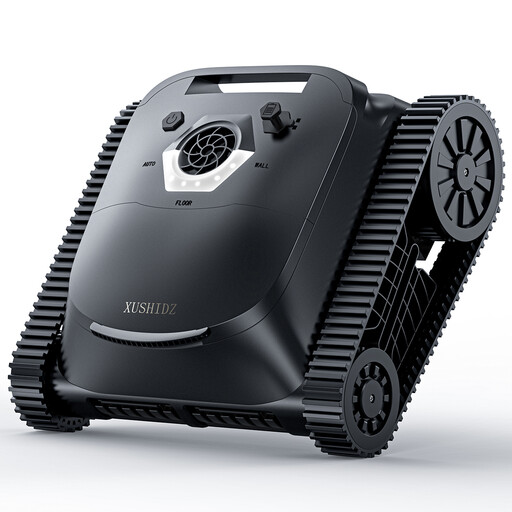
Why This Fits Their Persona: Ideal for users with large pools (up to 300 m?) who need maximum cleaning performance in a single pass. The simple one-button operation, with no forced app usage, appeals to users who value straightforward functionality.
Counters the unrealistic runtime trap with a specified runtime of up to 180 minutes. Its caterpillar treads with PVA rollers ensure a reliable grip, avoiding the poor climbing performance pitfall.
Powerful suction (21 m?/h) from three brushless motors. Four dedicated cleaning modes selectable directly on the unit. Large 3.5-litre filter basket that is easy to clean.
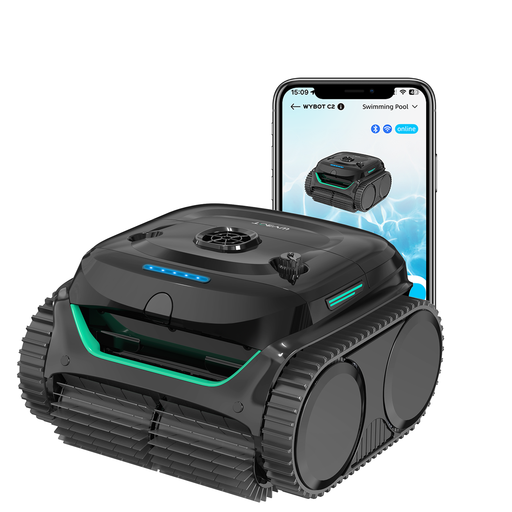
Why This Fits Their Persona: Perfect for pool owners who want full control and superior water quality. The app control allows for customising cleaning paths and scheduling weekly cycles, enabling fully autonomous pool care.
Circumvents the complicated maintenance trap with a two-stage filtration system (180?m + 10?m HEPA) that is easily accessible and simple to rinse. The gyroscopic navigation ensures systematic cleaning and prevents inefficient random paths.
Full control over cleaning modes and paths via the app. The dual filtration system captures both coarse debris and the finest particles for crystal-clear water. Auto-parking feature for easy retrieval.
We have compiled a complete, real-time list of products that fully satisfy these strict selection criteria and UK safety regulations.
The battery runtime varies by model, typically ranging from 90 to 180 minutes. The actual duration heavily depends on the selected cleaning mode—climbing walls consumes significantly more energy than cleaning only the floor. Pay attention to the manufacturer's specified battery capacity (mAh) and the maximum runtime to get a realistic estimate.
Yes, many modern devices are specifically designed for this. Features crucial for effective wall cleaning include powerful drive motors, an intelligent navigation system, and special drive wheels or caterpillar treads that provide grip on various surfaces (liner, tile, concrete). Models advertised as wall-climbing pool robots should have a dedicated wall-cleaning mode.
The optimal frequency of use depends on the pool's debris load from factors like swimmers, leaves, or pollen. As a general guideline, using it two to three times a week is recommended to maintain consistently high water quality. Some models with app control allow you to program fixed weekly cleaning schedules, further automating and simplifying pool maintenance.