
Lieferung heute & morgen

Qualitätsgarantie

Willkommens-Angebote freischalten: KOSTENLOSE Lieferung | Bis zu 80 % RABATT | Kostenlose 30-Tage-JoyPlus-Testphase
App herunterladen
Cordless tools make renovations, furniture assembly, gardening and repairs to bicycles or cars easier. At the same time, unclear voltage specifications, incompatible batteries and oversized accessory sets often lead to poor purchases. When comparing cordless power tools, you should therefore look beyond wattage or the number of accessories included.
A specification such as 18V, 20V or 21V initially describes the battery’s nominal electrical voltage. On its own, this does not indicate how well a tool will drill, drive screws or saw. Torque, speed, gearing, motor design and available battery capacity are also important factors.
An 18V cordless tool may be suitable for furniture assembly and household tasks, while a tool with a higher nominal voltage is not automatically better for every application. Also check whether the battery and charger are actually included in the package.
A power tool set with lots of bits and attachments may initially seem versatile. However, what matters is whether the accessories fit the chuck and whether replacement parts will be available later. A 10-mm keyless chuck is suitable for many standard drill bits and screwdriver bits. A precision tool, on the other hand, may require a 3/32-inch or 2.3-mm collet.
When buying a rotary tool or multifunction tool, check the collet diameter, accessory type and availability of compatible replacement parts beforehand.
Manufacturers’ claims often refer to no-load operation or specific test conditions. Drilling into metal, sawing branches or sanding places considerably greater demands on the tool. A higher capacity in mAh can extend runtime, but it usually also increases weight and charging time.
Two batteries are practical for longer jobs. For occasional repairs, a lightweight battery may be sufficient. Charging time, a battery level indicator and compatibility with other tools on the same platform should also be considered when making your choice.
With a cordless drill driver, the maximum torque indicates how much power is available when driving screws. More torque is not required in every situation: for delicate materials or small screws, finely graduated settings are more important. Two speed ranges often provide slow, controlled power transmission as well as a higher speed for drilling.
A brushless motor operates without conventional carbon brushes. This removes these wear components; depending on the design, it can also reduce heat generation and maintenance requirements. However, the motor design is only one part of the overall assessment.
Pay attention to:
Not every battery with a similar voltage rating is interchangeable. For Makita-compatible or platform-specific batteries, check the manufacturer’s precise compatibility approval.
With a cordless chainsaw or mini chainsaw, bar length, chain speed, chain tension and lubrication are key considerations. Automatic oiling reduces the need for manual maintenance, but does not replace checking the oil level and chain tension. Safety goggles, gloves and suitable leg protection are essential for safe use.
For bicycle or vehicle repairs, a digital torque wrench with a suitable measuring range is a sensible choice. A model covering 0.6 to 12 Nm is more suited to finer fastenings than jobs involving high wheel-nut torque. The measuring range, accuracy specification, units and warning signals should match your intended use.
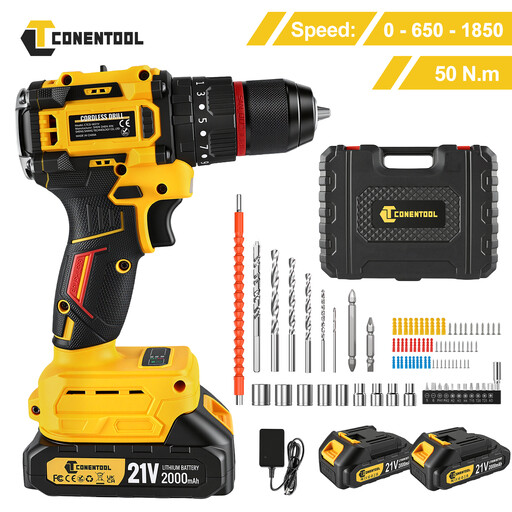
Why this product suits this profile: This set is designed for DIY enthusiasts who want to drill and drive screws with one tool and need accessories as well as two batteries.
The specifications state that two 21V lithium-ion batteries with 2,000 mAh, a charging time of 1 to 2 hours and a 10-mm keyless chuck are included. This makes it possible to check the contents and key technical specifications before buying.
Brushless motor, maximum torque of 50 Nm, two speed ranges and 25+3 torque settings.
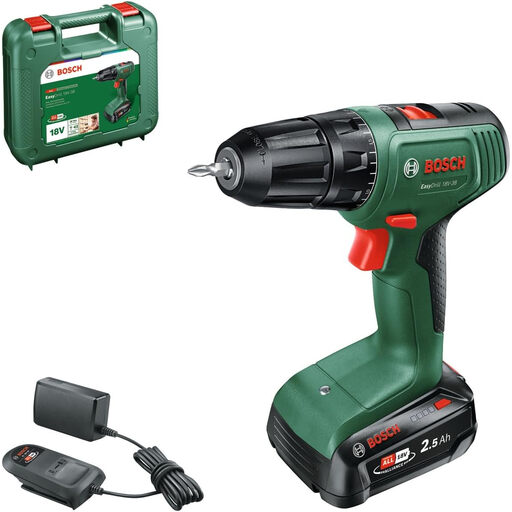
Why this product suits this profile: For regular household and DIY tasks, this set offers clear performance specifications and an established 18V battery system.
The specifications state 38 Nm, 20 torque settings, two speeds and a maximum drilling capacity of 30 mm in wood or 10 mm in steel.
10-mm keyless chuck, LED work light, weight of 1.2 kg with battery and POWER FOR ALL compatibility.
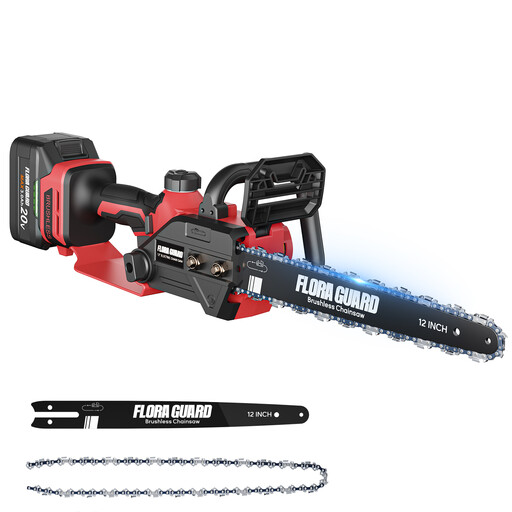
Why this product suits this profile: Garden owners carrying out regular cutting work get a longer guide bar, two batteries and automatic chain lubrication.
The product specifications state a 12-inch bar length, 60 ml oil tank, tool-free chain tensioning and two 4,000-mAh batteries. According to the description, chain oil is not included and must be supplied separately.
1200-W brushless motor, stated chain speed of 49 ft/s and automatic lubrication.
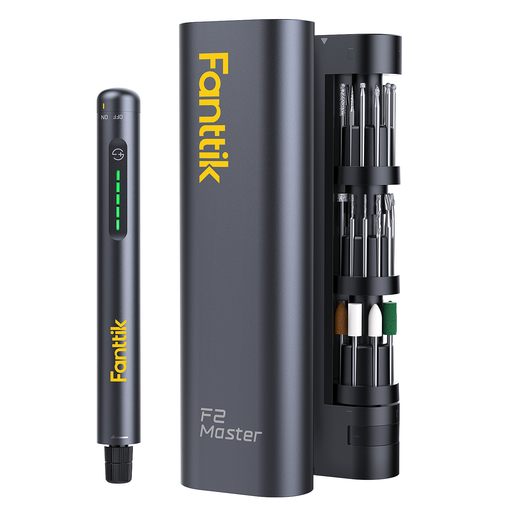
Why this product suits this profile: This compact tool is designed for engraving, polishing, sanding and small drilling jobs in DIY projects or on 3D-printed parts.
The collet is specified as 3/32 inch or 2.3 mm. This allows you to check in advance whether your existing attachments will fit. Five speed levels allow adjustment to suit the application.
Up to 25,000 rpm, 35 accessories, USB-C charging and a stated weight of 0.22 lb.
We have put together a complete, regularly updated list of products that fully meet these strict selection criteria and the safety regulations applicable in the EU.
Runtime depends on battery capacity, material, tool type and workload. Drilling into wood usually places different demands on the battery than sawing or sanding. For longer jobs, two batteries or a compatible interchangeable battery system is a sensible choice. Store lithium-ion batteries in a dry, frost-free place and follow the manufacturer’s instructions.
Only within battery systems that are explicitly approved as compatible. The same voltage rating is not enough, as contacts, electronics, design and charging methods may differ. Before buying, check the stated platform, such as POWER FOR ALL, as well as the intended charger.
In addition to the purchase price, you may incur costs for electricity, replacement batteries, accessories, saw chains, abrasives or chain oil. The charger’s power consumption and charging frequency affect electricity usage. With an electric screwdriver or precision tool, ongoing energy costs are usually lower than with heavily loaded sawing or sanding applications.