
Lieferung heute & morgen

Qualitätsgarantie

Willkommens-Angebote freischalten: KOSTENLOSE Lieferung | Bis zu 80 % RABATT | Kostenlose 30-Tage-JoyPlus-Testphase
App herunterladen
A cordless pressure washer can clean your car, bike, patio or garden without needing a mains socket or a fixed water supply. However, models vary considerably in pressure, water intake, battery life and accessories. If you focus only on a high bar rating or an especially long runtime, you could end up with a machine that doesn’t suit the jobs you need it for.
This buying guide explains which technical specifications matter, which common marketing claims deserve a closer look and which cordless pressure washer could suit different needs.
The bar rating describes water pressure. But actual cleaning performance also depends on water flow, nozzle type and distance from the surface. A compact cordless pressure washer with limited water flow is better suited to light or moderate dirt. A mains-powered electric pressure washer, on the other hand, can handle longer jobs with a higher volume of water.
When cleaning delicate surfaces such as car paintwork, bikes or painted fences, don’t hold the jet too close or direct it at one spot for too long. For plants, a wide spray with reduced pressure is a sensible choice.
Runtime figures often refer to a low-pressure or spray setting. Actual usage time may vary at higher pressure, when spraying continuously or in cold temperatures. So check the following:
A foam nozzle, water filter or extension can broaden the range of jobs you can tackle. But check that the connections are compatible and that the accessories are actually included. For a car pressure washer kit, for example, a suitable foam attachment, adjustable spray and water inlet filter are useful. For cleaning gardens and patios, a rotary nozzle or longer hose can extend your working range.
Pressure is given in bar or sometimes PSI. Water flow is usually measured in litres per hour or litres per minute. Consider both figures together:
If the machine has its own water tank or an intake hose, also check whether it can be used with a bucket, water butt or other container. Water filters help trap particles from alternative water sources. Seawater is generally unsuitable for these machines, as the salt can damage internal components.
A cordless pressure washer gives you greater freedom of movement, but you’ll need to plan realistically for each job. A small battery may be enough to clean one bike or give your car a quick wash. For several vehicles, large patios or longer jobs, interchangeable batteries and a charging plan become more important.
Before buying, check:
For mains-powered machines, check the CE marking, German-language instruction manual, cable and plug protection and whether the machine can be used with a suitable, protected socket. An RCD can provide additional protection when working outdoors, but it doesn’t replace the manufacturer’s instructions.
With battery-powered machines, keep the battery and charger dry. Don’t clean the casing with a strong jet of water unless the machine has a specified protection rating. A safety lock to prevent accidental operation is particularly useful when storing the machine at home.
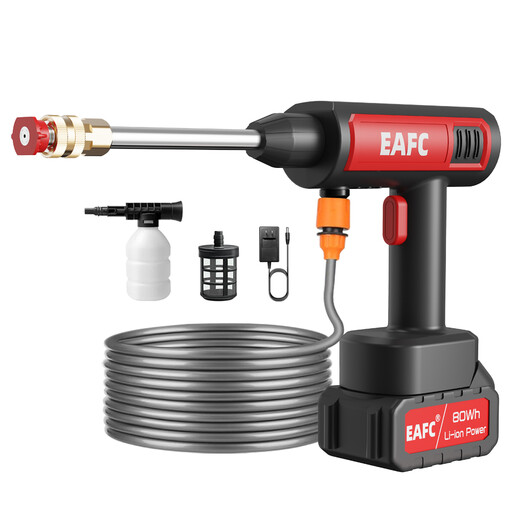
Why this product suits this profile: This handheld machine is designed for occasional cleaning and watering tasks. It can draw water from a bucket or use its self-priming function. It’s suitable for cars, bikes, balconies, windows and plants.
The product description specifically flags air in the system, kinked hoses, loose connections and a flat battery. You can check these points before use.
Cordless design, lithium battery and versatile cleaning and watering functions.
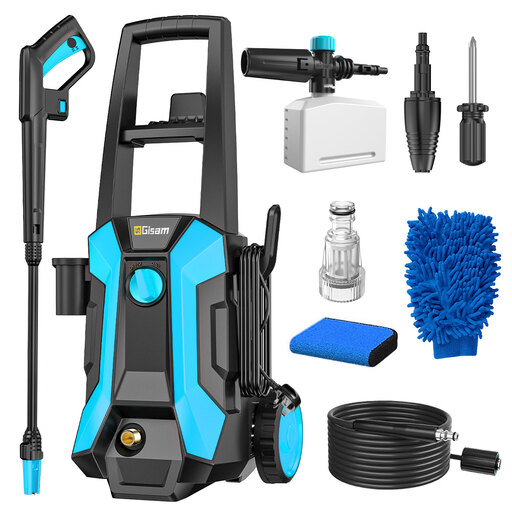
Why this product suits this profile: This mains-powered electric pressure washer is designed for larger areas, including cars, fences, patios, gardens and driveways. Its 8-metre high-pressure hose gives you a wider working range.
The pressure and flow rate are clearly stated: 180 bar and 480 l/h. This makes it easier to assess the performance before buying than with vague marketing claims.
2200 W motor, 8-metre hose, foam nozzle, rotary nozzle and high-pressure spray gun.
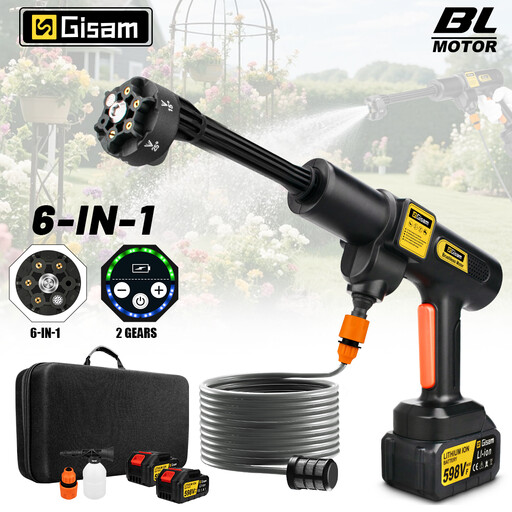
Why this product suits this profile: Two batteries, a 5-metre hose, a water filter and a storage bag make this a good option if you want to work on the go, while camping or at different locations.
The adjustable range of 25 to 65 bar lets you tailor the pressure to cleaning or watering. The manufacturer also advises against connecting the machine directly to a tap.
Two batteries, 6-in-1 nozzle, 180-degree nozzle, foam sprayer and filter for alternative water sources.
We’ve put together a complete, regularly updated list of products that meet these strict selection criteria and fully comply with the safety regulations in force in the EU.
You’ll need a suitable intake hose and, if necessary, a water filter. The hose should be fully submerged and kept free of kinks. If there’s air in the system, you may need to run the start-up process for longer or follow the manufacturer’s instructions for bleeding the system.
It depends on the battery capacity, pressure setting, water flow rate and operating mode. A low-pressure setting usually uses less energy than continuous high-pressure operation. For longer jobs, a second battery or a model with a replaceable battery is handy. After use, store the battery and charger somewhere dry and follow the manufacturer’s instructions.
Running costs mainly include electricity for charging, water and, where applicable, cleaning products. For a machine with a 21-volt battery and 250-watt power consumption, you can get a rough idea of its electricity use from the charging time and your local electricity price. With mains-powered models, you also need to account for the electricity used throughout the job. So it’s not just the purchase price that matters: the machine’s performance should also suit the cleaning task you have in mind.