
Lieferung heute & morgen

Qualitätsgarantie

Willkommens-Angebote freischalten: KOSTENLOSE Lieferung | Bis zu 80 % RABATT | Kostenlose 30-Tage-JoyPlus-Testphase
App herunterladen
A cordless pressure washer lets you clean vehicles, bicycles, patios and garden furniture without relying on a plug socket or tap. In practice, however, portable models can vary considerably. Some are more like electric cleaning guns for light dirt, while others deliver higher pressure and are better suited to regular car washing or outdoor surfaces.
If you focus only on claims such as “powerful pressure”, “long runtime” or “multifunctional”, you may miss important details. The following criteria will help you choose a cordless pressure washer that’s right for the way you plan to use it.
Bar or PSI figures alone tell you little about how well a washer will clean in practice. Water flow, nozzle design, distance from the surface and battery condition also matter. A model with a high pressure rating but low water flow may take a long time to clean larger areas.
For plants, bicycles or delicate paintwork, a lower, controlled pressure is often a better choice. For heavily soiled paving stones or driveways, a mains-powered model with a higher flow rate may be more suitable.
Runtime depends on the pressure setting, nozzle, temperature, charge level and battery capacity. That’s why runtime figures should always be considered in the context of the operating mode. For example, according to the product description, the Gisam model offers up to 45 minutes per battery on its low-pressure setting. Actual runtime may vary at higher power.
Also check:
A foam sprayer, adjustable nozzle or water filter can extend the range of uses. What matters, though, is whether the connectors are compatible and whether the cleaning components are easy to clean. A clogged filter, kinked intake hose or overtightened nozzle can affect performance.
With a portable pressure washer, the pressure should suit the task. When washing a vehicle, use a gentle spray setting and keep a sufficient distance from the paintwork. A pinpoint nozzle concentrates the water jet, while a widely adjustable nozzle covers larger areas more evenly.
Useful features include:
If you’re drawing water from ponds or water butts, filter out any dirt particles. Seawater is unsuitable for many models because it can cause corrosion. Always follow the instructions for your particular model.
Depending on their design, portable pressure washers can draw water from a bucket, canister or tap. Self-priming is useful for camping, gardening and washing vehicles away from home. However, the pump needs to be primed first.
If no water comes out when you switch the washer on, these steps may help:
A pressure washer with a foam sprayer applies cleaning solution to vehicles or smooth surfaces. This helps you pre-treat the surface evenly, but doesn’t replace rinsing or cleaning with a product suitable for the material. Only use products that are suitable for the washer and the surface you’re cleaning.
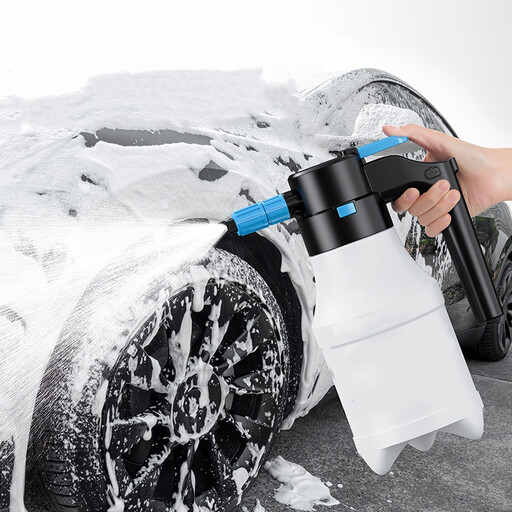
Why this product suits this profile: This compact device is ideal for occasional car washing, light household cleaning, plant care and applying cleaning solutions.
The 1.5-litre tank is transparent, and the brass nozzle is adjustable. This makes it easy to check the liquid level and control the spray pattern.
USB-rechargeable battery, one-button operation, safety lock and settings for mist, water jet or foam.
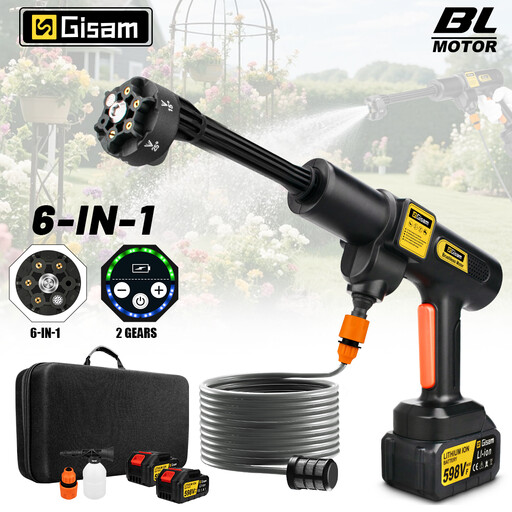
Why this product suits this profile: Two batteries, several nozzle options and a water filter make it a good fit for regular car care, gardening and camping.
The package contents include two batteries, a 5-metre hose and a filter. This helps reduce interruptions and makes it easier to draw water from containers.
According to the product description, the pressure is adjustable from 25 to 65 bar. The set also includes a 6-in-1 nozzle, a 180-degree rotating nozzle and a foam sprayer.
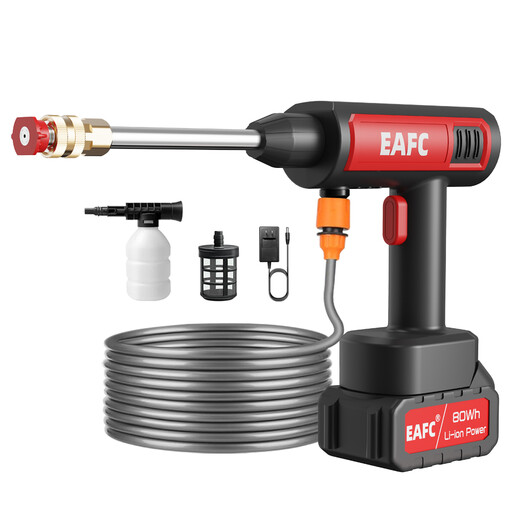
Why this product suits this profile: Its cordless design is aimed at people who want to clean cars, bicycles, floors, windows or fences in different locations.
The product description highlights bucket operation and self-priming. Guidance on priming, hose routing and battery charging helps you get started.
Battery-powered operation, adjustable nozzle, foam sprayer and uses ranging from car washing and household cleaning to patios and garden watering.
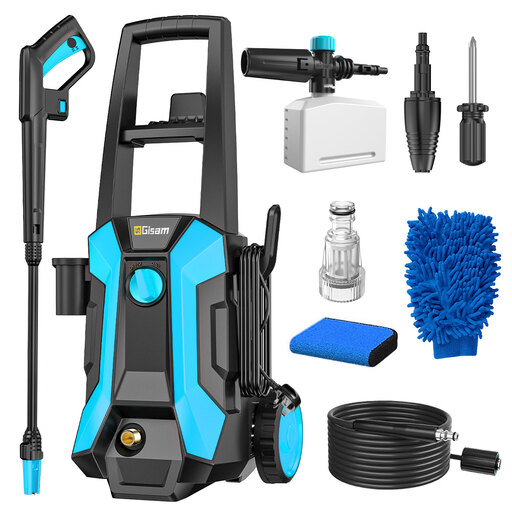
Why this product suits this profile: This mains-powered model is an alternative for homeowners with larger patios, driveways, fences or garden areas and access to a plug socket.
The specifications of 2200 watts, 180 bar and 480 litres per hour make its performance clearer than vague marketing claims.
8-metre hose, foam sprayer, rotating nozzle and high-pressure gun for larger outdoor areas.
We’ve put together a complete, regularly updated list of products that meet these strict selection criteria and fully comply with the safety regulations in force in the EU.
When washing a car, keep it at least several decimetres away, unless the instructions say otherwise. Start on a low pressure setting and test the spray pattern on an inconspicuous area. Don’t use a concentrated high-pressure jet on windows, joints, paintwork or delicate plants.
After use, you should:
Connect the intake hose and filter, place the end of the hose in a sufficiently full container and start the washer. If there’s air in the pump system, you may need to hold the trigger for 10 to 30 seconds. A kinked hose or clogged filter will reduce the water flow.
Runtime depends on the battery, pressure setting, nozzle and task. Lower pressure settings generally use less energy than a concentrated water jet. For longer jobs, two batteries or a replaceable battery can be useful. Always check which operating mode the manufacturer’s runtime figures refer to.
The main running costs are electricity for charging, water and, where necessary, cleaning products. You can estimate the electricity used per charge from the battery voltage and capacity. You may also need to factor in replacement batteries, filters or nozzles. Using a bucket generally takes less water than leaving a tap running, depending on the task and how you work.