
Lieferung heute & morgen

Qualitätsgarantie

Willkommens-Angebote freischalten: KOSTENLOSE Lieferung | Bis zu 80 % RABATT | Kostenlose 30-Tage-JoyPlus-Testphase
App herunterladen
A cordless pressure washer can make cleaning your car, caring for your patio or tackling jobs in the garden much more flexible. With no power cable and the ability to draw water from a separate source, many models can be used in a parking space, on a balcony or while camping. However, cordless sprayers are often described as pressure washers, even though their pressure, water flow and intended uses can vary considerably.
If you focus only on a high bar rating or especially long battery life, you could easily end up with a model that doesn’t meet your actual needs. The following criteria will help you assess a cordless pressure washer or electric water gun objectively.
A high maximum pressure usually refers to a peak value measured under specific conditions. Water flow, nozzle design, distance from the surface and water source are also key to real-world performance. A model with relatively low pressure may be more suitable for bikes, plants or washing the car than a more powerful one.
For paintwork, delicate pointing or plants, you should be able to adjust the water jet. An adjustable spray nozzle or a choice of nozzles lets you switch between a wide spray and a concentrated jet.
Runtime figures often apply to a low power setting or ideal conditions. Actual usage time may vary when using high pressure or foam mode, or when starting the device frequently. So check:
Many portable pressure washers draw water from a bucket, canister or water butt. They need a suction hose and often a filter. A kinked hose, air in the pump housing or a clogged filter mesh can significantly reduce water flow.
When using water from an open container, filter out any larger particles. Unless the manufacturer expressly says otherwise, salt water is generally unsuitable for devices with metal and pump components.
Pressure is measured in bar or PSI, while water consumption is usually given in litres per minute. For washing a car and light outdoor cleaning, moderate power with a well-controlled jet is often enough. For heavily soiled patios, fences or driveways, a mains-powered model with a higher flow rate may be more suitable.
One example from the range is an electric pressure washer rated at 180 bar and 480 l/h. With its motor, 8-metre hose and range of attachments, it is better suited to stationary cleaning jobs than to mobile use away from a power socket.
A single all-purpose nozzle is convenient, but it won’t be ideal for every job. Look for:
A foam sprayer applies cleaning product to the surface. It doesn’t replace the need to leave the product to work or to rinse by hand. When cleaning a vehicle, don’t direct the jet straight at seals, electrical connectors or damaged paintwork.
For campers, motorhome owners and gardeners, weight, hose length and ease of transport all matter. A model supplied with a bag, filter and several nozzles may be more practical for mobile use. For longer jobs, a spare battery or two batteries can be useful.
Also look for a safety lock, dry storage and clear instructions. Remove any remaining water after use, following the manufacturer’s instructions. Keep the battery and charger away from damp areas and direct heat.
The models below differ considerably in pressure, tank or water supply, and intended use. The details are based on the respective product descriptions.
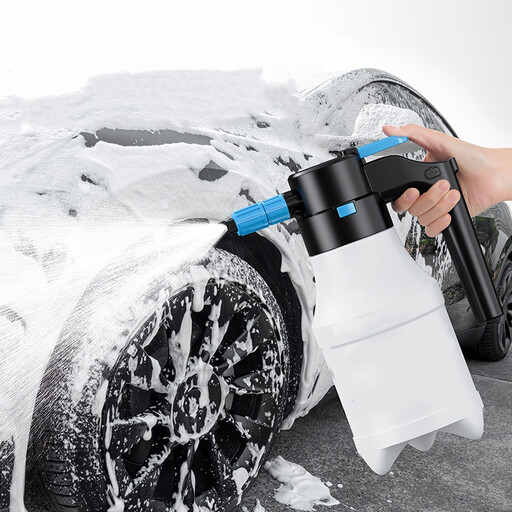
Why this product suits this type of user: This compact electric sprayer has a 1.5-litre container and is suitable for smaller cleaning jobs, plant care and applying cleaning solutions. It’s more of an electric water gun than a pressure washer for large areas.
The product description clearly states the capacity and explains that the brass nozzle is adjustable. This makes it easier to judge what this compact model can do, without mistaking it for a large-area cleaner.
1.5-litre tank, USB charging cable, one-button operation, safety lock and adjustable brass nozzle.
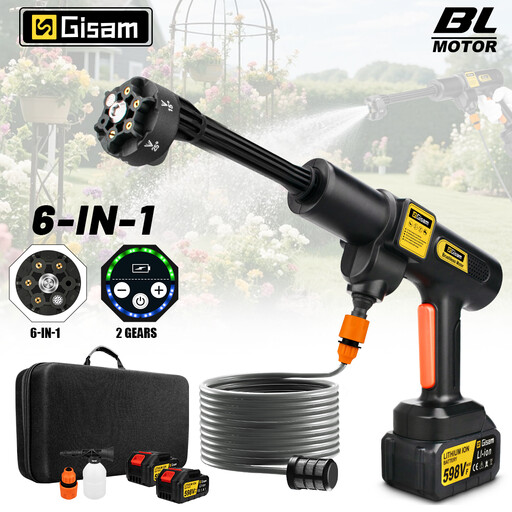
Why this product suits this type of user: Two batteries, a 5-metre hose, a water filter and a storage bag make this a good option for anyone who wants to clean or water on the go regularly.
The product details specify an adjustable pressure range of 25 to 65 bar and state that the device should not be connected directly to a tap.
Two 3,000-mAh batteries, 6-in-1 nozzle, 180-degree nozzle, filter and 5-metre hose, according to the product description.
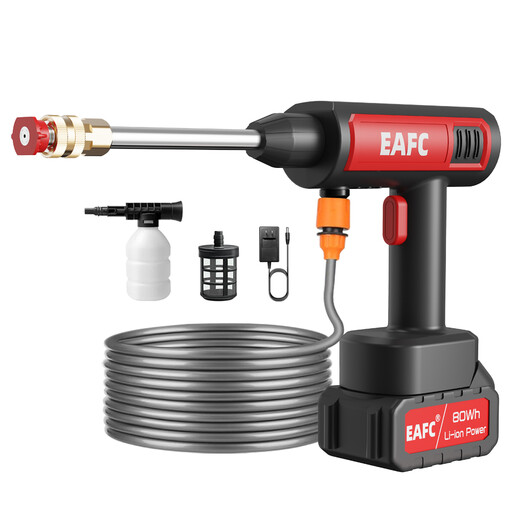
Why this product suits this type of user: This cordless pressure washer is designed for cleaning cars, bikes, floors and fences, as well as watering the garden. It can also draw water from a container.
The instructions highlight common causes of weak water flow, such as air in the system, a kinked hose, loose connections or a flat battery.
Cordless design, water supply from a bucket or container, foam sprayer and adjustable nozzle, according to the product description.
We’ve put together a complete, regularly updated list of products that meet these strict selection criteria and fully comply with the safety regulations in force in the EU.
Connect the suction hose and filter correctly, then place the filter fully in the water. If there’s air in the system, you may need to press the start button for several seconds until water starts flowing. Keep the hose straight and make sure all connections are secure.
It depends on the pressure setting, water flow rate, temperature, battery capacity and operating mode. You can only judge the exact runtime from the manufacturer’s figures and the power setting used. Spare batteries or a second battery help reduce interruptions during longer jobs.
Running costs include electricity for charging, water, cleaning products and any replacement parts you may need. With models that draw water from a container, you’ll also need to refill the tank or bucket regularly. So before buying, check the availability of batteries, nozzles, filters and seals too.