
Lieferung heute & morgen

Qualitätsgarantie

Willkommens-Angebote freischalten: KOSTENLOSE Lieferung | Bis zu 80 % RABATT | Kostenlose 30-Tage-JoyPlus-Testphase
App herunterladen
A cordless pressure washer is handy when there’s no mains electricity or water supply where you need to clean, whether that’s on your drive, balcony, in the garden or at a holiday home. As it’s cordless, it can draw water from a bucket, water butt or another clean container. Before you buy, though, it’s worth checking a few technical details. Not every compact cordless cleaning gun is suitable for every cleaning task.
A high pressure figure can look impressive at first glance. In practice, though, what matters is the combination of water pressure, flow rate and spray pattern. A machine with high maximum pressure but a low flow rate may take longer to clean larger areas. And maximum pressure isn’t necessarily the pressure delivered continuously during every use.
For cars, bikes and garden furniture, a machine with several spray settings is often enough. Avoid using a concentrated jet at close range on delicate surfaces such as car paintwork, rubber seals or window frames.
Some models come with a battery and charger; with others, you’ll need to buy them separately. This can make a significant difference to the actual cost. You should also compare the battery capacity in Ah, stated run time and charging time before you buy.
A cordless pressure washer with a short run time may be enough to rinse a bike, but cleaning a patio, garden furniture and several cars may mean frequent charging breaks. If you already own cordless tools, you may be able to use a compatible battery system. Check that compatibility is explicitly confirmed for the system you have.
The ability to draw water from a bucket is a major advantage of portable cleaning machines. However, it only works reliably if the suction hose is connected correctly, isn’t kinked and the pump has been primed. Dirt can affect the filter or pump, so only use clean water.
With some machines, you need to hold down the power button for longer to draw water into the unit. Other models require you to prime or bleed the system first. These details should factor into your buying decision, especially if you plan to use the machine regularly without a mains water connection.
Don’t just look at the bar rating. The flow rate in litres per hour or litres per minute tells you how much water the machine delivers. An adjustable nozzle lets you switch between a wider spray for rinsing and a more focused pattern for tougher dirt.
A pressure washer for cars and bikes should have several spray modes or an adjustable nozzle. A different spray may be better for patios and floors than for windows or garden furniture. A foam nozzle makes it easier to apply a suitable cleaning product, but you’ll still need to rinse thoroughly afterwards.
Check:
The stated run time depends on the pressure setting, nozzle, water supply and how often you stop. When choosing a machine, consider whether you’ll use it for occasional rinsing or longer cleaning jobs.
A portable pressure washer should still be easy to handle safely with the hose and battery attached. A longer suction hose gives you more freedom of movement, but can kink if stored incorrectly. After use, drain any remaining water and store the machine, hose and nozzle somewhere dry. Keep the battery and charger away from damp or frost-prone areas.
Never direct the water jet at people, animals, sockets, electrical equipment or sensitive vehicle components. When cleaning a car, avoid the engine bay, charging sockets and electronic parts.
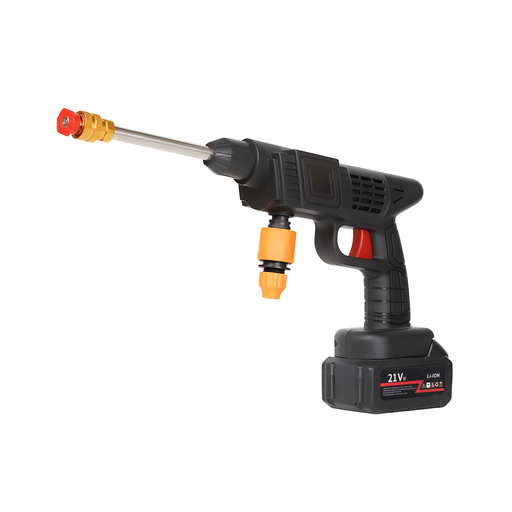
Why this product suits this profile: According to the product details, this compact machine weighs 2 kg and is designed for quick cleaning jobs around the car, windows, lawn or patio.
The stated 15-minute run time makes it clear what the machine is designed for. You won’t be expecting it to handle hours of continuous cleaning.
21 V, 5-metre hose, three spray modes, plus a foam container and charger according to the items included.
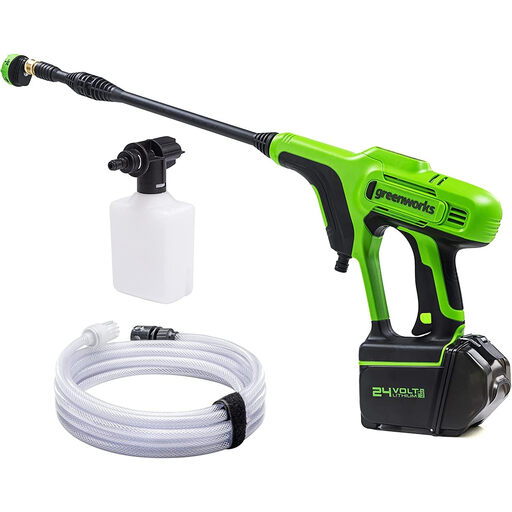
Why this product suits this profile: The technical specifications are clearly set out: 24 bar, 180 l/h, a 6-metre hose and a 5-in-1 nozzle. The battery and charger are not included, according to the product name.
The battery and charger are explicitly not included, so be sure to factor this in. This makes it easier to estimate the total system cost before you buy.
300 W motor, 5-in-1 nozzle, 6-metre hose and water intake from a bucket, water butt or pond containing clean water.
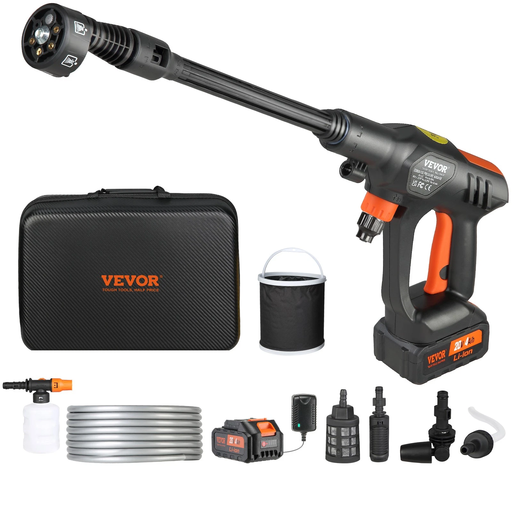
Why this product suits this profile: According to the product details, this machine offers 21 V, 250 W, 50 bar and 4 l/min. The accessories and extension wands are designed for mobile cleaning and watering tasks.
The safety lock reduces the risk of accidental operation. You should still check the connections, water source and battery before use.
50 bar maximum pressure according to the product details, a flow rate of 4 l/min and accessories for hard-to-reach areas.
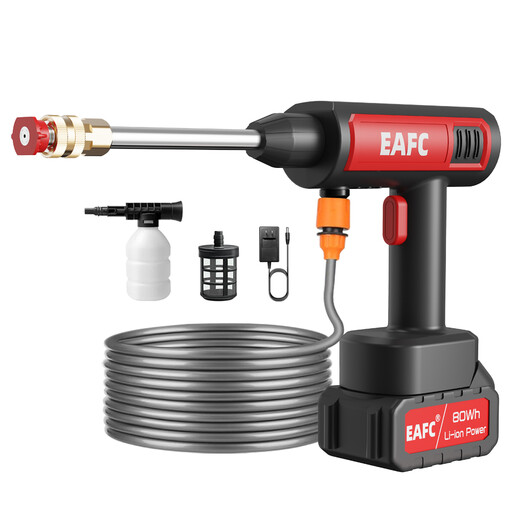
Why this product suits this profile: The set is designed for cars, bikes, motorbikes, balconies, windows, floors and garden jobs. It can also draw water from a bucket.
The product description explains how to bleed the system, straighten the hose and connect the plug correctly. These details can help you understand common starting and pressure problems.
Cordless design, water intake from a container and a foam bottle according to the product description.
We’ve put together a complete, regularly updated list of products that meet these strict selection criteria and fully comply with the safety regulations in force in the EU.
Many models are designed to draw water from a bucket, water butt or another clean container. The suction hose must be attached correctly and free of kinks. Depending on the machine, you may need to bleed the system before spraying for the first time. Always follow the instructions for your specific product.
Run time depends on battery capacity, pressure setting, nozzle and how you use the machine. Compact models are suitable for short jobs such as cleaning a bike or garden furniture, or rinsing a car. For larger areas, check whether a spare battery is available, how long it takes to charge and whether the battery system is compatible.
A cordless pressure washer can be suitable for pre-washing and rinsing a car. Keep a reasonable distance, use a wide spray setting and choose a suitable cleaning product. Don’t direct the water jet at electronics, seals, charging sockets or the engine bay.