
Lieferung heute & morgen

Qualitätsgarantie

Willkommens-Angebote freischalten: KOSTENLOSE Lieferung | Bis zu 80 % RABATT | Kostenlose 30-Tage-JoyPlus-Testphase
App herunterladen
Switching from manual to cordless pruning shears promises to make gardening significantly easier. Less physical strain and faster cuts are the main selling points. However, the market is flooded with models whose performance claims often don't hold up in practice. Before you make a decision, it's crucial to understand the common pitfalls that can lead to disappointment and unnecessary expense.
As your Joybuy Product Recommendation Officer, I have analysed the most frequent issues buyers encounter. This guide will help you distinguish marketing hype from real-world performance and make an informed choice.
Many tools look convincing at first glance but reveal their weaknesses only after you start using them. Pay close attention to these three points to avoid a bad buy.
To avoid the traps mentioned above, you should base your selection on objective technical features. The following three aspects are central to the performance and longevity of your electric cordless pruning shears.
The specified cutting capacity should always be viewed critically. For typical pruning of shrubs and roses, a reliable capacity of 20 to 25 mm is a good benchmark. For the occasional cutting of thicker branches, electric pruning shears for thick branches with up to 30 mm can be useful.
Pay attention to the blade material. Blades made of high-grade carbon steel (e.g., SK5 steel) stay sharp longer and are more durable. A non-stick coating (e.g., Teflon) reduces friction and prevents plant sap from sticking to the blade, which simplifies cleaning and improves cutting quality.
The performance of a cordless tool is determined by two values:
For longer jobs, having a second battery included or compatibility with a multi-brand battery platform (e.g., for tools you already own) is a significant advantage.
Today, a professional cordless pruning shears is often equipped with a brushless motor. Compared to traditional brushed motors, these offer several advantages:
Although tools with brushed motors may be cheaper to purchase, a brushless model is often the more economical choice in the long run.
Based on the criteria above, we have compiled a selection of tools for various needs.

Why This Fits Their Persona: Ideal for hobby gardeners who maintain larger gardens and don't want to be interrupted mid-task by a dead battery. The cutting capacity is sufficient for most shrubs and branches.
Sidesteps the "battery dead-end" by including two 3000mAh batteries, enabling continuous operation. The stated 25 mm cutting capacity is a realistic value for this class of device.
Complete package with two batteries and a charger. The high-grade steel blade ensures clean cuts and good durability.
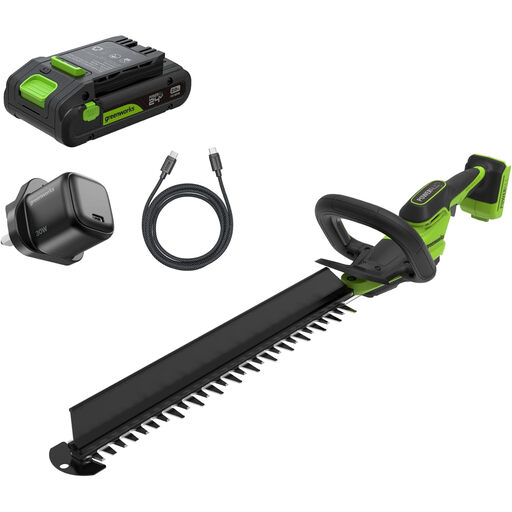
Why This Fits Their Persona: This device is a cordless hedge trimmer, specialised for fast and efficient trimming of hedges and larger shrubs. It's the right choice when large-area work is the priority.
The brushless motor ensures longevity and efficiency, bypassing the disadvantages of simple brushed motors. The 28 mm cutting capacity is robust and practical for a hedge trimmer.
Long 51 cm dual-action blade for rapid progress. The brushless motor delivers consistently high power, and the wrap-around handle allows for comfortable work in various positions.
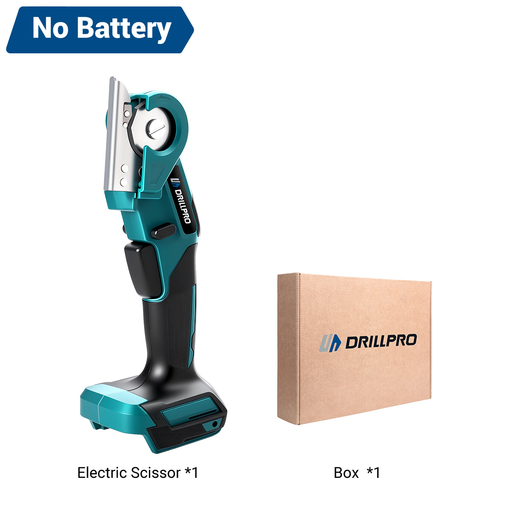
Why This Fits Their Persona: Perfect for users who already own Makita batteries and are looking for an extremely lightweight tool for precise but less power-intensive cuts, e.g., on flowers, thin shoots, or for crafting.
Solves the "battery dead-end" through compatibility with a widespread professional system. Its very low weight of under 1 kg effectively prevents the fatigue trap during delicate tasks.
Economical for existing Makita users. Extremely light and handy for fatigue-free work during repetitive, light cuts.
A cordless pruning shear is just one tool for garden care. For larger areas and hedges, a different device might be more suitable. We have compiled a selection of tools that meet strict selection criteria.
The runtime heavily depends on the battery capacity (Ah), the hardness of the wood, and the frequency of cuts. In practice, the runtime can vary from 30 minutes to several hours. For longer jobs, models with a capacity of at least 2.0 Ah and ideally a second battery for swapping are recommended.
That depends on the specific model. Most consumer-grade tools are designed for branches up to 25 mm in diameter. For thicker branches over 30 mm, a more powerful cordless lopper or a small cordless saw is the safer and more material-friendly choice.
Clean the blades after each use with a dry cloth to remove plant sap and dirt. This prevents rust and sticking. Occasionally apply a drop of machine oil to keep the mechanism running smoothly. If cutting performance declines, the blades can be sharpened or replaced, depending on the model.