
Lieferung heute & morgen

Qualitätsgarantie

Willkommens-Angebote freischalten: KOSTENLOSE Lieferung | Bis zu 80 % RABATT | Kostenlose 30-Tage-JoyPlus-Testphase
App herunterladen
A well-maintained vehicle finish is not just a matter of aesthetics, but also of value preservation. Fine scratches, swirl marks, and a dull finish can significantly detract from a car's overall appearance. A cordless random orbital polisher offers a flexible and effective solution to restore your paintwork to its former glory, without being tethered to a power cord.
As your Joybuy Product Recommendation Officer, my mission is to provide you with clear and objective guidance. This article highlights the essential features of a cordless polisher and presents a selection of models to help simplify your purchasing decision.
Before you decide on a model, you should consider a few technical aspects. These will help you find a machine that perfectly matches your needs, whether for occasional car care or for more demanding DIY projects.
Naturally, the most critical feature of a battery-powered polisher is its power source. Pay attention to the voltage (specified in Volts, V) and capacity (specified in Amp-hours, Ah). Higher voltage can indicate a more powerful motor, while higher capacity generally means a longer runtime per charge. Models sold as a car polisher kit with a spare battery and a fast charger offer the advantage of uninterrupted work.
A random orbital polisher is characterized by its oscillating, orbital motion. This technique generates less heat on the paint than a purely rotary machine and minimizes the risk of holograms. This makes it a suitable polisher for beginners.
Variable speed control (specified in RPM, revolutions per minute) is crucial for adapting the machine to different tasks:
The diameter of the backing plate determines the size of the work area. A diameter of 125 mm is a common standard that offers a good compromise between coverage on large panels (roof, hood) and maneuverability in narrower areas. Check which accessories are included. Kits with various polishing pads (e.g., for cutting, polishing, finishing) and perhaps even sandpaper significantly expand the car polishing machine's range of applications.
Here is a selection of models that are compelling for various user profiles based on their technical specifications and feature sets.
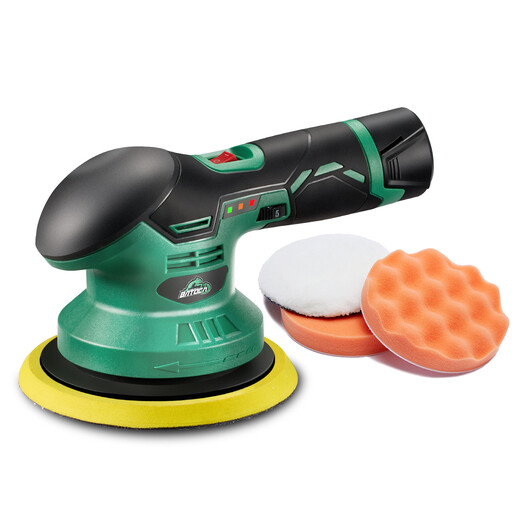
Why it stands out: Weighing only about 1.36 kg (3 lbs), this model is exceptionally lightweight and easy to handle. The combination of low weight and a 5 mm orbital throw makes operation straightforward and safe, especially for newcomers to machine paint care.
Advantages:
Who is it for? This model is an excellent choice for car enthusiasts and beginners looking for a lightweight, easy-to-use cordless polisher for the regular maintenance of their vehicle.
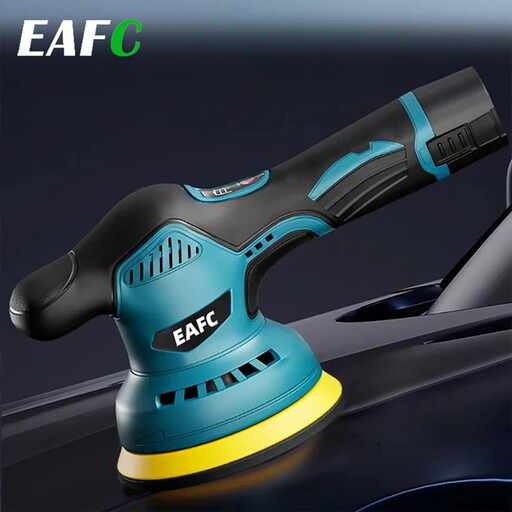
Why it stands out: This device combines a powerful motor with a wide speed range and a pronounced 9 mm throw. This combination enables efficient material removal and high-quality surface finishing, not only for machine-polishing paint but also for other DIY tasks.
Advantages:
Who is it for? Users seeking a versatile and powerful car polishing machine for vehicle detailing and various projects around the house will find this to be a suitable tool.
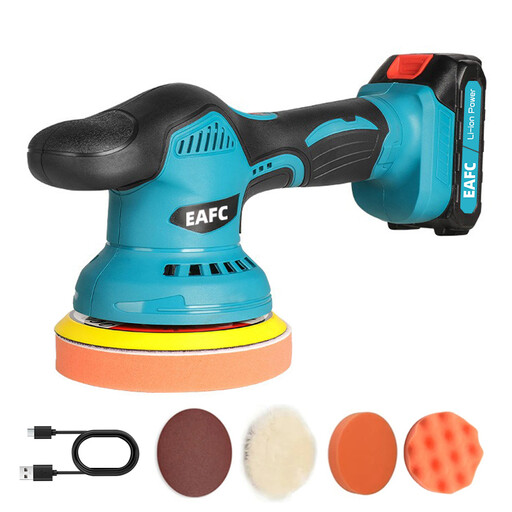
Why it stands out: With a battery voltage of 21V and a capacity of 7500mAh (composed of 5x 1500mAh cells), this model is designed for endurance-focused performance. The wide, eight-stage speed control and comprehensive accessory package make it a versatile all-rounder.
Advantages:
Who is it for? This model is aimed at users who prioritize maximum battery runtime and a versatile car polisher kit to handle a wide range of polishing and even light sanding jobs.
The selection presented here offers a glimpse into the available models. If the perfect device for your specific needs isn't among them, there are numerous other alternatives to discover. Every project has different requirements, whether it's a more compact machine for hard-to-reach areas or a model with specialized accessories.
Browse our full collection of rechargeable battery car accessories to find the perfect model for your needs.
A rotary polisher only spins the polishing pad on a single central axis. This generates significant friction and heat, which can lead to paint damage (holograms) if used improperly. A random orbital polisher, on the other hand, not only rotates but also oscillates in an orbital path. This eccentric motion distributes pressure and heat more evenly, making it much safer to use and qualifying it as the ideal polisher for beginners.
The optimal speed depends on the task and the product being used (polish, wax). As a general guideline:
Yes, many polishers, especially those sold as a kit with the appropriate accessories, can also be used for light sanding tasks. By attaching a suitable sanding backing plate and sandpaper, the machine can be used, for example, to sand down wood surfaces or remove old paint from small areas. This increases the tool's versatility beyond just vehicle care.