
Lieferung heute & morgen

Qualitätsgarantie

Willkommens-Angebote freischalten: KOSTENLOSE Lieferung | Bis zu 80 % RABATT | Kostenlose 30-Tage-JoyPlus-Testphase
App herunterladen
By a Joybuy Product Recommendation Officer, August 30, 2026
A cordless robotic pool cleaner promises to make pool maintenance significantly easier: no tangled cords, no complex installation with your filter system, and fully automated cleaning. However, the market is flooded with devices whose real-world performance often falls short of their marketing claims. Before making a purchase, it's crucial to understand the common pitfalls that can lead to disappointment and unnecessary expense.
This guide will show you what to look for to find a reliable cordless pool robot that truly meets your needs.
Many devices look impressive at first glance but reveal their weaknesses only after daily use. Pay close attention to these three points:
To avoid these traps, you should focus on the objective technical specifications that determine a device's actual performance.
The raw battery capacity (specified in mAh) is only half the story. The crucial factor is the interplay between battery size, the robot's weight, and the motor's efficiency. A lighter robot with an energy-efficient motor can achieve a longer and more effective cleaning performance with a smaller battery than a heavy, power-hungry model with a large one. Pay attention to the advertised runtime and compare it to the recommended pool size.
Suction power, often specified in cubic metres per hour (m?/h), determines how forcefully the robot can pick up dirt, sand, and leaves from the floor. High suction is especially important for wall cleaning, as it helps the device adhere to the surface. The filtration system is just as critical. A two-stage system with a coarse pre-filter for leaves and a fine filter (specified in microns) for small particles like sand and algae ensures clear water and prevents the filter from clogging too quickly.
Basic models often move randomly, causing them to miss spots. More advanced devices use gyroscope navigation to follow systematic paths, ensuring complete coverage of the floor and walls. Check if the automatic pool vacuum offers different cleaning modes, such as "Floor Only," "Wall Only," or a combined mode. This allows for targeted cleaning as needed and conserves battery power.
Here are some models that represent a smart choice for different user profiles and pool types, based on their technical specifications.
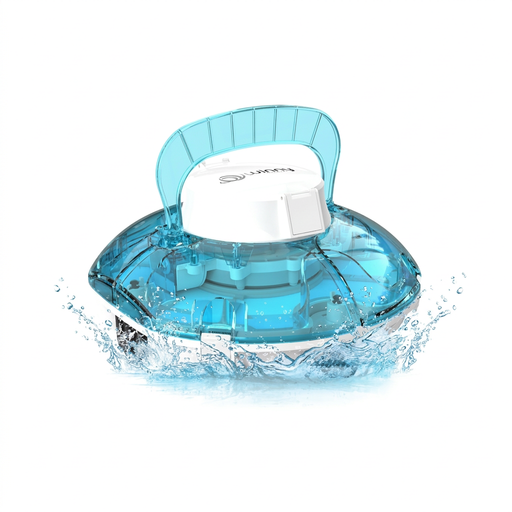
Why This Fits Their Persona: This model is ideal for beginners or owners of smaller above-ground pools who are looking for a straightforward and cost-effective solution for floor cleaning. It is lightweight, easy to handle, and requires no complex setup.
It is explicitly designed for flat floors and makes no promises about wall cleaning. This avoids the disappointment of poor climbing ability. Its operation is streamlined to the essentials, without a failure-prone app.
Auto-Parking System: The robot moves to the pool's edge at the end of its cycle, making it easy to retrieve. Dual Filtration: Reliably captures both coarse and fine debris.
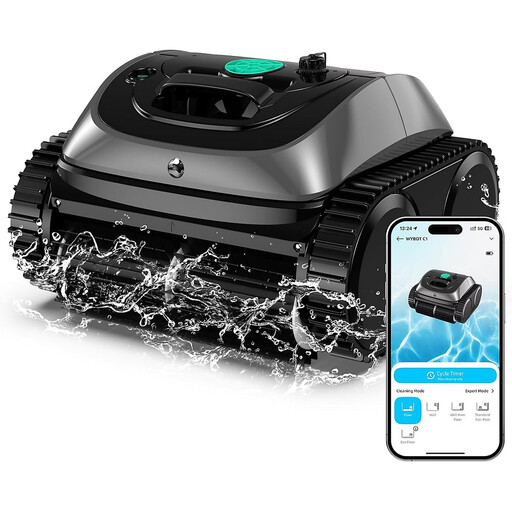
Why This Fits Their Persona: For owners of medium-sized in-ground or above-ground pools who want comprehensive cleaning of the floor, walls, and waterline. The app control offers added flexibility for targeted cleaning cycles.
The combination of 11.5 m?/h suction power and intelligent cleaning modes ensures reliable wall adhesion. The app allows for the selection of specific modes, thus bypassing the problem of useless software.
4 Cleaning Modes: Allows for targeted cleaning of the floor, walls, or the entire pool. Long Runtime: Up to 150 minutes of cleaning time is sufficient for most medium-sized pools.
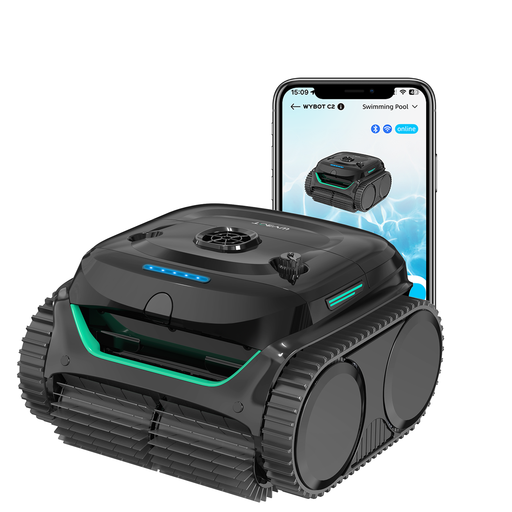
Why This Fits Their Persona: For owners of large pools (up to 200 m?) who value maximum autonomy, advanced technology, and a deep clean. The scheduling function in the app allows for completely independent pool maintenance.
The runtime of up to 180 minutes in Eco mode is designed for large areas. With path customisation and weekly scheduling, the app is a genuine control tool. Three brushless motors and gyro navigation secure its wall-cleaning performance.
Dual-Layer Filtration: A 180?m pre-filter and a 10?m HEPA filter remove even the finest particles. Comprehensive App Control: Offers mode selection, path customisation, and scheduling.
An automatic pool cleaner is just one part of the perfect pool setup. Explore our full range of accessories that help you keep your swimming pool clean and inviting.
The lifespan of a lithium-ion battery in a robotic pool cleaner is measured in charge cycles and typically lasts between 3 to 5 years, depending on frequency of use and proper storage. To maximise its lifespan, the robot should be stored in a cool, dry place after use and not left permanently in the water. A battery replacement is possible for most models but should be performed by a professional or according to the manufacturer's instructions.
Most modern cordless pool robots are suitable for common surfaces like vinyl (liner), tile, concrete, or fibreglass. The shape of the pool is more critical. Models designed for flat floors are not suitable for pools with steep slopes or complex steps. Devices designed for wall cleaning typically require a relatively sharp right-angle transition between the floor and wall to climb effectively. Always check the manufacturer's specifications for compatibility with your pool's shape and surface.
Maintenance is minimal compared to manual cleaning. After each cleaning cycle, the filter basket or cartridge should be removed and rinsed with a garden hose. This only takes a few minutes. Additionally, the brushes and wheels should be regularly checked for trapped debris or hair. Storing the device in a dry place out of direct sunlight protects the plastic components and electronics, contributing to its longevity.