
Lieferung heute & morgen

Qualitätsgarantie

Willkommens-Angebote freischalten: KOSTENLOSE Lieferung | Bis zu 80 % RABATT | Kostenlose 30-Tage-JoyPlus-Testphase
App herunterladen
A cordless rotary tool promises versatility for countless projects—from model making and engraving jewellery to minor household repairs. But the market is flooded with kits that promise more than they deliver. Many DIY enthusiasts and creators invest in a comprehensive kit, only to find it's unsuitable for precision work or loses power after a short time.
This guide will help you identify the typical pitfalls and make an informed decision. We focus on the technical features that truly matter for long-lasting, precise performance.
Before you decide on a model, you should be aware of the most common problems that often only become apparent after the purchase.
To avoid a bad purchase, you should focus on a few, but crucial, technical parameters. These determine the performance, durability, and usability of your tool.
Portability is the main advantage of a cordless tool. Therefore, look for a modern lithium-ion battery that offers consistent power output without a memory effect. A key factor for convenience is the charging port. A USB-C port is the standard today. It allows for fast charging with the same cable you likely already use for your smartphone or other devices, making you independent of proprietary power adapters.
Different materials and tasks require different speeds. A good cordless rotary tool should offer several adjustable speed settings. Low speeds (approx. 5,000 RPM) are suitable for polishing plastics, while high speeds (15,000 RPM and more) are required for grinding metal. Some models feature a brushless motor. According to manufacturers, these motors are often quieter, generate less heat, and have a longer lifespan than conventional brushed motors.
A good cordless rotary tool kit should not only include a solid starter set of accessories like sanding bands, cutting discs, and engraving bits but also be compatible with common standards. This gives you the freedom to later buy specialised accessories for model making or a detailed engraving tool kit. Check the collet size; a common diameter is 3/32 inch (approx. 2.3 mm), which significantly expands the selection of third-party accessories, often offered as a Dremel alternative.
Here are some recommendations tailored to different needs and use cases.
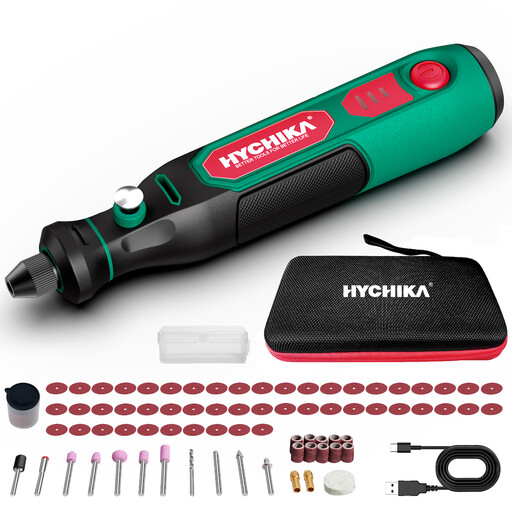
Why This Fits Their Persona: This kit is ideal for DIYers and creators looking for a versatile tool for occasional projects without a large budget. With 77 accessories, it covers a wide range of applications and allows you to get started right away.
It bypasses the trap of outdated technology with a modern USB-C charging port. The three optimised speed settings are more intuitive for beginners than an overly complex dial and cover the most common tasks.
Comprehensive accessory package for immediate use; tool-free bit changes for easy handling.
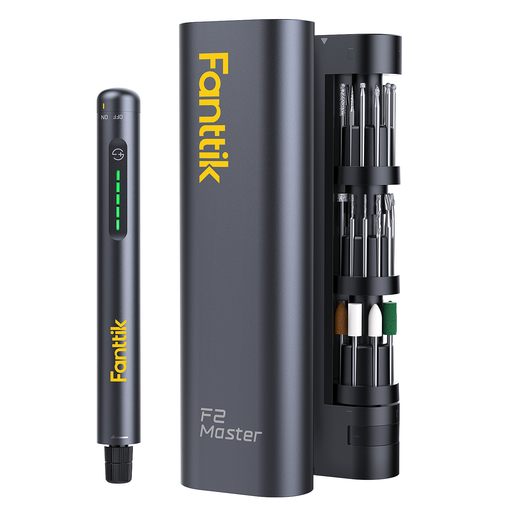
Why This Fits Their Persona: This kit is aimed at users who value precision, durability, and a premium feel. It's ideal for model making, post-processing 3D prints, or other delicate tasks where control and low weight are crucial.
It directly addresses the pitfalls of a clumsy design and inferior components. The low weight of approx. 100g and the aluminium body prevent fatigue. The brushless motor ensures quieter, low-vibration operation.
Extremely lightweight and compact design for maximum control; organised magnetic accessory hub for quick access.
We've compiled a complete, up-to-date list of products that fully meet these strict selection criteria and safety standards.
Battery life heavily depends on the selected speed and the material being worked on. For light tasks like polishing, a battery can last over an hour, while demanding jobs like cutting metal can reduce the runtime to 15–20 minutes. Models with USB-C charging offer the advantage of being usable while charging (depending on the manufacturer) or can be easily powered by a power bank.
Compatibility depends on the tool's collet. Many manufacturers offering a Dremel alternative use standard sizes. A common size is 2.3 mm (3/32 inch). Before purchasing, check the specifications of both the tool and the desired accessory to ensure they match. Some kits also include adapters for different shank diameters.
A good starter kit should cover the basics for the three most common tasks: