
Lieferung heute & morgen

Qualitätsgarantie

Willkommens-Angebote freischalten: KOSTENLOSE Lieferung | Bis zu 80 % RABATT | Kostenlose 30-Tage-JoyPlus-Testphase
App herunterladen
From assembling new furniture and handling general household repairs to changing seasonal tires – a reliable cordless screwdriver is an indispensable tool. However, the market is vast, and technical specifications can quickly become overwhelming. Which type of device is right for your needs? Do you require high torque, or is a precise, lightweight tool a better fit?
This guide is designed to bring you clarity. We'll introduce different types of cordless screwdrivers, explain the most important performance features, and present a selection of models for various applications. Our goal is to provide you with a solid basis for your decision, helping you find the perfect tool for your projects.
To select the right device, it's helpful to understand a few basic criteria. These three points will help you define your requirements and compare models more effectively.
Not all cordless screwdrivers are created equal. The three most common types are designed for specific tasks:
Two metrics are crucial for the performance of a cordless screwdriver:
Pay attention to what's included in the box. A cordless screwdriver kit that comes with a battery and charger, as well as a case and a set of bits, often offers great value for money and ensures you're ready to go right out of the box.
Another key aspect is the battery system. Many manufacturers offer cross-platform batteries that are compatible with a wide range of other tools from the same brand or even cross-brand alliances. This saves money and space in the long run, as you only need one battery system for many different devices.
Here is a selection of models that cater to different needs—from the versatile helper for around the house to the powerhouse for heavy-duty tasks.

[Free Shipping] Bosch EasyDrill 18V-38 Set Cordless Drill Driver
Why this model stands out: The Bosch EasyDrill 18V-38 is a classic cordless drill/driver that excels in versatility and user-friendliness. As part of the 18V POWER FOR ALL ALLIANCE, its battery is compatible with numerous other tools from various brands.
Advantages:
Who it's for: Ideal for DIY enthusiasts looking for a reliable and flexible tool for a wide range of household tasks, from furniture assembly to drilling in wood, metal, and plastic.
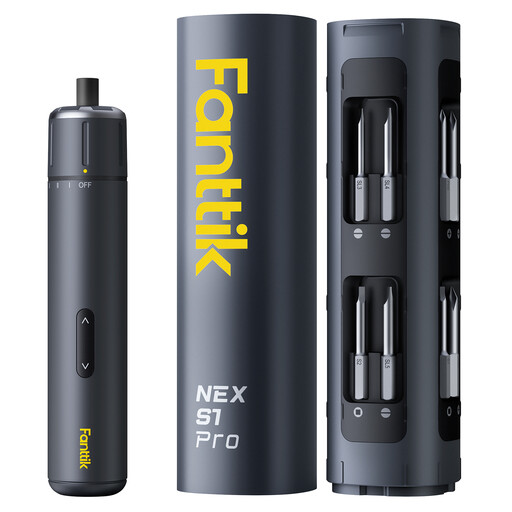
Fanttik S1 Pro Electric Screwdriver, Power Screwdriver with16 S2 Steel Bits
Why this model stands out: The Fanttik S1 Pro is a compact and stylish electric screwdriver designed for precision. With its magnetic aluminium case and 16 included S2 steel bits, it's a practical tool for delicate assembly jobs.
Advantages:
Who it's for: Perfect for tech enthusiasts, PC builders, and anyone who regularly assembles furniture or performs repairs on electronic devices.
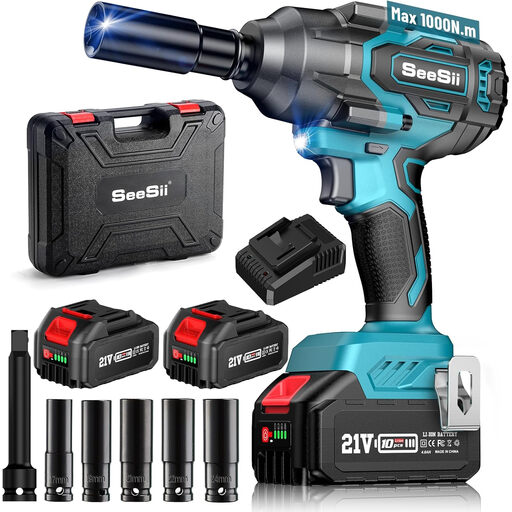
SEESII Impact Wrench 1000 N.m (740 Ft-lbs) 2400 RPM 1/2 Battery Impact Wrench
Why this model stands out: This impact wrench from SEESII is a pure powerhouse. With a loosening torque of up to 1000 Nm, it is designed for the most demanding tasks where conventional screwdrivers reach their limits.
Advantages:
Who it's for: Users who regularly perform heavy-duty fastening jobs, such as changing car tires on cars and trucks, scaffolding assembly, or working on agricultural machinery.
If the right model for your specific project wasn't included, you're sure to find the right tool in our broader selection. Discover more models and kits in our Cordless Screwdrivers category.
1. What does torque mean on a cordless screwdriver? Torque (in Nm) is the force with which the screwdriver turns a screw. Higher torque allows for driving larger screws into harder materials. On cordless drill/drivers, the torque can often be adjusted in steps to prevent over-tightening small screws or damaging screw heads.
2. Can I drill into concrete with a cordless drill/driver? A standard cordless drill/driver is designed for drilling in wood, metal, and plastic. For masonry or concrete, you need a device with a selectable hammer function, known as a cordless hammer drill/driver, or a rotary hammer for more intensive work.
3. How important is the voltage (e.g., 18V)? The voltage (V) is a measure of the battery's electrical power and affects the device's strength and endurance. While 12V tools are often more compact and lightweight, the 18V class offers an established standard with an excellent balance of power, runtime, and weight, making it ideal for most DIY projects.
Sincerely,