
Lieferung heute & morgen

Qualitätsgarantie

Willkommens-Angebote freischalten: KOSTENLOSE Lieferung | Bis zu 80 % RABATT | Kostenlose 30-Tage-JoyPlus-Testphase
App herunterladen
Manually driving countless screws during furniture assembly or performing delicate work on sensitive electronics can be time-consuming and tedious. The right cordless screwdriver set simplifies these tasks, delivering the necessary power and precision without straining your wrists or damaging components.
This article serves as your guide. It outlines objective criteria for selecting the right model and presents a curated selection of tools designed for different applications—from general DIY tasks to specialised electronics repair.
Selecting the right tool depends on your planned projects. Three key features will help you evaluate a model's functionality and make an informed decision.
Torque, measured in Newton-metres (N.m), describes the rotational force of the device. An electric screwdriver with adjustable torque is crucial for versatile applications:
A comprehensive bit set is the foundation of flexibility. Pay attention to the quality and variety of the included screwdriver bits. Bits made from S2 steel are known for being durable and resilient. Magnetic bit holders and tips make it significantly easier to position screws, especially in hard-to-reach places. A good electronics repair tool includes a wide range of small Torx, Pentalobe, and Phillips bits.
A cordless device offers maximum freedom of movement. Other features enhance user comfort:
Based on the criteria above, we have compiled a selection of models that stand out for their specific features and are suited for various use cases.
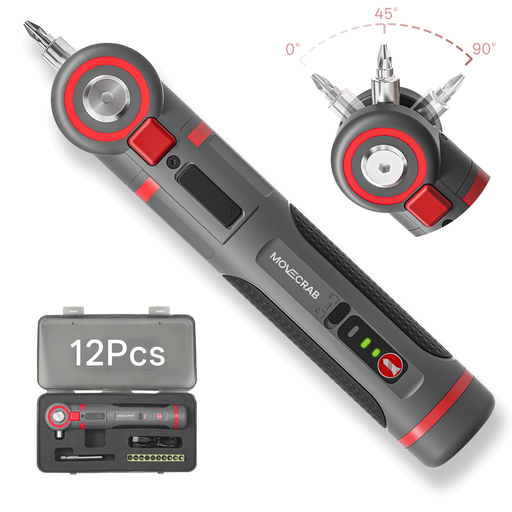
Why It Stands Out: This model is distinguished by its adjustable head, which allows you to work at 0°, 45°, and 90° angles. This flexibility makes it a practical tool for hard-to-reach spots, such as inside furniture or technical equipment.
Pros:
Who Is It For?: DIY enthusiasts looking for a versatile and flexible tool for general repairs and furniture assembly, where work at awkward angles is common.
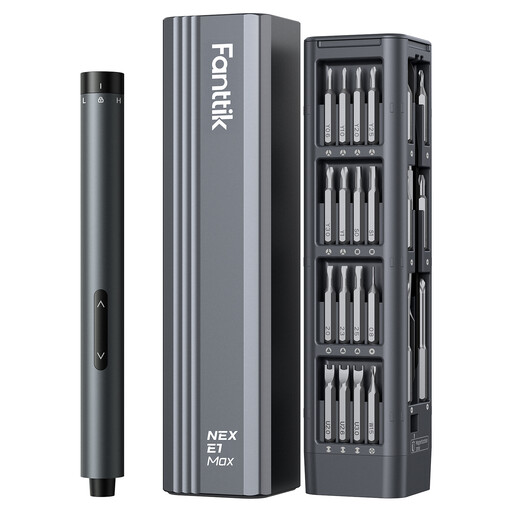
Why It Stands Out: The Fanttik E1 Max is designed as an electric precision screwdriver. With its very low torque and extensive bit set, it is specifically tailored to the demands of delicate electronics work. The magnetic storage case highlights its focus on organisation and ease of use.
Pros:
Who Is It For?: Tech enthusiasts, hobbyists, and anyone who regularly performs electronics repair on devices like smartphones, laptops, cameras, or drones and needs a specialised electronics repair tool.
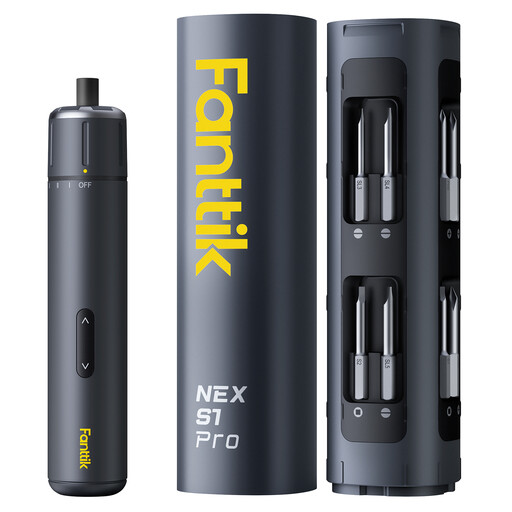
Why It Stands Out: This model positions itself as a powerful all-rounder. With significantly higher torque than precision tools, the S1 Pro is suitable for more demanding assembly jobs that require more force, such as building gaming PCs or larger pieces of furniture.
Pros:
Who Is It For?: Users who need a powerful yet compact tool for regular assembly tasks, especially for putting together furniture, installing household appliances, or building desktop computers.
The models presented here cover specific use cases. If you haven't found the right solution for your needs, you can find a broader selection of tools for different requirements.
Discover more models in our Screwdriver Set category.
What should you look for in a cordless screwdriver for PC building? For PC building, a model with low, adjustable torque (approx. 0.2–1.5 N.m) is recommended to avoid damaging sensitive components like motherboards. Magnetic bits are very helpful for preventing screw loss in tight cases. A set with a good selection of Phillips (PH0, PH1) and possibly small Torx bits is also important.
How much torque does an electric screwdriver need for furniture assembly? For most furniture made of particleboard or softwood, a torque between 3 N.m and 5 N.m is sufficient. This force ensures the screws are tight without splitting the material or stripping the screw heads. Models with adjustable torque offer the greatest safety here.
Are mini cordless screwdrivers also suitable for more demanding tasks? It depends on the model. There are two main types: ultra-compact precision screwdrivers with very low torque for electronics, and slightly larger but still handy "power" models. The latter, like the Fanttik S1 Pro, often provide enough power (4–6 N.m) for general DIY jobs and furniture assembly, striking a good balance between compactness and performance.