
Lieferung heute & morgen

Qualitätsgarantie

Willkommens-Angebote freischalten: KOSTENLOSE Lieferung | Bis zu 80 % RABATT | Kostenlose 30-Tage-JoyPlus-Testphase
App herunterladen
A cordless table lamp offers true freedom: light exactly where you need it, without being tethered to the nearest outlet. Whether as flexible ambient lighting in the living room, a bedside lamp, or out on the balcony, a battery-powered table lamp is a modern and practical solution. However, the market is flooded with models whose actual performance often falls short of their advertising claims. Before you make a decision, it's crucial to understand the most common pitfalls to avoid a poor investment.
This guide will help you separate the wheat from the chaff and find a rechargeable table lamp that truly meets your needs.
The allure of cord-free convenience often leads to hasty purchases. Watch out for these three typical problems to avoid disappointment:
To make the right choice, focus on a few crucial technical parameters. These will determine the functionality and longevity of your new lamp.
Battery capacity is measured in milliampere-hours (mAh). A higher value generally means a longer runtime. However, the efficiency of the built-in LEDs and electronics is even more critical. Look for product descriptions that specify the runtime for different brightness levels. A good rechargeable table lamp should last at least 8–10 hours at a medium, usable brightness.
Modern LED technology offers more than just on and off. A good dimmable LED table lamp is a must-have for versatile use.
Since a cordless table lamp is frequently moved, stability is key. A metal or weighted base ensures it stands securely. Look for solid build quality and high-grade materials that can withstand regular use.
Instead of presenting an overwhelming list, we have selected models that are tailored to specific use cases and successfully avoid the pitfalls mentioned above.

Why it's a great fit: Ideal for anyone who needs an ultra-portable and focused light source. It's perfect as a reading light in bed, on a train, or on a plane without disturbing others. The clamp function makes it incredibly versatile.
The battery life of up to 8 hours is realistic for its specific, focused use case, avoiding the problem of exaggerated claims meant for continuous room lighting.
Extremely lightweight (37g) and compact; it can even be folded and used as a bookmark. USB charging ensures you can power it up anywhere.

Why it's a great fit: A sleek, modern metal design that blends seamlessly into various interior styles. It's versatile enough for a desk, bedside table, or as an accent light in your living area.
The all-metal construction provides the necessary stability and durability, sidestepping the trap of cheap, wobbly plastic models.
Features a practical 3-step touch dimmer and produces a pleasant, warm white light at 3000 K. It recharges easily via USB.
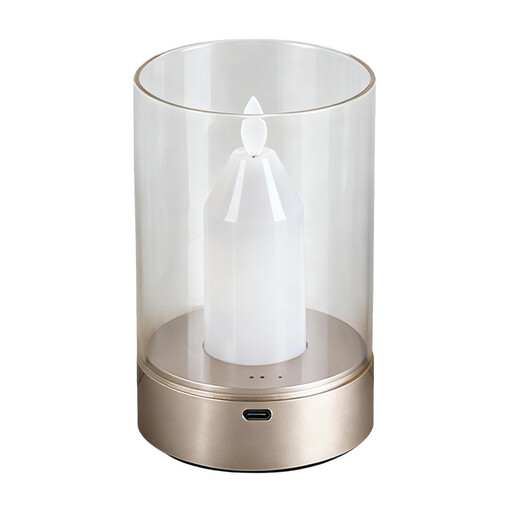
Why it's a great fit: Creates a safe and realistic candlelight atmosphere without the fire hazard. Ideal for cosy evenings, as a decorative piece, or for households with children and pets.
This model features a modern USB-C port and stepless dimming. This directly addresses the problems of outdated charging technology and impractical brightness levels.
The flickering LED flame effect creates a particularly authentic atmosphere. The 1800 mAh battery provides a solid runtime of 8 to 10 hours.
We have compiled a complete, up-to-date list of products that fully meet these strict selection criteria and relevant safety standards.
How long does the battery of an average LED table lamp last? The runtime varies greatly and depends on the battery capacity (mAh) and the selected brightness level. It can range from 5 to over 40 hours. Look for manufacturer specifications that detail the runtime at different brightness levels. A good all-rounder should offer a runtime of 8 to 12 hours at medium brightness.
Can you replace the battery in a table lamp yourself? In most cases, the batteries are built-in and not designed to be user-replaceable. This enhances product safety and allows for a more compact design. A modern lithium-ion battery is designed for several hundred charge cycles, which corresponds to a lifespan of several years with normal use.
What should I look for in a charging port? A USB-C port is preferable to the older Micro-USB standard. It generally allows for faster charging, and the reversible connector makes it much easier to handle day-to-day.