
Lieferung heute & morgen

Qualitätsgarantie

Willkommens-Angebote freischalten: KOSTENLOSE Lieferung | Bis zu 80 % RABATT | Kostenlose 30-Tage-JoyPlus-Testphase
App herunterladen
Choosing the right tool set can be overwhelming. Hundreds of pieces, shiny finishes, and grandiose promises make the decision difficult. But not every set that looks comprehensive is useful in practice. As your Joybuy Product Recommendation Officer, I'll help you recognise the common pitfalls and make an informed decision based on facts, not marketing hype.
Many buyers invest in large sets, only to find that the tools become unusable after a short time. Here are the most common problems you should avoid:
To avoid a bad purchase, you should focus on three core parameters that determine the longevity and functionality of your tool set.
The material composition is the most important indicator of a tool's quality. Look for the Chrome Vanadium Steel (Cr-V) designation. This alloy is heat-treated to achieve high hardness and toughness. The result:
Simple carbon steel, often found in very inexpensive sets, does not offer these properties and quickly leads to frustration.
The contents of the set must match your use case. A universal DIYer set has different requirements than a specialised mechanic's tool set.
The quality of a ratchet in a ratchet wrench set is often overlooked. A crucial feature is the number of teeth in the mechanism. A ratchet with 72 teeth has a swing arc of only 5 degrees. In comparison, a 48-tooth ratchet requires 7.5 degrees. This small difference is critical in tight engine bays or behind panels, as it allows you to work with very little room to move.
Here are some recommendations tailored to different user profiles and the quality criteria mentioned above.
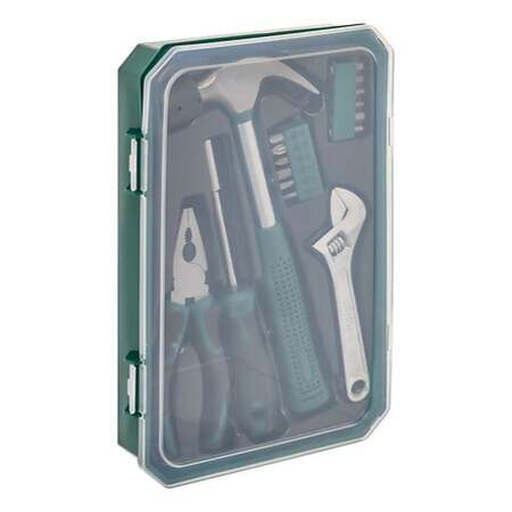
Why this set is a good fit: Ideal for those who need a basic kit for occasional household repairs—from assembling furniture to hanging pictures. It's compact and contains the most essential tools without unnecessary filler.
This set resists the "more is better" myth. It focuses on 16 essential, functional steel parts designed for everyday tasks, rather than dazzling with useless filler pieces.
A compact case and a thoughtful selection of tools (hammer, pliers, adjustable wrench, bit set) provide high functionality in a small footprint.
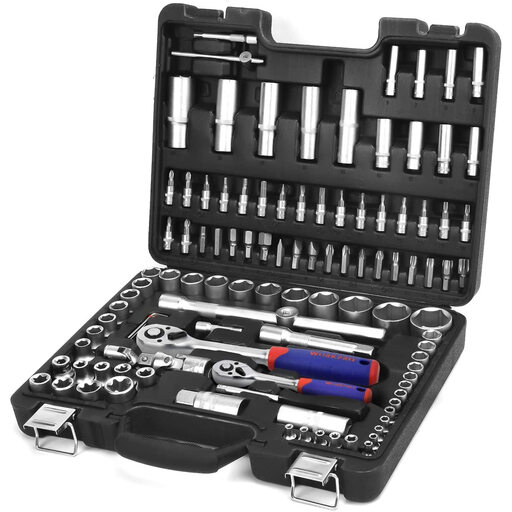
Why this set is a good fit: A solid foundation for anyone who regularly works on their car, motorcycle, or machinery. It offers comprehensive coverage of the most common metric sizes for repair and maintenance tasks.
This set is made of Chrome Vanadium steel and comes in a sturdy plastic case where every part has its designated spot. This prevents material fatigue and disorganisation.
The combination of 1/4" and 1/2" drives and 72-tooth ratchets allows for both delicate and high-torque jobs. Spark plug sockets and extensions complete the package for automotive work.
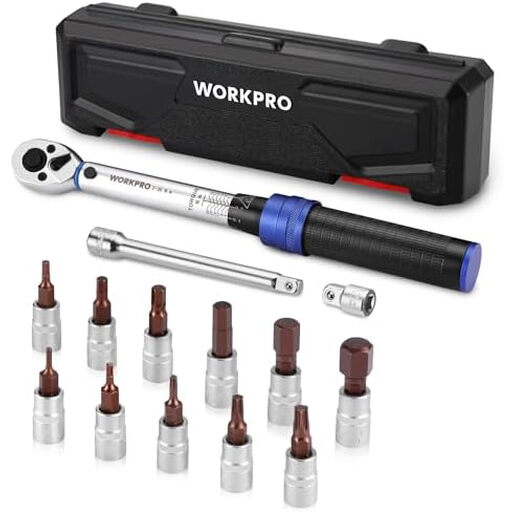
Why this set is a good fit: Indispensable for maintaining modern bicycles (especially those with carbon parts) and motorcycles, where precise tightening torque is critical for safety. This set is specifically designed for precise, torque-controlled assemblies.
It prevents one of the most costly consequences of using the wrong tool: damage from over-tightening. The torque function protects sensitive components from cracks or deformation.
Adjustable torque range of 2-26 N·m with an accuracy of ±3% (according to the manufacturer). The audible and tactile "click" signal upon reaching the target torque ensures safe application.
There are specialised kits available, particularly for bicycle maintenance. If you are specifically looking for a solution for your bike, you can find a suitable selection here.
Look for the Chrome Vanadium Steel (Cr-V) label. This material is heat-treated and offers the necessary hardness and toughness to remain dimensionally stable and resist wear even under high stress. An additional chrome plating protects against corrosion.
A good tool case is characterised by sturdy hinges and robust, easy-to-use latches. Inside, all tools should fit snugly in their holders and not fall out during transport. Clear labelling of socket and bit sizes makes organisation much easier.
A torque wrench is required whenever bolts must be tightened to a precise torque specified by the manufacturer. This is the case for safety-critical components on a car (e.g., lug nuts, cylinder head bolts) and bicycle (e.g., handlebars, seat post, especially with carbon components). Incorrect torque can lead to material failure.