
Lieferung heute & morgen

Qualitätsgarantie

Willkommens-Angebote freischalten: KOSTENLOSE Lieferung | Bis zu 80 % RABATT | Kostenlose 30-Tage-JoyPlus-Testphase
App herunterladen
Cordless devices make many tasks around the home, garden, car and DIY projects much easier. However, a battery alone doesn't guarantee a practical solution. What really matters is battery capacity, charging method, accessories, ergonomics, and suitability for the intended use.
As a Joybuy Product Recommendation Officer, I rank the most important product data according to its real-world usefulness. This helps you separate marketing claims from verifiable features, and avoid unnecessary, costly mistakes.
A figure like 5,000 mAh sounds impressive at first. However, actual runtime depends just as much on motor power, speed, load and battery voltage. A tool with two batteries can be more practical for longer jobs than a model with a single larger battery, provided you can swap them without a long interruption.
So, look out for:
A comprehensive DIY tool set may include many attachments, but that doesn't automatically make it suitable for every task. A 3.6-volt multi-function tool, for example, is designed for engraving, light sanding or small repairs. For drilling into hard materials, you'll need a proper cordless drill set with sufficient torque.
Weight, grip position, noise levels and safety features all affect daily use. For garden tools, cutting length, tooth spacing and safe battery handling are also important. For car care, controlled speed matters just as much as an ergonomic handle, so you can guide the tool smoothly.
First, check whether a USB-C charger or a proprietary charger is included. USB-C can be convenient around the home, but the charging adapter isn't always part of the package. The charging time should also suit your usage: for occasional tasks, a single battery is often enough; for longer sessions, swappable batteries make sense.
With cordless tools for home, garden and car, you should also pay attention to the stated voltage. 3.6-volt devices are typically compact and intended for light work. 16- or 24-volt systems generally offer more power for drilling, cutting or gardening tasks. However, voltage alone is not a complete measure of performance.
For a cordless hedge trimmer, cutting length, tooth spacing and strokes per minute are important comparison values. A tooth spacing of 28 mm indicates the maximum branch thickness the tool is designed for, according to the product specification. Actual suitability also depends on the type of wood, the condition of the hedge and how you use it.
For a cordless polisher, the speed range, orbit stroke and polishing pad size are relevant. A larger pad covers more area, but can be less manoeuvrable in tight bodywork areas. An adjustable speed allows you to adapt to the material and work stage, but it doesn't replace proper polishing technique.
For tools that come into contact with water or a damp environment, pay attention to the stated protection rating. The marking IPX7 means, according to the IP classification, protection against temporary immersion under specified test conditions. It does not mean the tool is suitable for every wet application without restriction.
Shear blades should be cleaned after use and maintained according to the manufacturer's instructions. For power tools, check ventilation openings, battery contacts and accessories for dirt. Before cleaning, changing attachments or performing maintenance, the battery must be removed if the instruction manual says so.
The following selection groups specific tools by typical usage scenarios. The information is based on the respective product descriptions.
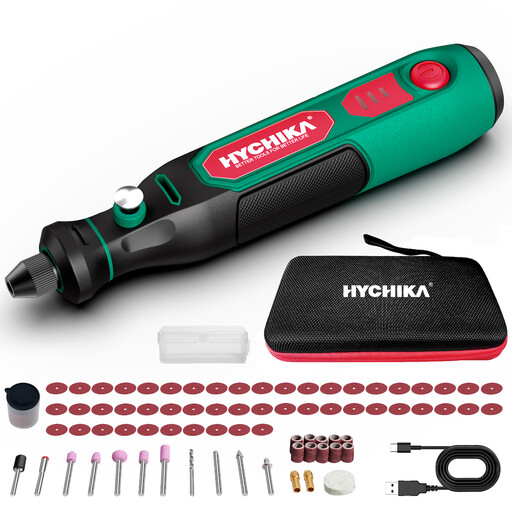
Why this product fits the profile: This compact tool is aimed at households and DIY beginners who want to cover drilling, sanding, polishing or engraving with one handy device.
The limitations are clearer thanks to the 3.6-volt drive, making it easier to judge than vague multi-function claims. It's designed for lighter tasks, not heavy drilling work.
77-piece accessory set, three speed settings, 250 g weight and USB-C charging cable according to the product description.
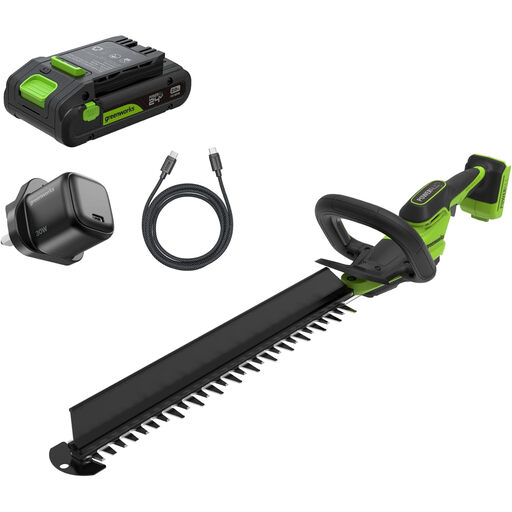
Why this product fits the profile: Garden owners get defined cutting data and a battery system that, according to the description, is compatible with other Greenworks 24V tools.
The advertised performance is backed up by concrete figures: 51 cm dual blade, 28 mm tooth spacing and 4,000 strokes per minute. The stated runtime is up to 25 minutes.
Brushless motor, 2.0 Ah battery, USB-C charger and wraparound three-point handle according to the product data.

Why this product fits the profile: This tool is aimed at car owners who regularly work on vehicle surfaces, boats or larger painted areas.
Instead of a single battery figure, two 5 Ah batteries, a charging time of around 2.5 hours and six speed settings are specified. Actual runtime depends on load and setting.
8 mm orbit stroke, 125 mm polishing pad, LCD display and soft start according to the product description.
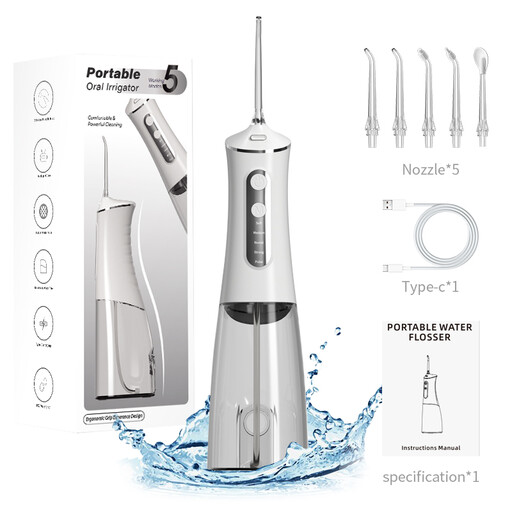
Why this product fits the profile: For cordless dental care at home or on the go, this device offers a 350 ml water tank and several adjustable pressure settings.
The pressure control is specified in five levels. This allows users to adapt the operation to their personal routine, without claiming any unsubstantiated medical effect.
1,500 mAh battery, Type-C charging, 350 ml tank and IPX7 protection rating according to the product information.
We've put together a complete, regularly updated list of products that fully meet these strict selection criteria and the safety regulations in force in the EU.
The lifespan depends on charge cycles, temperature, storage and load. Keep batteries dry and avoid storing them permanently fully discharged. For longer periods of non-use, follow the manufacturer's instructions on storage and charge level.
The ongoing costs mainly consist of electricity and, if necessary, replacement batteries. USB-C makes it easier to use existing charging infrastructure, but on its own it says nothing about charging efficiency or battery life. Check that the charger, cable and required power ratings are compatible.
For light repairs and creative projects, a cordless multi-function tool is a good choice. For regular gardening or car care, specialised tools are usually more suitable, because cutting data, speed range and accessories are more precisely matched to the specific task. A DIY tool set can supplement your basic equipment, but should be chosen based on the functions it includes, not just the number of pieces.