
Lieferung heute & morgen

Qualitätsgarantie

Willkommens-Angebote freischalten: KOSTENLOSE Lieferung | Bis zu 80 % RABATT | Kostenlose 30-Tage-JoyPlus-Testphase
App herunterladen
The freedom of a cordless vacuum is undeniably convenient. Quickly cleaning up dirt in the entryway, getting rid of crumbs after breakfast, or cleaning the car—a cordless vacuum makes daily chores more straightforward. But the market is flooded with tempting offers and technical specs that confuse more than they clarify. Many buyers soon find that their new device fails to meet their expectations.
Before you make a decision, it's crucial to understand the typical pitfalls that often lead to disappointment and buyer's remorse:
To avoid a bad purchase, you should focus on a few crucial technical parameters. These will help you objectively assess a device's performance.
Battery life is the heart of any cordless vacuum. Don't just look at the maximum runtime; specifically seek out the runtime in medium or turbo mode, as this most closely reflects real-world usage. A key advantage is a swappable battery. It not only allows you to extend your cleaning time with a second battery but also ensures the long-term usability of the device, as an aging battery can be easily replaced without having to dispose of the entire vacuum.
A cordless vacuum with high suction power is the result of a well-tuned system. The raw motor power, specified in Watts (W) or suction in Pascals (Pa), is only half the story. The critical component is a motorised, rotating brush roll in the floorhead. This actively brushes dust and hair out of carpet fibres and off hard floors so the airflow can capture them. For households with pets, a cordless vacuum for pet hair with a special anti-tangle brush is a smart choice to minimise maintenance.
A multi-stage filtration system is standard today. For allergy sufferers, a HEPA (High-Efficiency Particulate Air) filter is particularly important, as it filters the smallest particles like pollen, dust mite droppings, and fine dust from the exhaust air. Check if the filters are washable to reduce running costs. Practical handling also plays a role: a lightweight cordless vacuum is easy on your arms and back, especially when cleaning stairs. Many models can also be converted into a convenient handheld vacuum, ideal for furniture, upholstery, or the car. Some devices even offer a mopping function, turning them into a cordless vacuum mop.
Based on these objective criteria, we have curated a selection of models suitable for various needs and households in the UK.
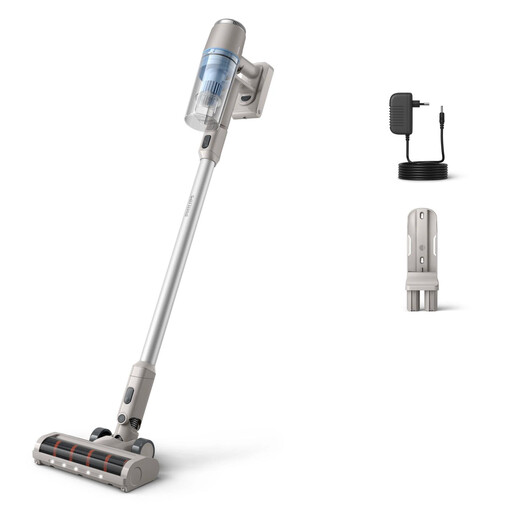
Why This Fits Their Persona: Ideal for apartments and smaller homes that need a reliable and straightforward device for quick cleaning of hard floors. Its low weight makes it very comfortable to handle.
This device avoids the battery life trap with clear specifications: up to 40 minutes in standard mode and 10 minutes in turbo mode. This sets realistic expectations for cleaning duration.
Very lightweight cordless vacuum (1.5 kg according to the manufacturer) with an LED nozzle for better dust visibility and a detachable handheld unit for more flexibility.
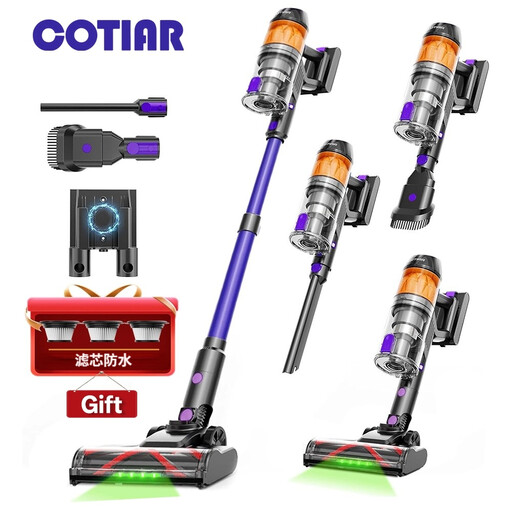
Why This Fits Their Persona: Designed for the challenges of homes with pets and children. The combination of high performance and specialised brushes is engineered to tackle hair and stubborn dirt.
This model directly addresses the maintenance trap. According to the manufacturer, the anti-tangle brush was specifically designed to prevent hair from wrapping around it, reducing the need for frequent manual cleaning of the brush roll.
Offers high suction power (40 kPa according to the manufacturer) and a long runtime of up to 60 minutes. The 180° lay-flat design makes it easier to clean under furniture.
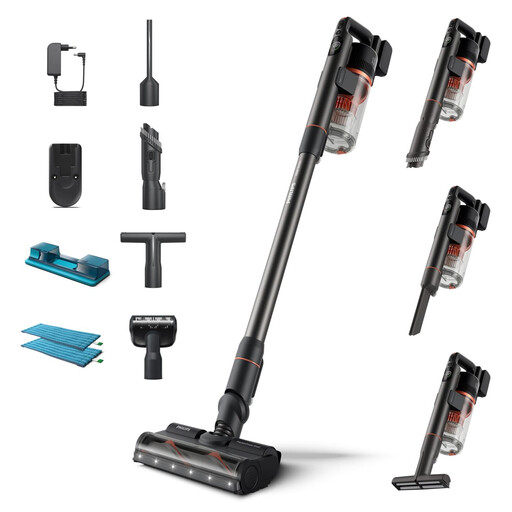
Why This Fits Their Persona: For users seeking an all-in-one solution for total home cleaning. The combination of vacuuming and mopping in one device saves time and space. The LCD display provides full control.
Instead of just advertising abstract suction power figures, this model offers tangible value with its clip-on Aqua module. Its function as a vacuum with a mopping function is a clearly defined advantage.
Combined vacuum and mop function, a very long runtime of up to 80 minutes (according to the manufacturer), and a swappable battery for maximum flexibility.
We have compiled a complete, up-to-date list of products that fully meet these strict selection criteria and UK safety regulations.
1. How long does a vacuum cleaner's battery really last? The actual runtime heavily depends on the selected suction level. The maximum runtime stated by the manufacturer applies to the eco mode. For cleaning carpets or dealing with heavier dirt, turbo mode is often necessary, which significantly reduces the runtime. A realistic usage time usually falls somewhere between the figures for eco and turbo modes. Look for models with a swappable battery to double the cleaning time if needed.
2. Is a high Pascal (Pa) number always a guarantee of good cleaning performance? No, not necessarily. The Pascal value measures the vacuum pressure generated by the motor but is only one part of the overall picture. Effective cleaning performance, especially on carpets, depends heavily on the design of the floorhead. A motorised brush roll that actively loosens dirt and hair from the fibres is often more important than an extremely high Pa value alone.
3. How often do I need to change the HEPA filter in a cordless vacuum? This varies depending on the model and frequency of use. Many modern cordless vacuums have washable filters. It is recommended to clean them under running water approximately every 2-4 weeks and let them dry completely before reinserting them. Depending on the manufacturer's instructions and wear, replacing the filter is usually advisable every 6 to 12 months to ensure optimal filtration performance and air hygiene. Always refer to the instructions in your device's user manual.