
Lieferung heute & morgen

Qualitätsgarantie

Willkommens-Angebote freischalten: KOSTENLOSE Lieferung | Bis zu 80 % RABATT | Kostenlose 30-Tage-JoyPlus-Testphase
App herunterladen
Choosing a new cordless vacuum can quickly become overwhelming. Manufacturers advertise impressive specs and innovative features. But not every new feature is genuinely useful in daily life, and some marketing promises turn out to be expensive traps. As your Joybuy Product Recommendation Officer, I'll help you identify the crucial features and make an informed decision that suits your household.
A cordless vacuum promises flexibility and convenience. However, that joy can quickly fade if the device loses suction power after a short time, the battery dies mid-clean, or the brush roll is constantly blocked by hair. Before you invest, you should know the three most common pitfalls:
To avoid a bad purchase, focus on verifiable technical specs that have a direct impact on daily use.
Endurance is a critical factor for a cordless vacuum cleaner. Pay attention not only to the maximum runtime in minutes but also to the battery's capacity (in mAh) and the charging time. A swappable battery is a significant advantage, as it can double the cleaning time when needed and extends the device's lifespan, since the entire vacuum doesn't need to be discarded due to a battery defect. Models with intelligent power management that automatically adjust performance to the floor type can also use the runtime more efficiently.
A cordless vacuum with strong suction power is essential, but the value alone isn't the whole story. Suction power is often specified in Pascal (kPa) or Air Watts (AW). While kPa measures the vacuum pressure, Air Watts is a more comprehensive metric that describes the interplay of suction pressure and airflow, thus allowing for a better comparison of actual cleaning performance.
For allergy sufferers and families, a vacuum with a HEPA filter is indispensable. A multi-stage, fully sealed filtration system captures the smallest particles like pollen, fine dust, and allergens, ensuring that the air expelled from the device is clean. Look for specifications on what percentage of particles down to a certain size (e.g., 0.3 micrometres) are filtered.
The floorhead is the most important point of contact with dirt. A lightweight cordless vacuum should still have a robust and well-designed brush. Specifically look for models with anti-tangle technology (often described as "Anti-Tangle" or featuring V-shaped bristles). These channel hair directly into the suction opening and prevent it from wrapping around the roll. This is particularly important for a cordless vacuum for pet hair. LED lights on the floorhead are also a handy feature for making dust and dirt visible in dark corners or under furniture.
Instead of making a one-size-fits-all recommendation, we have identified models that meet specific needs and specifically avoid the pitfalls mentioned.
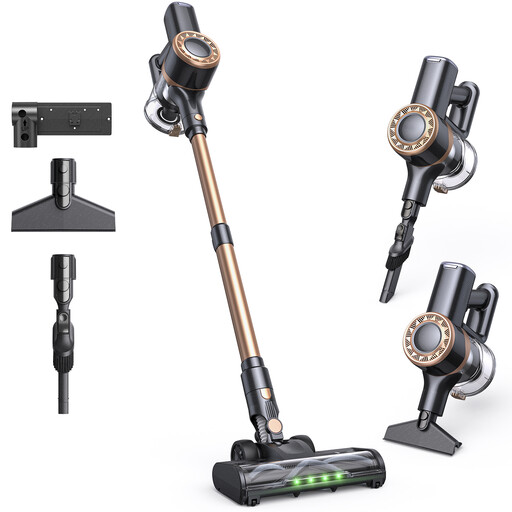
Why it's a good fit: This device offers a solid set of essential features for daily cleaning of hard floors and low-pile carpets. It combines adequate suction power with practical functions without breaking the bank. Ideal for apartments and smaller homes.
The freestanding design eliminates the need for a wall mount and solves the problem of cumbersome storage. The V-shaped brush counteracts hair tangling and reduces maintenance.
Freestanding Design: Can be parked anywhere without leaning or a mount. Anti-Tangle Brush: Effective against hair on hard floors and carpets.
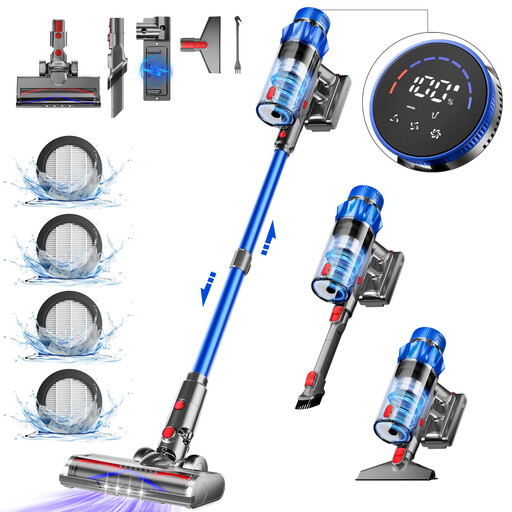
Why it's a good fit: With high suction power and a long battery life claimed by the manufacturer, this model is designed for the challenges of households with pets. It reliably removes pet hair from carpets and upholstery and offers enough endurance for larger areas.
The long runtime of up to 70 minutes (per manufacturer's claim) and the swappable battery counteract the trap of insufficient usage time. The V-shaped anti-tangle brush is specifically designed for picking up hair.
Long Runtime & Swappable Battery: Up to 70 minutes of cleaning and the option to double the runtime. Large Dustbin: With a 1.8-litre capacity for less frequent emptying.
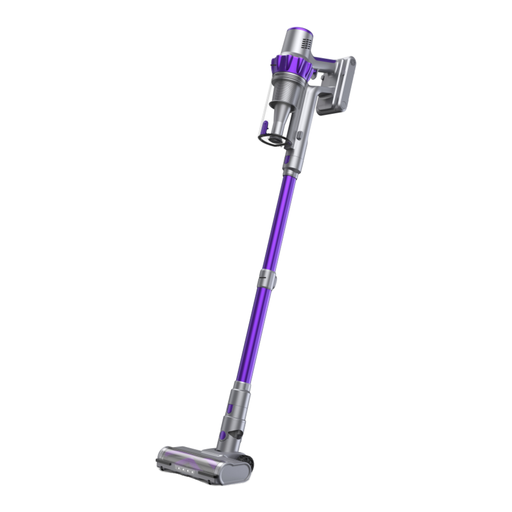
Why it's a good fit: For users who value smart technology and efficient cleaning. The device automatically adjusts its power and provides all relevant information at a glance on its display, simplifying cleaning management.
The intelligent auto mode detects the floor type and adjusts the suction power accordingly. This optimises battery consumption and bypasses the trap of having to manually switch between modes and waste energy.
Intelligent Auto Mode: Automatic suction adjustment for different floors. LED Touch Display: Shows battery level, suction mode, and maintenance alerts.
We've compiled a full, up-to-date list of products that fully meet these strict selection criteria and UK safety regulations.
How often should you change the HEPA filter on a cordless vacuum? The frequency depends on usage and the model. Many HEPA filters are washable and should be cleaned every few weeks. Most manufacturers recommend a replacement every 6 to 12 months to ensure optimal filtration performance and air hygiene. Always follow the manufacturer's instructions.
What does "kPa" mean on a vacuum cleaner? kPa stands for kilopascal and is a unit of measurement for the vacuum pressure a motor can generate. A higher kPa value indicates potentially stronger suction, but it's not the only factor for good cleaning performance. The design of the nozzle, airflow, and brush rotation are just as crucial.
Can a cordless vacuum replace a traditional corded vacuum? For many households, yes. Modern, powerful cordless models now offer suction power and battery life sufficient for cleaning entire apartments and houses. For very large areas or extremely deep-seated dirt in high-pile carpets, a classic corded vacuum may still have advantages in some cases. However, for flexible and quick daily cleaning, a cordless vacuum is often the more practical choice.