
Lieferung heute & morgen

Qualitätsgarantie

Willkommens-Angebote freischalten: KOSTENLOSE Lieferung | Bis zu 80 % RABATT | Kostenlose 30-Tage-JoyPlus-Testphase
App herunterladen
A cordless vacuum promises quick, hassle-free cleaning without tangled cords. But the market is flooded with marketing claims that often create more confusion than clarity. Many buyers soon discover their new device doesn't live up to expectations. Before you make a decision, it's crucial to understand the common pitfalls that can lead to a bad purchase.
As your Joybuy Product Recommendation Officer, I'll help you correctly interpret technical specs and find a model that truly fits your needs.
The 3 Most Common Traps When Buying a Cordless Vacuum:
To avoid falling into these traps, you should focus on a few, but critical, technical features. These will help you objectively evaluate a cordless vacuum's performance.
Instead of relying solely on the Pascal (Pa) value, it's wise to look for the Airwatt (AW) rating if provided by the manufacturer. Airwatts combine vacuum pressure (Pa) with airflow (litres/second), offering a more comprehensive picture of actual cleaning performance. A cordless vacuum with strong suction power for carpets should have a solid AW rating. If this information is missing, pay attention to the motor power (Watts) and look for models with brushless motors, which are often more efficient and durable.
Check the stated battery life for the different suction modes (Eco, Standard, Turbo). Consider which mode you will use most often in your daily routine. For a household with carpets and pets, the runtime in Standard or Turbo mode is crucial. A cordless stick vacuum should last at least 25–30 minutes in its medium setting to clean an average-sized home without interruption. Also, pay attention to the charging time—ideally, it should not exceed 4–5 hours. A removable battery offers added flexibility.
A high-quality, multi-stage filtration system is essential, especially for allergy sufferers or pet owners. Look for a bagless cordless vacuum with a cordless vacuum with a HEPA filter. HEPA (High-Efficiency Particulate Air) is a standard that guarantees the filter removes 99.97% of all particles as small as 0.3 microns from the air. A washable HEPA filter reduces running costs and maintenance. A fully sealed system prevents dust and allergens from leaking past the seals and back into the air.
Based on these objective criteria, we have identified several models that represent a smart choice for specific user profiles.
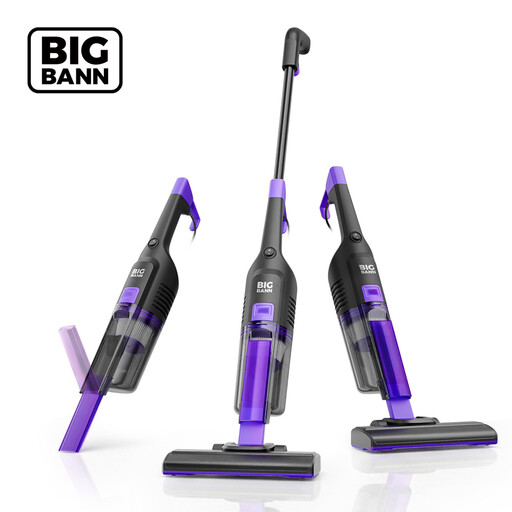
Why This Fits Their Persona: This model is extremely lightweight and quickly converts from a stick to a handheld vacuum thanks to its 3-in-1 functionality. It's ideal for smaller apartments with hard floors, stairs, or for quick clean-ups of crumbs and dirt. The upright storage feature saves valuable space.
As a corded device, it completely bypasses the battery life trap. It delivers consistent power with no loss of suction or charging interruptions, which is a major advantage for larger cleaning tasks.
Consistent suction power thanks to the cord; very lightweight (approx. 1.2 kg); HEPA filtration system.
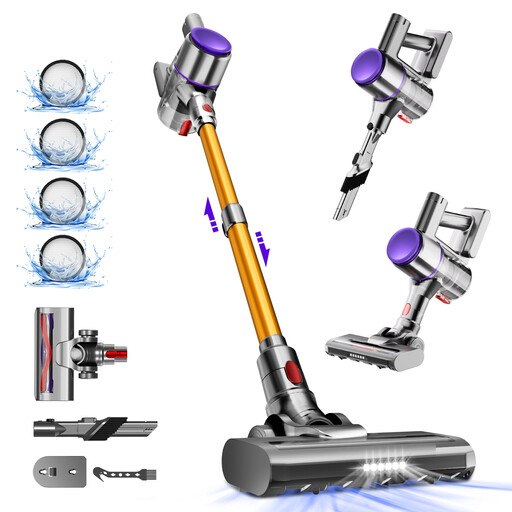
Why This Fits Their Persona: This model is tailored to the needs of pet owners. Its high suction power reliably removes pet hair from carpets and upholstery. The V-shaped brush roll minimises hair tangles, and the 5-stage filtration system securely traps allergens.
It avoids the battery trap by transparently stating the runtime in two modes (up to 50 min in standard mode). The 5-stage HEPA system directly addresses the filter trap, ensuring clean exhaust air.
High suction power (up to 45,000 Pa); 5-stage HEPA filtration system; V-shaped anti-tangle brush.
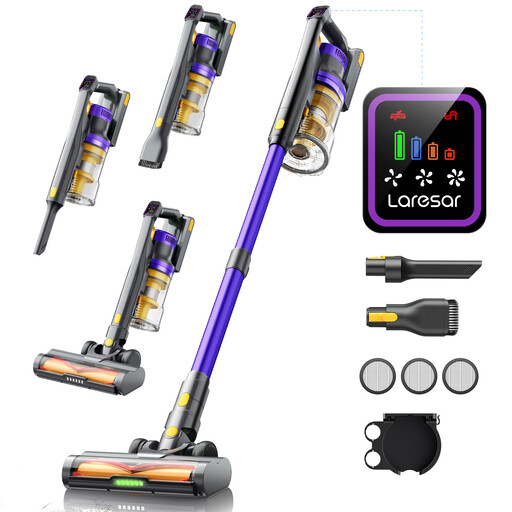
Why This Fits Their Persona: For users who need high performance on all floor types. With a 550W motor, up to 60 minutes of runtime, and a large 2-litre dustbin, this model is designed for whole-home cleaning. The green LED dust detection is a practical feature for thoroughly cleaning hard floors.
Specifying three suction levels (15/28/55 kPa) with corresponding runtimes creates transparency. The 7-stage HEPA system and large dustbin are designed for performance and convenience, not just marketing numbers.
Very high suction power (550W / 55 kPa); up to 60 min runtime; large 2-litre dustbin; 7-stage HEPA filtration.
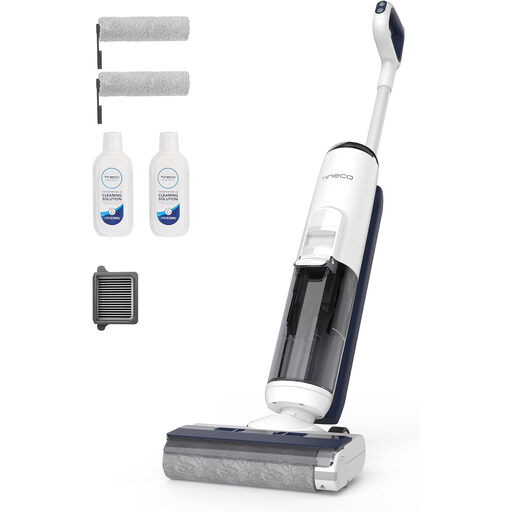
Why This Fits Their Persona: For anyone who wants to save time by vacuuming and mopping in a single step. This device is specifically designed for cleaning sealed hard floors like tile, laminate, or vinyl, and it removes both dry debris and wet messes.
This device focuses on a clear function (vacuuming and mopping) instead of making unrealistic all-in-one promises. The dual-tank system, which separates dirty and fresh water, is a practical feature that ensures a hygienic clean.
Vacuums and mops in one step; dual-tank system for continuous cleaning with fresh water; self-cleaning function for the brush roll.
We've compiled a complete, up-to-date list of products that fully meet these strict selection criteria and all relevant safety regulations.
Most HEPA filters in modern cordless vacuums are washable. First, tap the filter over a bin to remove loose debris. Then, rinse it under cold, running water without using any detergent. Let the filter air-dry completely (for at least 24 hours) before reinserting it. A wet filter can impair motor performance and lead to mould growth. Always follow the manufacturer's recommendations for cleaning and replacement intervals.
Whether a cordless vacuum is sufficient for your entire home depends on its size, your floor types, and the device's battery capacity. For homes up to approx. 80 m? with mostly hard floors, a model with a 30–40 minute runtime in standard mode may be enough. For larger areas or homes with a lot of carpet, you should consider a model with a longer runtime (50+ minutes) or a swappable battery.
Pascal (Pa) is the physical unit for pressure. On vacuums, it measures the maximum suction pressure the motor can generate. A high Pa value indicates a potentially powerful motor, but it is not the sole guarantee of good cleaning performance. The ability to pick up dirt also depends on airflow and the design of the floorhead. Therefore, consider the Pa value as one of several indicators, not the only purchasing criterion.