
Lieferung heute & morgen

Qualitätsgarantie

Willkommens-Angebote freischalten: KOSTENLOSE Lieferung | Bis zu 80 % RABATT | Kostenlose 30-Tage-JoyPlus-Testphase
App herunterladen
A cordless vacuum promises freedom and flexibility in your housework. No tangled cords, no heavy unit to lug up the stairs. But the market is flooded with models whose marketing claims often obscure more than they reveal. Before you make a decision, it's crucial to understand the common pitfalls that can lead to a bad purchase.
Two of the most common marketing traps are unrealistic battery runtimes and misleading performance specs. Many manufacturers advertise maximum runtimes of 60 minutes or more, but fail to mention that this is only achievable in Eco mode—a setting too weak for most cleaning tasks. Similarly, motor power in watts is often highlighted, yet the actual suction power at the nozzle, measured in Pascals (Pa), and the brush design are far more crucial for a clean result.
To find a cordless vacuum that truly meets your needs, you should focus on objective, real-world criteria.
The battery life is directly dependent on the suction level you use. A realistic runtime for standard or auto mode on most devices is between 20 and 40 minutes. For larger homes or households with pets, a model with a swappable battery is a smart option, as it can double your cleaning time when needed. Also, pay attention to the charging time—ideally, the battery should be fully charged and ready to go in under four hours.
High suction power is important, but it's only effective in combination with the right floorhead. For homes with pets, a specialised brush roll that minimises hair wrap (anti-tangle technology) is a game-changing advantage. A good stick vacuum should also feature a motorised brush that actively lifts dirt from carpets. Models with LED lights on the nozzle help to make dust and debris visible even in dark corners or under furniture.
For allergy sufferers, a multi-stage filtration system with a HEPA filter is essential. It captures the smallest particles like pollen and fine dust from the exhaust air. A bagless vacuum should also have a dustbin that is easy and hygienic to empty. Capacity matters, too: a larger container needs to be emptied less frequently. Last but not least, weight is a key factor. A lightweight vacuum makes it easier to clean stairs, ceilings, and to manoeuvre in general. Many models can also be converted into a convenient handheld vacuum.
Here are a few recommendations tailored to specific needs and user profiles.
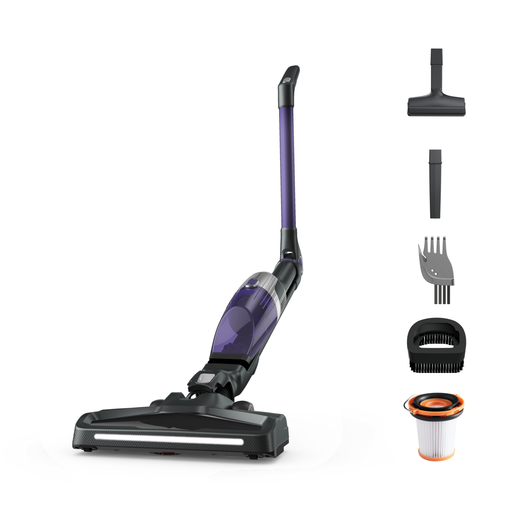
Why it's a good fit: Perfect for quick, in-between cleaning in city apartments. Its low weight and ability to convert into a handheld vacuum make it extremely flexible for floors, upholstery, and hard-to-reach spots.
The stated runtime of up to 40 minutes is realistic for standard tasks on hard floors and isn't advertised with inflated figures for a barely usable Eco mode.
The flexible 2-in-1 design (stick and handheld) and its light weight of approx. 1.76 kg allow for versatile, fatigue-free use.
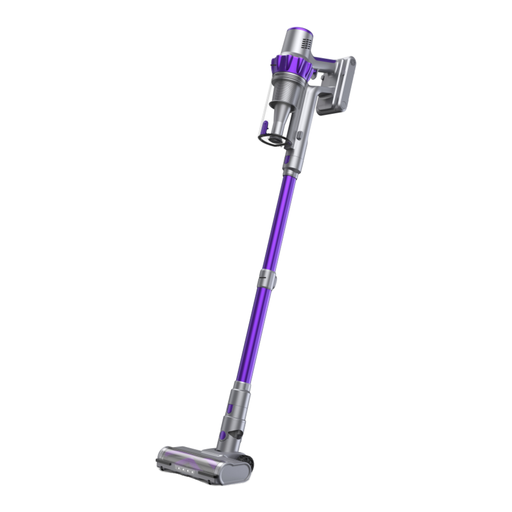
Why it's a good fit: Engineered for demanding tasks. The high suction power of 45 kPa and the large 1.5-litre dustbin are ideal for efficiently tackling pet hair, crumbs, and everyday messes in a family home.
The intelligent auto mode adjusts suction power based on the floor type. This optimises cleaning performance and battery consumption, rather than just advertising a theoretical maximum power.
The combination of automatic suction adjustment, a large 1.5-litre dustbin, and a multi-stage filtration system makes cleaning more efficient and reduces interruptions.
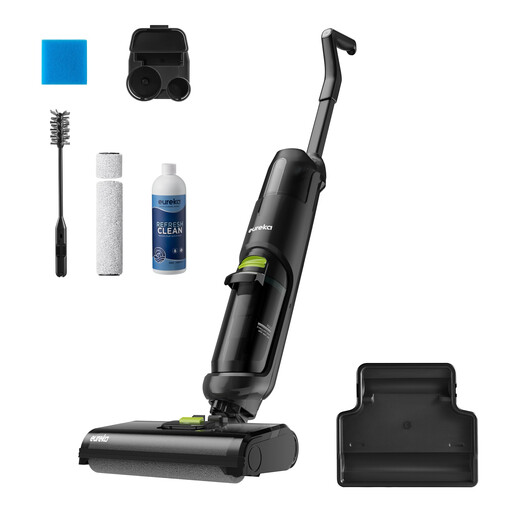
Why it's a good fit: This wet dry vacuum is designed for users who primarily have hard floors like parquet, laminate, or tile and want to save time by vacuuming and mopping in one step.
The device focuses on a clear, specialised function (vacuuming and mopping) and doesn't try to be a jack-of-all-trades with weak compromises. Its performance is specifically optimised for wet and dry cleaning on hard floors.
The two-tank system separates fresh and dirty water, ensuring you always mop with clean water. The self-cleaning function for the brush roll enhances convenience and hygiene.
We've compiled a full, up-to-date list of products that fully meet these strict selection criteria and UK safety regulations.
The actual battery life depends heavily on the suction mode used. In Turbo mode, which is needed for carpets or stubborn dirt, most batteries only last 10 to 20 minutes. In Standard or Auto mode, you can expect 20 to 40 minutes. The maximum runtime stated by the manufacturer almost always refers to the weakest Eco mode.
No. The wattage only indicates the motor's power consumption, not the suction power at the floorhead. An efficient motor and a well-designed, sealed nozzle can generate higher suction power (measured in Pascals, Pa) at a lower wattage than an inefficient device with high power consumption. Therefore, focus on the Pascal rating and the brush technology.
Most modern bagless vacuums use washable filters. It is recommended to clean the pre-filter and HEPA filter under running water every four to six weeks, depending on usage. It is absolutely crucial to let the filters air-dry completely (for at least 24 hours) before reinserting them, as any residual moisture can damage the motor and lead to mould growth.