
Lieferung heute & morgen

Qualitätsgarantie

Willkommens-Angebote freischalten: KOSTENLOSE Lieferung | Bis zu 80 % RABATT | Kostenlose 30-Tage-JoyPlus-Testphase
App herunterladen
A cordless vacuum promises freedom and convenience in your housework. No tangled cords, no heavy machine to lug up the stairs. But the market is flooded with models whose marketing promises often outshine their actual cleaning performance. Before you make a decision, it's crucial to understand the common pitfalls that can lead to buyer's remorse.
Many buyers focus on advertised peak performance values that have little relevance in everyday use, or they overlook hidden running costs. Two of the most common mistakes are:
A well-considered purchase is based on parameters tailored to your specific needs, not on isolated marketing figures.
To avoid a bad purchase, you should focus on three core aspects. These determine whether a cordless vacuum will impress in daily use or just gather dust in a closet.
Suction power, often specified in Pascal (Pa), describes the negative pressure generated by the motor. A higher value potentially means stronger suction. However, the combination of suction power and motor technology is more important.
Battery performance is critical for flexibility. Look for the following features:
A good filtration system is important for everyone, not just allergy sufferers. It prevents fine dust from being blown back into the room air and protects the motor.
Instead of making a one-size-fits-all recommendation, we have identified models that meet specific requirements and avoid the common pitfalls mentioned.
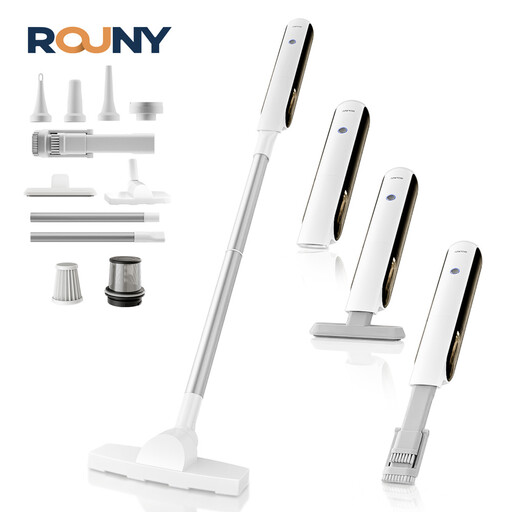
Why This Fits Their Persona: Ideal for smaller apartments, as a secondary device, or for car cleaning. This model combines the functions of a handheld vacuum and a stick vacuum, offering high flexibility for various cleaning tasks with its 7 attachments.
Avoids hidden running costs with a washable HEPA filter. The two suction levels (up to 18 kPa) provide realistic performance for everyday tasks instead of advertising unrealistic peak values.
Very lightweight vacuum (0.5 kg as a handheld) with a practical blower function and LED light to spot dust in dark corners. The brushless motor ensures a longer lifespan.
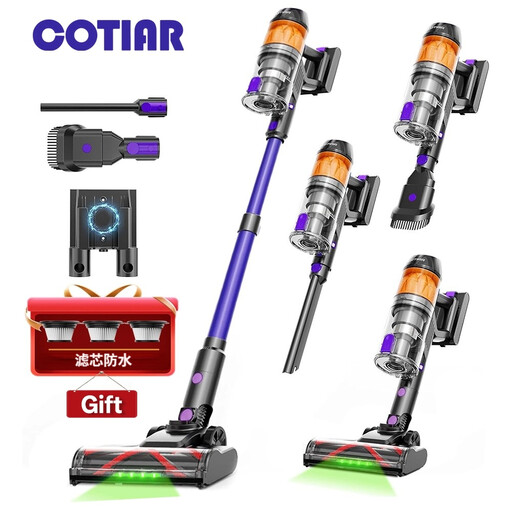
Why This Fits Their Persona: Designed for the challenges of pet-owning households. The combination of high suction power and a specialized brush is engineered to effectively remove pet hair from carpets and upholstery.
Doesn't just focus on raw suction power (50 kPa) but combines it with an anti-tangle brush that prevents hair from wrapping. The inclusion of three HEPA filters directly addresses the issue of running costs and maintenance.
Long runtime of up to 60 minutes. The 180° lay-flat feature allows for cleaning under furniture. The green light on the brush helps to make hidden dirt and hair visible.
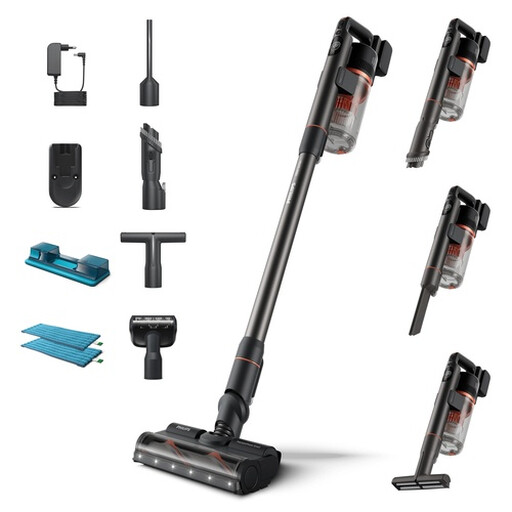
Why This Fits Their Persona: For users seeking a comprehensive solution for the entire home. This model is a vacuum with a mopping function that both vacuums dry debris and wet-mops hard floors—a true 2-in-1 solution.
The stated runtime of up to 80 minutes is realistic even for larger areas. Instead of focusing solely on suction power, the device offers clear, practical added value for hard floors with its additional mopping function.
Combines vacuuming and mopping in a single pass. The large 0.6-liter dustbin needs to be emptied less frequently. The cyclonic filtration system ensures consistent suction power.
We have compiled a complete, up-to-date list of products that fully meet these strict selection criteria and German safety regulations.
1. What does the suction power rating in Pascal (Pa) really mean? Pascal (Pa) is the unit of measurement for pressure and describes the negative pressure created by the vacuum's motor. A higher Pa value indicates stronger suction capability. Values between 15,000 and 25,000 Pa are sufficient for most everyday cleaning tasks on hard floors and low-pile carpets. For households with pets or high-pile carpets, models with over 25,000 Pa can be advantageous. However, remember that effective cleaning performance always depends on the interplay of suction power, the floorhead, and the filtration system.
2. On average, how long does a cordless vacuum's battery last? The lifespan of a lithium-ion battery is measured in charge cycles and is typically between 500 and 800 cycles. With weekly use, this corresponds to a lifespan of several years. The runtime per charge depends heavily on the selected suction level. In standard mode, most devices last between 25 and 45 minutes, while in turbo mode, it's often only 10 to 15 minutes. Models with a swappable battery offer greater flexibility here.
3. Are cordless vacuums also suitable for carpets? Yes, modern cordless vacuums are quite suitable for carpets, provided they have a motorized electric brush. This brush roll rotates to loosen dirt and hair from deep within the carpet fibers. For high-pile carpets, high suction power (over 20,000 Pa) combined with such a brush is recommended. Some models positioned as a Dyson alternative offer special brushes that automatically adapt to different floor types.