
Lieferung heute & morgen

Qualitätsgarantie

Willkommens-Angebote freischalten: KOSTENLOSE Lieferung | Bis zu 80 % RABATT | Kostenlose 30-Tage-JoyPlus-Testphase
App herunterladen
The search for the right cordless vacuum cleaner can quickly become overwhelming. Manufacturers advertise high suction power figures and long battery runtimes, but not all promises hold up under scrutiny. Many devices turn out to be impractical or lose performance after a short time. This guide will help you identify the crucial features and avoid marketing traps, so you can find a device that truly fits your household.
Before you buy a vacuum cleaner, you should familiarise yourself with the three most common issues that lead to dissatisfaction.
To make an informed decision, focus on the following objective criteria that determine actual performance and usability.
The true cleaning performance of a stick vacuum comes from the interplay of several components. A vacuum with strong suction power needs an efficient motor that generates high airflow (measured in litres per second). The floorhead is just as important: a motorised brush roll actively loosens dirt and pet hair from carpet fibres, while a soft roller works gently and effectively on hard floors like parquet. Models with automatic suction adjustment detect the floor type and optimise performance on their own.
A high-quality filtration system is crucial for air hygiene. A vacuum with a HEPA filter (High-Efficiency Particulate Air) is proven to capture at least 99.97% of particles as small as 0.3 microns. This is especially relevant for allergy and asthma sufferers. Look for sealed systems that ensure filtered air doesn't escape through leaks in the housing. A washable filter reduces running costs, while a bagless vacuum with an easy-to-empty dustbin increases convenience.
Battery capacity, specified in milliampere-hours (mAh), and operating voltage (V) determine the runtime. Compare the manufacturer's stated runtime in standard mode, as this is the most commonly used setting in daily life. For larger homes, models with a runtime of over 40 minutes in standard mode or with a swappable battery are a smart choice. A lightweight vacuum (under 2.5 kg for the handheld unit) makes cleaning stairs, ceilings, and upholstery much easier.
Instead of making a blanket recommendation, we've identified models tailored to specific user profiles and their requirements.
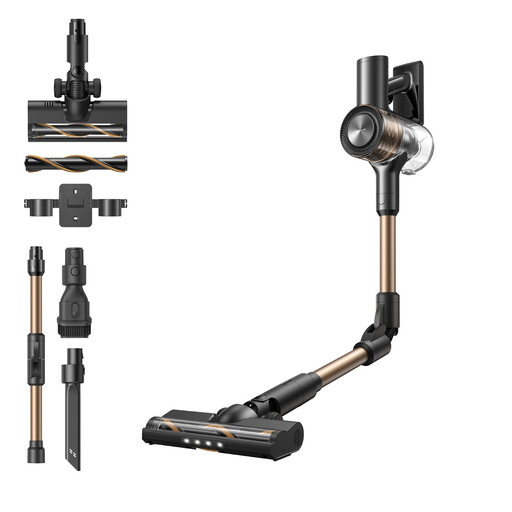
Why it's a good fit: Ideal for small to medium-sized apartments. It offers a solid set of basic features without costly extras. Its light weight and easy handling make it a practical tool for daily cleaning.
The device has a balanced ratio of suction power (25,000 Pa) and a practical runtime of up to 45 minutes. It relies on a proven HEPA filtration system instead of vague marketing terms.
Lightweight handheld unit (1.4 kg) for effortless manoeuvring. Includes an LED floorhead for better visibility of dust in dark corners.
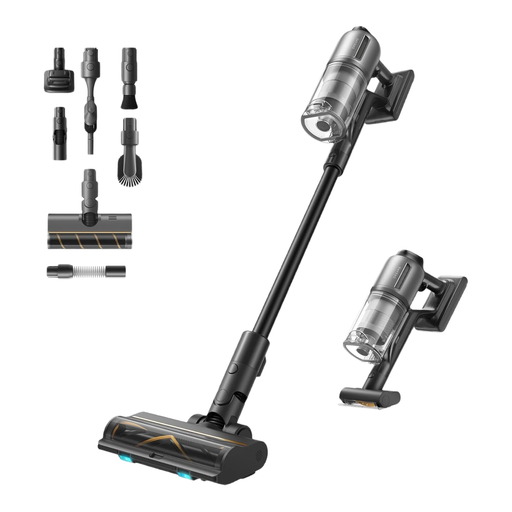
Why it's a good fit: Designed for demanding households where pet hair and allergens are a major concern. The high suction power and specialised accessories reliably remove hair from floors and upholstery.
Instead of just relying on a high Pa value, this model offers high suction power of 310 AW and a sealed HEPA H14 filtration system that captures 99.99% of particles down to 0.1 microns, according to the manufacturer. The anti-tangle brush prevents hair from getting tangled.
Smart dust detection with automatic suction adjustment. Includes a motorised mini-brush for effective cleaning of upholstery and mattresses.
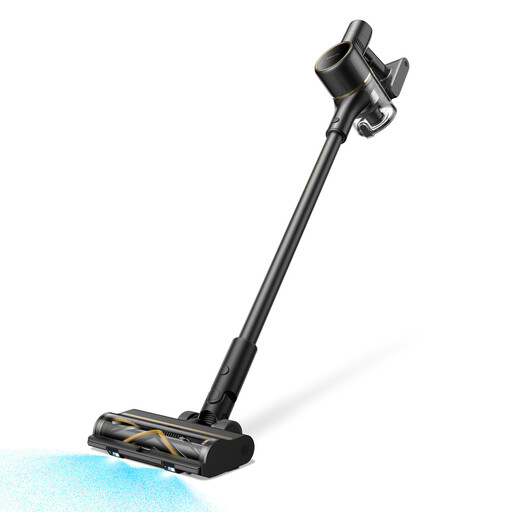
Why it's a good fit: Designed for cleaning large homes without interruption. The long battery life and large dustbin allow you to clean the entire living area in one go.
This model avoids the unrealistic runtime trap by offering a high battery capacity (8 x 2,900 mAh) which provides a runtime of up to 90 minutes, according to the manufacturer. This is a realistic figure for cleaning large areas in Eco or Standard mode.
Lightweight carbon fibre body (1.76 kg) for comfortable use. CelesTect LED lighting makes invisible dust visible, ensuring a more thorough clean.
We have compiled a complete, up-to-date list of products that fully meet these strict selection criteria and relevant safety standards.
Most modern HEPA filters are washable. It is recommended to clean the filter under running water every four to six weeks, depending on usage frequency. It must be completely dry before being reinserted. A replacement is typically only necessary every 12 to 24 months, or if there is visible damage or a significant loss of suction power. Please refer to the manufacturer's instructions for specific details.
Air Watts (AW) is the more meaningful metric, as it represents a combination of vacuum pressure (Pa) and airflow (CFM). It gives a better indication of the vacuum's actual ability to pick up and transport dirt. A high Pa value with low airflow is not very effective. Therefore, focus on the AW value if provided by the manufacturer, as well as the design of the floorhead.
For many households, especially those with mostly hard floors and small to medium-sized carpeted areas, a powerful cordless vacuum like a model from Dreame or Rowenta can replace a classic corded vacuum. For very large areas with high-pile carpet or extreme messes, a corded vacuum may still have advantages due to its unlimited runtime and often higher motor power. For specialised tasks like wet cleaning, vacuum mops or carpet cleaners are also a useful addition.