
Lieferung heute & morgen

Qualitätsgarantie

Willkommens-Angebote freischalten: KOSTENLOSE Lieferung | Bis zu 80 % RABATT | Kostenlose 30-Tage-JoyPlus-Testphase
App herunterladen
The selection of cordless vacuums is vast, and the marketing promises from manufacturers are often even bigger. Anyone looking for a new cordless vacuum is confronted with a flood of technical specs and marketing jargon. But not every high number on the spec sheet translates to a cleaner home. Many devices quickly turn out to be a poor investment. This guide will help you identify the features that truly matter and avoid three common pitfalls.
Before you make a decision, it's important to understand the most common issues that only become apparent with everyday use.
To avoid a bad purchase, you should focus on the technical features that determine a device's actual performance and longevity.
A powerful motor is the foundation of effective cleaning. Look for models with a brushless motor. Compared to conventional brushed motors, these are not only more efficient and quieter but also have a significantly longer lifespan. Suction power, specified in kilopascals (kPa), is an important indicator, but it should always be evaluated in the context of motor power (watts) and the overall design. A well-designed vacuum for carpets and hard floors can deliver convincing results even with moderate kPa values.
A long battery life is crucial for uninterrupted cleaning. Check the manufacturer's specified runtimes for the different power levels. A model with a removable battery offers additional flexibility. This allows you to charge a second battery while the first is in use, effectively doubling your cleaning time when needed. This is a particularly relevant advantage for larger apartments or houses. Many devices also quickly convert into a cordless handheld vacuum for cleaning upholstery or your car.
For allergy sufferers and health-conscious users, a high-quality filtration system is essential. Multi-stage systems with a HEPA filter (High-Efficiency Particulate Air) are the standard here. They capture up to 99.9% of fine dust particles, pollen, and allergens, preventing them from being blown back into the room's air. A fully sealed system ensures that all dirty air passes exclusively through the filters, releasing only clean air.
Instead of presenting an overwhelming list, we've selected models that meet specific needs and avoid the pitfalls mentioned earlier.
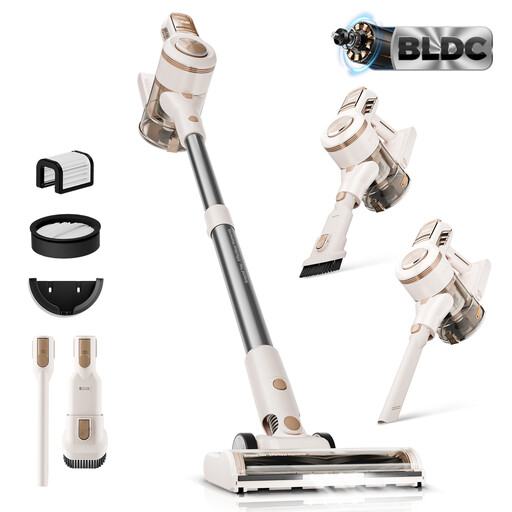
Why it's a good fit: This device offers a solid feature set for anyone new to cordless cleaning. With 45 kPa of suction and a brushless motor, it delivers reliable performance on hard floors and low-pile carpets without breaking the bank.
The model relies on a durable brushless motor and provides a realistic runtime of up to 40 minutes in Eco mode, which is sufficient for apartments and targeted clean-ups. The suction power is impressive for this price range.
The removable battery and 6-stage filtration system are features not often found in this price segment, ensuring great flexibility and air hygiene.
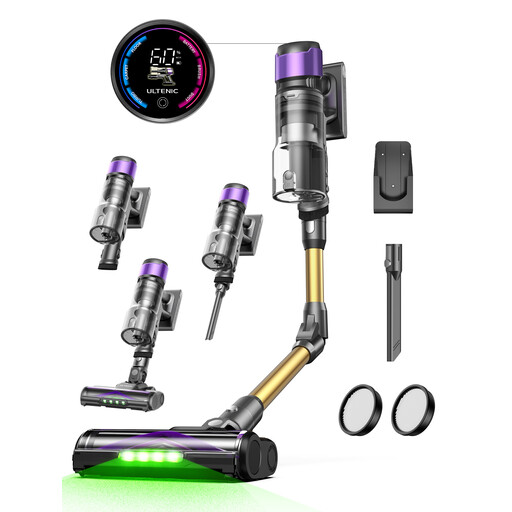
Why it's a good fit: This stick vacuum for pet hair is specifically designed to tackle the challenges of homes with animals. Its high suction power of 55 kPa, combined with special brush technology, ensures the effective removal of hair and dirt.
It solves the tangled brush problem with a V-shaped anti-hair wrap brush that actively cuts through hair to prevent clogs. The battery life of up to 60 minutes is also sufficient for larger areas.
The flexible wand allows for easy cleaning under furniture without having to bend down. The large 1.5-litre dustbin reduces the frequency of emptying.
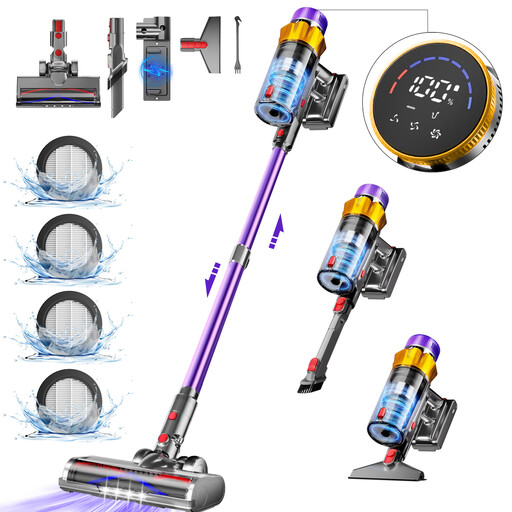
Why it's a good fit: For users seeking maximum power and endurance for large areas with mixed flooring. The very high suction power of 65 kPa and a runtime of up to 70 minutes enable a deep and comprehensive clean of the entire house.
This model escapes the battery illusion by delivering a genuinely long runtime of up to 70 minutes. The high suction power isn't just a marketing claim; it's backed by a powerful motor and an efficient design.
The combination of extremely strong suction (65 kPa), long runtime, and an anti-tangle brush makes it a versatile solution for demanding cleaning tasks. The aromatherapy function also adds a breath of fresh air.
We have compiled a complete, up-to-date list of products that fully meet these strict selection criteria and comply with German safety standards.
1. How often should the HEPA filter in a cordless vacuum be replaced? Most HEPA filters are washable and should be cleaned every few weeks, depending on the frequency of use. It's important to let the filter dry completely before reinserting it. Most manufacturers recommend replacing it every 6 to 12 months to ensure optimal filtration performance and suction power.
2. Is higher suction power in kPa always better? Not necessarily. High suction power is a good starting point, but the actual cleaning performance depends on the interplay of several factors: motor efficiency, floorhead design, and the seal of the entire system. A well-engineered device with 30 kPa can be more effective on hard floors than a poorly designed model with 50 kPa.
3. Can a cordless vacuum completely replace a traditional corded vacuum? For many households, yes—especially in apartments or homes with predominantly hard floors. Modern, high-performance cordless vacuums now offer suction power and battery life that are perfectly adequate for daily cleaning. For very large areas with high-pile carpet, a traditional corded vacuum can still be a useful supplement for deep cleaning.