
Lieferung heute & morgen

Qualitätsgarantie

Willkommens-Angebote freischalten: KOSTENLOSE Lieferung | Bis zu 80 % RABATT | Kostenlose 30-Tage-JoyPlus-Testphase
App herunterladen
The market for cordless vacuums is vast, and the marketing promises are often even bigger. But not every device lives up to its claims. As your Joybuy Product Recommendation Officer, I'm here to help you separate fact from marketing hype, so you can make an informed decision and not fall into the usual traps. Many buyers regret their choice after just a few months, having been swayed by exaggerated performance claims or impractical designs.
This guide will walk you through the three most common pitfalls when buying a cordless vacuum and highlight the technical features you should focus on instead.
The Myth of Raw Suction Power (Pa Value): Many manufacturers advertise extremely high Pascal (Pa or kPa) values to suggest superior cleaning performance. However, a high Pa value only measures the suction pressure directly at the motor; it's no guarantee of effective debris pickup from the floor. Actual cleaning performance depends on the overall engineering, including the nozzle design, airflow, and brush technology. A device with a lower Pa value but a better-designed floorhead can be significantly more effective in practice.
Unrealistic Battery Runtime Claims: The advertised battery life of 60, 70, or even 80 minutes almost always refers to the Eco mode with minimal suction power. This mode is often only sufficient for cleaning light dust from hard floors. As soon as you move to a carpet or activate Turbo mode for stubborn dirt, the actual runtime can drop to just 15–25 minutes. This leads to frustration when you have to interrupt your cleaning mid-process.
The Brush Roll Tangle Trap: A common annoyance, especially for pet owners or households with long-haired individuals, is the brush roll. Standard brushes quickly get tangled with hair, which reduces suction power and requires frequent, often unhygienic manual cleaning. A cordless vacuum whose brush is constantly clogged quickly loses its practical utility.
To avoid the pitfalls mentioned above, focus on the following objective parameters. These determine the true performance and durability of your device.
Instead of the raw Pa value, the specification in Air Watts (AW) is a more reliable indicator of cleaning performance, as it considers both suction pressure and air volume. A value of 150 AW or higher indicates very strong suction power, suitable for carpets and picking up pet hair. Also, look for a brushless motor. These motors are generally more efficient, durable, and quieter in operation than conventional brushed motors.
Check the manufacturer's stated runtime for the Standard or Auto mode, not just the Eco mode. For an average-sized home (approx. 80 m? / 860 sq ft), a realistic runtime of 30–40 minutes in Standard mode is a good benchmark. A key advantage is a removable battery. This feature allows you to double your cleaning time by purchasing a second battery and makes you less dependent on the lifespan of a built-in battery. A cordless vacuum with long runtime and a swappable battery offers maximum flexibility.
For households with pets or mixed floor types, advanced brush technology is essential. Look for models with an anti-tangle brush. These often feature a V-shaped design and are equipped with combs that actively detangle hair and guide it directly into the suction channel.
For allergy sufferers, a multi-stage filtration system with a HEPA filter (High-Efficiency Particulate Air) is crucial. By definition, such a system captures up to 99.97% of all particles as small as 0.3 microns, including fine dust, pollen, and allergens, ensuring clean exhaust air.
Here are a few models that represent a smart choice for specific user profiles, based on the criteria above.
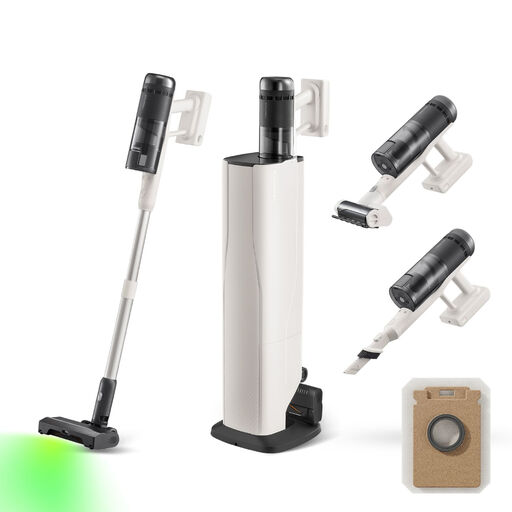
Why It's a Match: Ideal for users who want to clean large living spaces without interruption and value high performance and convenience. The auto-empty dock minimises contact with dust.
Bypasses the suction myth with a clear specification of 170 AW and avoids the runtime trap with a long operating time of up to 80 minutes in Eco mode.
The auto-empty dock empties the dustbin automatically. The anti-tangle brush is designed for both carpet and hard floors.
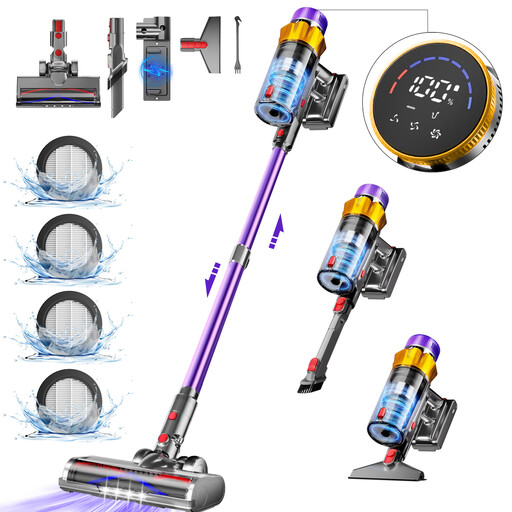
Why It's a Match: A great choice for households with mixed floor types and pets who need long cleaning sessions and effective hair pickup.
Addresses the tangle trap with a special V-shaped anti-tangle brush. The runtime trap is mitigated by the removable battery and a stated runtime of up to 70 minutes.
Combines a long runtime with a 7-stage filtration system and a flexible floorhead with LED lighting to ensure no dirt is missed, even in dark corners.
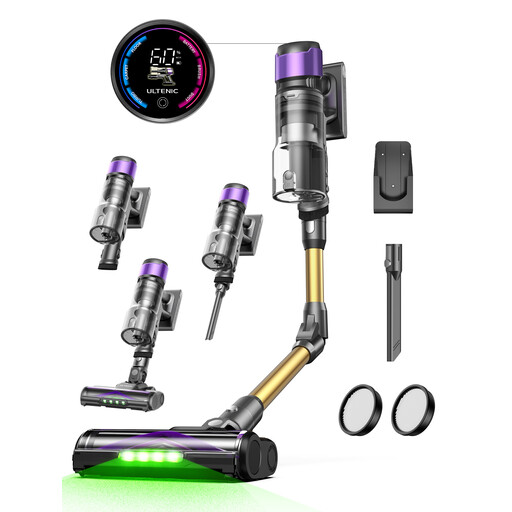
Why It's a Match: Perfect for users who value maximum flexibility and ease of use in their daily routine. The design is focused on comfort and cleaning hard-to-reach areas.
Solves the problem of awkward storage with a freestanding design that requires no wall mounting. The V-shaped anti-tangle brush counteracts the hair-tangle trap.
The foldable wand allows for comfortable cleaning under furniture without needing to bend down. The touchscreen provides intuitive control and monitoring of the device's status.
Explore our full range of cordless vacuums, carefully selected based on objective performance metrics and practical, everyday usability.
Yes, provided the model meets certain criteria. A cordless stick vacuum is ideal for tackling pet hair if it has a motorised brush roll with strong suction (e.g., over 150 AW) and anti-tangle technology. Models specifically marketed as a cordless vacuum for pet hair often come with special upholstery attachments, which makes cleaning even easier.
The actual runtime heavily depends on the selected suction mode. While manufacturers often advertise figures of over 60 minutes in Eco mode, you should plan for a realistic 15–25 minutes in Turbo mode and 30–45 minutes in Standard mode. For larger areas or longer, uninterrupted cleaning sessions, a model with a removable battery is a very worthwhile investment.
Maintenance intervals vary by manufacturer and frequency of use. As a general rule, wash the filter every 2–4 weeks under running water (without detergent) and let it air-dry completely for at least 24 hours before reinserting it. A wet filter can lead to mould growth and motor damage. Replacing the HEPA filter is typically recommended every 6 to 12 months to ensure optimal filtration performance.