
Lieferung heute & morgen

Qualitätsgarantie

Willkommens-Angebote freischalten: KOSTENLOSE Lieferung | Bis zu 80 % RABATT | Kostenlose 30-Tage-JoyPlus-Testphase
App herunterladen
A cordless vacuum promises freedom and flexibility in your housework. No tangled cords, and no heavy appliance to lug up the stairs. But the market is flooded with models whose marketing claims often suggest more than the technology can deliver. Many buyers find that after just a few months, the suction power fades, the battery doesn't last long enough for the whole home, or the device is unsuitable for removing pet hair.
As a Joybuy Product Recommendation Officer, I analyse product data daily to help you make informed decisions. In this guide, I'll show you the three most common pitfalls when buying a cordless vacuum and which technical features you should really pay attention to.
Manufacturers often advertise with impressive numbers that, in practice, mean very little. Pay attention to these three points to avoid disappointment:
To avoid buyer's remorse, you should focus on three objective criteria that determine the performance and longevity of a cordless vacuum.
A vacuum with high suction power is crucial, especially if you have pets or want to clean carpets. Instead of the pure Pascal (Pa) value, which measures negative pressure, the specification in Airwatts (AW) is often more meaningful as it describes the relationship between airflow and suction. Furthermore, a modern brushless motor is generally more efficient, durable, and often quieter than conventional brushed motors. For the effective removal of pet hair, a motorized floorhead with special bristles (e.g., arranged in a V-shape) is essential to minimise hair tangling.
Check the specified runtime for the standard or medium mode, as this is the mode most frequently used in daily life. For an average-sized home (approx. 80 m?), a runtime of at least 25–30 minutes in this mode should be sufficient. A removable battery offers the advantage of being able to charge a second battery while the first is in use—ideal for larger living spaces or a thorough cleaning of your car and home.
A multi-stage filtration system is important for filtering fine dust and allergens from the exhaust air. A washable HEPA filter (High-Efficiency Particulate Air) is the gold standard here. It captures up to 99.9% of particles like pollen, dust mite droppings, and fine dust, which is particularly important for allergy sufferers. Washable filters also reduce running costs and waste, as they don't need to be constantly repurchased.
Based on these objective criteria, we have selected a few models for different user profiles.
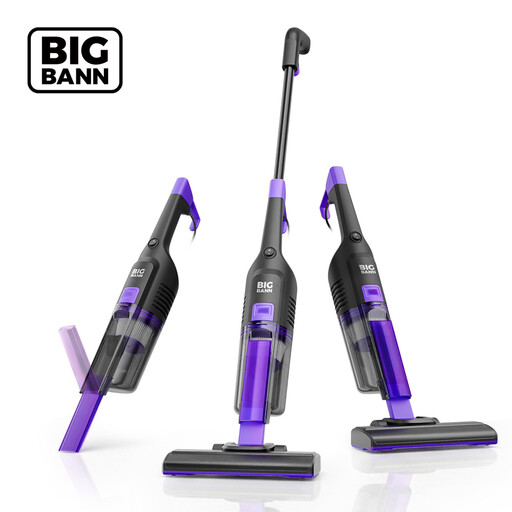
Why it's a match: Ideal for small apartments, students, or as a secondary device. The corded design ensures consistent power without battery worries and keeps the price low. At just 1.2 kg, it's extremely lightweight and easy to handle.
This model completely bypasses the unrealistic battery life trap because it's corded. You get consistently stable suction power of 18 kPa without having to worry about charging times.
Its 3-in-1 functionality as a stick vacuum and handheld vacuum at a very affordable entry-level price. Includes a washable HEPA filter to reduce long-term costs.
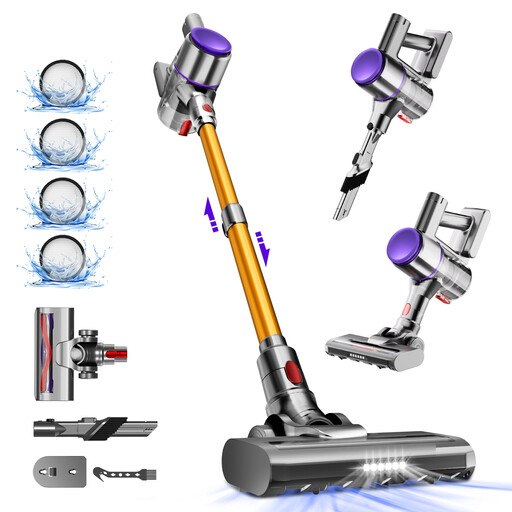
Why it's a match: Designed for homes with pets and high standards for air hygiene. The high suction power, large 1.6-litre dustbin, and 5-stage filtration system are ideal for effectively tackling pet hair and allergens.
It addresses the misleading suction power trap by combining a high Pa rating with an advanced 5-stage filtration system and a V-shaped brush, ensuring high cleaning performance in practice.
A long battery life of up to 50 minutes in normal mode and a comprehensive filtration system with four HEPA filters that captures 99.98% of particles. According to the manufacturer, the operating noise stays below 58 dB, making it relatively quiet.
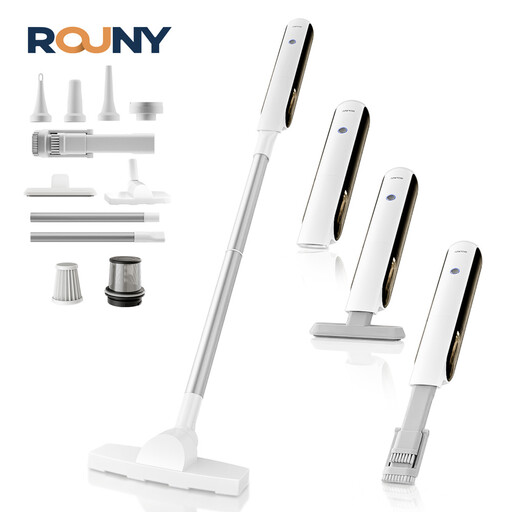
Why it's a match: A versatile cordless vacuum that can be used as a compact handheld vacuum for the car or with an extension tube for light floor cleaning. The blower function is a practical extra for air vents and keyboards.
It sidesteps the hidden costs trap with a durable brushless motor and a washable dual filtration system (metal mesh + HEPA filter). This reduces the need for expensive replacement parts.
The combination of suction and blower functions, the integrated LED light for illuminating dark corners in the car, and the 7 included nozzles make it an extremely flexible tool for your car and home.
We have compiled a complete, up-to-date list of products that fully meet these strict selection criteria and safety standards.
1. How long does a cordless vacuum's battery really last? The actual runtime heavily depends on the selected suction mode. The manufacturer's specification usually refers to the eco mode. For a realistic assessment, you should check the specified runtime for the standard or turbo mode. On average, you can expect 20 to 40 minutes on medium power, which is sufficient for most homes.
2. Is a HEPA filter necessary in a vacuum cleaner? For allergy sufferers or households with pets, a HEPA filter is highly recommended. It filters the smallest particles like pollen, fine dust, and pet allergens from the exhaust air, contributing to better indoor air quality. Even for non-allergy sufferers, a good filtration system is a clear plus for a clean home.
3. How often do I need to clean or replace my cordless vacuum's filter? This depends on the model and frequency of use. Many modern devices have washable filters. It is recommended to clean them under running water every 2 to 4 weeks and let them dry completely before reinserting them. According to manufacturer specifications, a replacement is often only necessary every 6 to 12 months. Refer to the manufacturer's specific instructions to maintain suction power.