
Lieferung heute & morgen

Qualitätsgarantie
App herunterladen
Kategorien
Choosing a cordless vacuum cleaner requires an analysis of technical specifications tailored to specific use cases. Factors such as motor power, battery life, weight, and filtration system are crucial for household efficiency and user comfort. This article breaks down the essential criteria for making an informed purchasing decision and presents a selection of models with different specialisations.
The performance of a cordless vacuum is determined by the interplay of several technical components. An objective evaluation of these parameters helps in selecting the right device.
Motor power, specified in Watts (W), describes the motor's energy consumption. A higher wattage does not necessarily correlate with better cleaning performance. More relevant is the suction power, often measured in Pascals (Pa) or Airwatts (AW). Pascals indicate the vacuum pressure generated, which is responsible for picking up dirt. A cordless vacuum with strong suction power typically has values of 20,000 Pa or more, which is necessary for deep-cleaning carpets and removing stubborn debris like pet hair.
A long battery life is a key criterion for the uninterrupted cleaning of larger areas. Manufacturer specifications usually refer to the eco mode with the lowest suction setting. For a realistic assessment, the runtime in standard or turbo mode should be considered. Modern lithium-ion batteries allow for runtimes of up to 70 minutes. Equally important is the charging time, which should ideally be under four to five hours to quickly restore readiness. Some models also offer a removable battery, which increases flexibility through the use of a second battery.
A lightweight cordless vacuum cleaner reduces physical strain, especially when cleaning stairs or overhead areas. The weight of the main unit (without the wand and nozzle) should ideally be under 2 kg. Ergonomic features like an adjustable telescopic wand allow for adaptation to the user's height. A self-standing feature offers practical convenience, as the device does not need to be leaned against a wall during cleaning breaks. The design as a stick vacuum combined with a detachable unit as a handheld vacuum offers maximum flexibility for various cleaning tasks.
For allergy sufferers, a multi-stage filtration system with a HEPA (High-Efficiency Particulate Air) filter is essential. Such filters are capable of filtering up to 99.97% of all particles as small as 0.3 microns from the exhaust air, including pollen, dust mite faeces, and fine dust. The volume of the dustbin, specified in litres, determines how often it needs to be emptied. A hygienic one-click emptying mechanism minimises contact with the collected dirt.
The following models have been selected based on their technical specifications and feature sets.
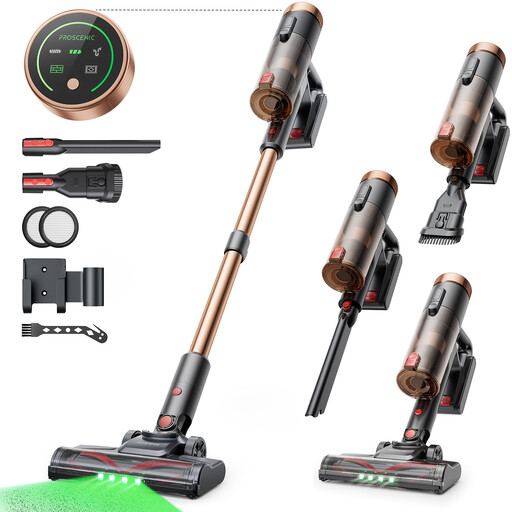
Why we recommend it The Proscenic P11 Ultra stands out with its self-standing design, which allows the device to be parked upright without support. The combination of a 550-watt motor and a suction power of 55,000 Pa (manufacturer's claim) positions it in the high-performance category. The OLED touch display also provides real-time information on battery level and suction mode.
Pros
Who it's for This model is suitable for users who value high ease of use, powerful performance, and smart features. The self-standing design and adjustable wand are particularly beneficial for households where cleaning is frequently interrupted or where people of different heights use the device.
View Product: Proscenic P11 Ultra
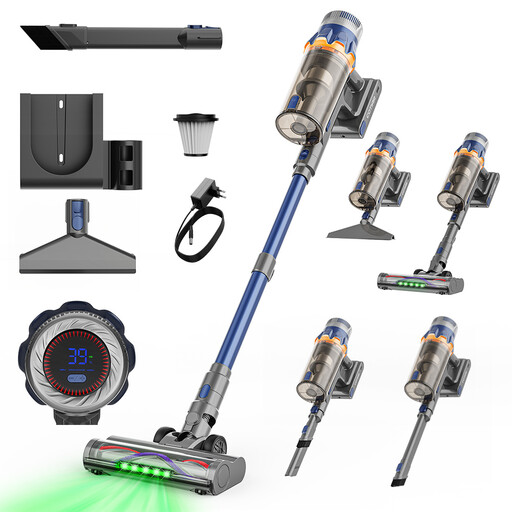
Why we recommend it The COTIAR S25 focuses on an exceptionally long battery life of up to 70 minutes (manufacturer's claim), making it ideal for cleaning very large living spaces. With 650 watts of motor power and 60 kPa of suction, it offers high performance reserves. A special feature is the floorhead with a green LED light that makes fine dust visible.
Pros
Who it's for Ideal for owners of large houses or apartments (over 200 m²) who require maximum runtime. The LED floorhead offers a clear advantage for those who appreciate visual confirmation of cleanliness on hard floors.
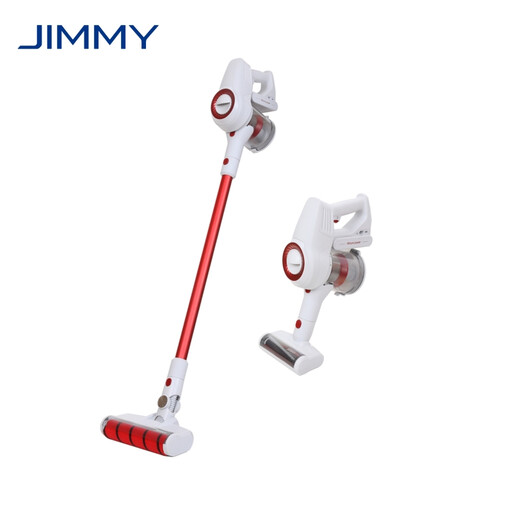
Why we recommend it The Jimmy JV51 focuses on being extremely lightweight and highly manoeuvrable. The main unit weighs only 1.46 kg, which makes cleaning ceilings, walls, and cars significantly easier. Despite its low weight, the digital motor delivers an effective suction power of 115 AW. The included electric anti-mite brush is a specific advantage for allergy sufferers.
Pros
Who it's for This model is the right choice for users looking for a particularly light and agile device for quick clean-ups and hard-to-reach areas. Thanks to the anti-mite brush, it is a great option for households with allergy sufferers.
The models presented here cover a wide range of requirements. However, if you are looking for devices with a specific focus on maximum suction power, you can find an extended selection in our stärkster handstaubsauger category.
1. What do Watts and Pascals (Pa) mean for a cordless vacuum? The Watt (W) figure indicates the power consumption of the motor. Pascal (Pa) is the unit of pressure and measures the vacuum pressure generated by the motor, which is the actual suction power. A high Pascal number is an indicator of the ability to pick up deep-seated dirt and heavy particles.
2. How important is a HEPA filter for allergy sufferers? A HEPA filter is highly relevant for allergy sufferers. It filters the smallest particles such as pollen, fine dust, mould spores, and dust mite faeces from the vacuum's exhaust air. This prevents these allergens from being released back into the room's air, which can help reduce allergic reactions.
3. Can a cordless vacuum replace a traditional corded vacuum? In many households, modern, powerful cordless vacuums can completely replace a corded canister or upright vacuum. Models with high suction power (over 25,000 Pa) and long battery life (over 45 minutes) are suitable for cleaning various floor types, including medium-pile carpets. For homes with very large areas or extremely demanding carpets, a corded device can still be a useful supplement.