
Lieferung heute & morgen

Qualitätsgarantie

Willkommens-Angebote freischalten: KOSTENLOSE Lieferung | Bis zu 80 % RABATT | Kostenlose 30-Tage-JoyPlus-Testphase
App herunterladen
A new cordless vacuum cleaner promises freedom and convenience: no tangled cords, no heavy unit to lug up the stairs. But the reality after buying one is often quite different. The battery dies after ten minutes, the suction power can't handle pet hair, and the device proves to be impractical. As your Joybuy Product Recommendation Officer, I'll help you spot the common marketing traps and understand the key features that lead to a smart buying decision.
Many advertising claims sound tempting but often lead to disappointment. Pay close attention to these two points to avoid making a poor choice:
To find a powerful cordless vacuum that suits your needs, you should evaluate three core aspects.
Suction power is the heart of any vacuum cleaner. Instead of relying solely on the motor's wattage, look for the rating in Pascals (Pa) or Kilopascals (kPa). This value describes the vacuum pressure the device can generate and is a more direct indicator of its ability to pick up dirt, dust, and pet hair.
Consider how you'll be using the device. Do you need to clean a large area in one go, or will you use the stick vacuum more for quick, intermittent clean-ups?
A good filtration system doesn't just capture large debris; it also purifies the exhaust air. This is especially important for allergy sufferers and homes with pets.
Here are some models tailored to specific needs that meet the criteria mentioned above.
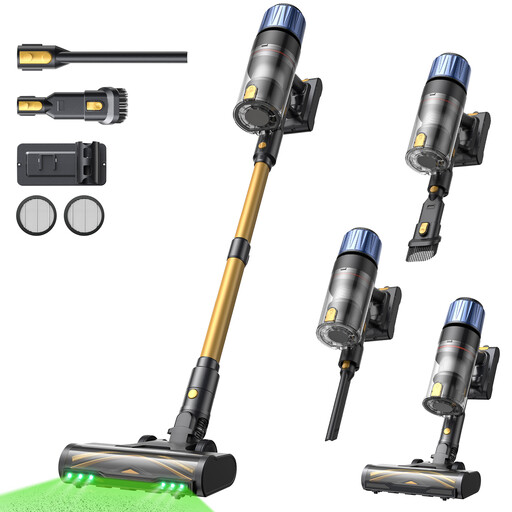
Why this model fits: Ideal for users who want to clean an entire apartment or house without interruption. The combination of high suction power and long battery life makes it a full-fledged alternative to a traditional corded vacuum.
This model bypasses the unrealistic runtime trap with a large 8-cell battery, which provides up to 70 minutes in Eco mode according to the manufacturer. The high suction power of 55 kPa is supported by a 600W motor, representing a transparent performance specification.
High suction power for deep cleaning on carpet and hard floors; self-standing design for convenient pauses.
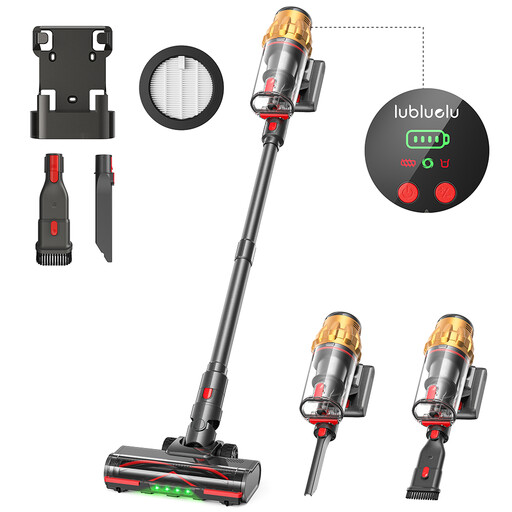
Why this model fits: Designed for the challenges of households with pets. The anti-tangle brush prevents long hair from getting stuck, while the HEPA system filters allergens from the air. The green LED light makes fine dust and hair visible.
Instead of just advertising suction power, this model solves a real-world problem: tangled hair in the brush roll. The combination of a strong 45 kPa suction power and a specialised brush offers genuine added value for pet owners.
Anti-tangle brush roll; green LED light for dust detection; HEPA filtration.
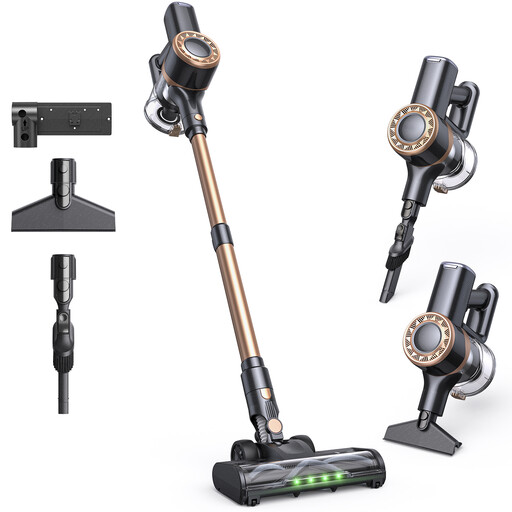
Why this model fits: Perfect for anyone who values convenience and ease of use. The self-standing design eliminates the need to drill for a wall mount and allows you to pause cleaning at any time without having to lean the device against something.
This model focuses on an often-overlooked but crucial feature: everyday usability. Instead of just aiming for maximum power, it offers a practical solution for storage and cleaning breaks with its self-standing design.
Self-standing design for maximum flexibility; 5-stage filtration system; balanced performance for daily use.
We have compiled a complete, up-to-date list of products that fully meet these strict selection criteria and all relevant safety standards.
1. How long does a cordless vacuum's battery really last? The actual runtime depends heavily on the mode you use. In Eco mode, many devices can run for 40-60 minutes. However, in Turbo mode, which is needed for carpets or heavy dirt, the runtime often drops to just 10-20 minutes. Always check the manufacturer's specifications for each power level and compare it to the size of your home.
2. Is a cordless vacuum suitable for carpets? Yes, modern and powerful cordless vacuums are perfectly capable of cleaning carpet and hard floors. Look for models with a motorised brush roll that agitates dirt out of carpet fibres and a suction power of at least 25 kPa for an effective deep clean.
3. What does a HEPA filter in a vacuum cleaner do? A HEPA filter is a high-efficiency particulate air filter. It captures microscopic particles like pollen, fine dust, mould spores, and dust mite allergens, preventing them from being recirculated into the air. For allergy and asthma sufferers, a vacuum with a HEPA filter is an excellent choice for improving indoor air quality.