Crafters with low shelves
If you mainly want to clear ordinary dry dust from the floor beneath a low shelf after crafting, the measured clearance and the design of the floor head are key.


For ordinary dry craft dust under a shelf, choose the design based on the clearance you’ve measured: a low-profile head may fit where space is limited, while a bendable tube can work if there’s enough room; for edges and narrow compartments, the right crevice tool matters. Bosch, Philips and Dyson list different designs and run times for specific models, so check each one against your own shelving and the mode you need. For wood dust from machinery, the DGUV sets out specific requirements for professional use; these do not amount to a blanket recommendation for every home crafting session.
If you mainly want to clear ordinary dry dust from the floor beneath a low shelf after crafting, the measured clearance and the design of the floor head are key.
If you more often clean edges, skirting boards and narrow gaps than open floor areas, a suitable crevice tool and an easy-to-handle vacuum are especially important.
If you want to disturb as little ordinary dust as possible while cleaning and emptying the vacuum, look at the filtration and how the dust container is handled. A separate suitability check is needed for potentially hazardous dust from machinery.
A good fit if: The dust is mainly on the floor beneath a shelf with sufficient clearance, and you’d like to bend down less while vacuuming.
Bear in mind: A joint in the tube alone doesn’t prove that the floor head will fit through the gap under your shelf.
A good fit if: There’s a hard floor beneath your shelf and a low profile matters more than a bendable tube. Dyson lists a minimum height of 95 mm for the PencilVac Fluffycones.
Bear in mind: This measurement applies to the model named and doesn’t prove that it will fit beneath every shelf or work on every floor covering.
A good fit if: Dust is mainly on shelves, along skirting edges or in narrow gaps.
Bear in mind: A detachable handheld vacuum won’t necessarily make cleaning larger floor areas as convenient; check the tools supplied and their compatibility with the exact variant.
The Verbraucherzentrale highlights how dust containers are handled. Information from Bosch, Philips and Dyson shows why you should check clearance and run time for the specific vacuum and the mode you need.
| Buying priority | What should you check? | Who is this especially important to? |
|---|---|---|
| Getting under the shelf | Measure the available height and depth, then compare them with the floor head of the specific model. | If I mainly want to vacuum the floor beneath a low shelf, the head must fit through the measured gap. Around 36% of consumers put this clearance first. |
| Reaching edges and compartments | Check whether a crevice tool or combination tool comes with the exact variant or is available as a compatible accessory. | There’s more dust and debris along my shelf edges and in narrow compartments than in open areas. Around 29% of consumers prioritise access to tight spots like these. |
| Handling and emptying dust | Consider the filtration details and their conditions separately from how the vacuum is emptied; take the type of dust and intended use into account. | If I want to disturb as little ordinary dust as possible while cleaning and emptying the vacuum, I pay particular attention to filtration and how the dust container is handled. Around 21% of consumers put this priority first. |
| Short cleaning sessions and battery supply | Check the run time in the mode you need and whether a compatible replacement battery is available. | After a crafting session, I want my vacuum to be ready to use without unnecessary interruptions. Around 14% of consumers prioritise straightforward short cleaning sessions and the ongoing effort involved in using the appliance. |
The joint can make it easier to manoeuvre the head, but the floor head may still be too tall for the gap in question.
Measure the lowest point and compare it with the height of the fully assembled floor head in its working position.
For the Philips XC5242/10, the manufacturer lists up to 60 minutes in Eco mode, but 15 minutes in turbo mode.
Compare the run time for the mode you actually plan to use and, if needed, check whether a compatible replacement battery is available.
A filtration rating does not prove that a vacuum is suitable for hazardous dust from machinery or that it can be emptied without releasing dust.
If you’re dealing with wood-sanding dust or other potentially hazardous materials, first check what extraction is suitable for the material and task. The DGUV sets out specific requirements for extracting dust from woodworking machinery in professional settings.
The models mentioned illustrate two different designs: a bendable tube on the Unlimited 7 BSS711W and a detachable handheld vacuum on the Readyy'y BCHF216S.
The 5000 Series Flex XC5242/10 is described as having a flexible tube and an illuminated floor head.
The PencilVac Fluffycones is described as a low-profile design for low-clearance hard-floor areas.
The PowerDetect Speed Luxe Collection Clean & Empty was highlighted in the German IMTEST comparison; this alone doesn’t prove that it’s suitable for a particular craft shelf.
This selection includes cordless vacuum cleaners with features described for cleaning beneath furniture or in tight spots. Check the features listed and what’s included for the specific model variant.
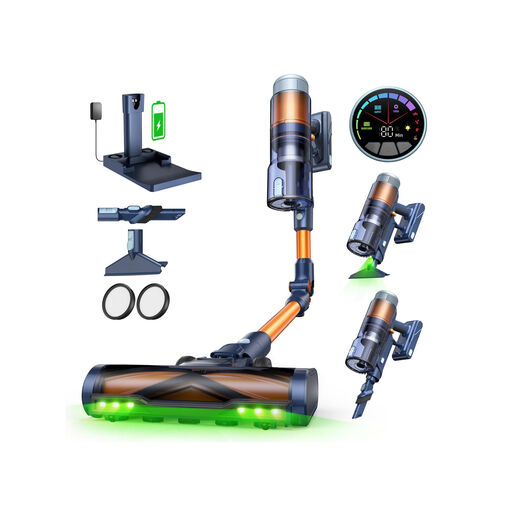 No image available
The folding tube and crevice tool described are relevant for cleaning beneath furniture and in narrow spots.
Listed features: 70 cm reach, 70 kPa, up to 80 min and a charging station. Check which operating mode the run-time figure applies to.
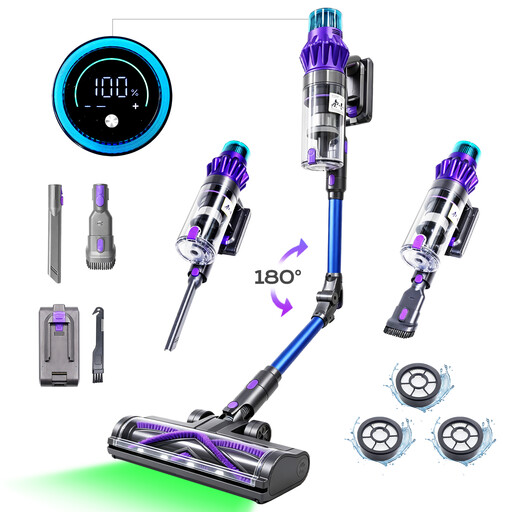 No image available
The bendable tube and crevice tool described make this a relevant option if you want to clean both floor areas beneath furniture and narrow spots.
The product name lists 500 W, 75 kPa and 60 min; a removable battery and 2-in-1 brush are also listed. Check the conditions behind the run-time figure for your intended use.
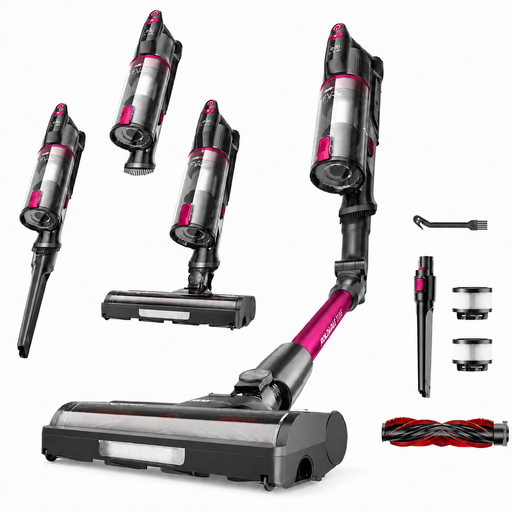 No image available
The folding, extendable tube is worth considering if you want to clean beneath furniture.
Listed features: 70 cm reach, 60 kPa and up to 50 min. The description lists hard floors and carpets as suitable surfaces; check the run-time conditions for the mode you choose.
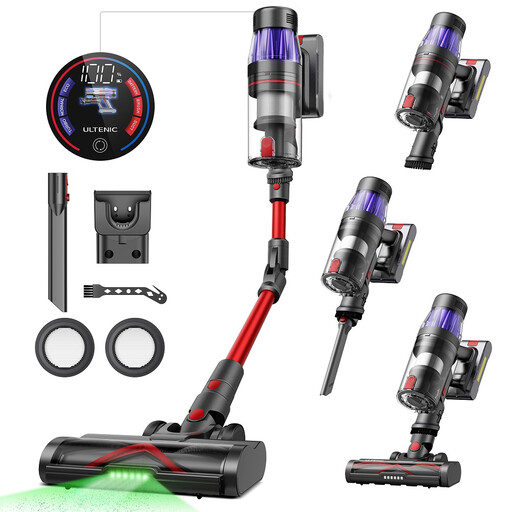 No image available
The bendable tube and crevice tool described are useful for floor areas beneath furniture and narrow spots.
The product name lists 50,000 Pa and up to 60 min; the description also includes a rotating floor head. Check the run-time figure against the operating mode you need.
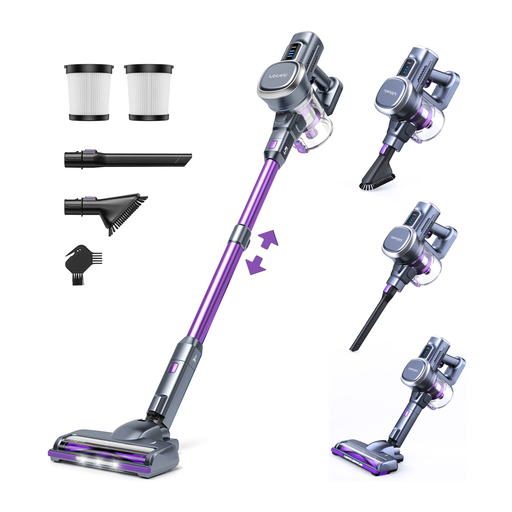 No image available
The long crevice tool described is useful if you want to clean edges and narrow gaps.
Listed features: up to 50 min, removable battery, motorised floor head and long crevice tool. The description lists hard floors and carpets as suitable surfaces.
Measure the available height at the lowest point and check the height of the floor head in its actual working position. A bendable tube alone doesn’t prove that the head will fit through; for example, the manufacturer lists a minimum height of 95 mm for the Dyson PencilVac Fluffycones.
Check the dust container, tool and filter, and follow the maintenance instructions for the exact model number. Philips notes that several factors can cause reduced suction in appliances from its 5000 Series; this doesn’t establish a single filter replacement schedule for every model.
Don’t assume it’s suitable based on a household filter rating. For extracting dust from woodworking machinery in the professional settings covered, the DGUV specifies at least Class M dust extractors, along with further requirements for combustible dust. This is not a blanket recommendation for every home crafting session; check the material, task and suitable extraction separately when dealing with dust from machinery.
According to the Verbraucherzentrale, online orders generally come with a 14-day cancellation period from the date you receive the goods. Your statutory rights against the seller are separate from any voluntary guarantee, so check its terms separately.
The Umweltbundesamt’s disposal guidance says that old electrical appliances and batteries must not go in household rubbish. Take the appliance to an appropriate collection point; if the battery can be removed easily by hand, take it separately to a battery collection point.