Cleaning crevices after a walk
If you want to remove dry dust from accessible corners or crevices, a suitable crevice tool is essential. Einhell and Bosch DIY list crevice tools as accessories for the models in question.


For dry dust in accessible crevices, a cordless handheld vacuum with a suitable crevice tool is a natural place to start. If you also want to clean hard floors, consider a model with extension tubes and a floor nozzle. However, Einhell and Bosch DIY specify that the body-only versions described here are supplied without a battery or charger. If you also need to vacuum up liquid, the specific model must be explicitly designed for wet use.
If you want to remove dry dust from accessible corners or crevices, a suitable crevice tool is essential. Einhell and Bosch DIY list crevice tools as accessories for the models in question.
If you also want to pick up liquid, check that the specific model has a wet-vacuum function. BLACK+DECKER and Makita explicitly state that certain models have this feature.
If you want to remove dry debris from both crevices and hard floors, compare the handheld mode, extension tubes, floor and crevice tools, and what’s included in the battery pack. Einhell and Bosch DIY list accessories for these tasks with the respective versions described here.
Ideal if: You mainly want to remove dry dust from narrow, easy-to-reach areas.
The trade-off: A compact design doesn’t automatically mean that a floor or wet-vacuum nozzle is included.
Ideal if: You want to clean dry debris from hard floors as well as crevices. Einhell and Bosch DIY list crevice and floor accessories with the versions described here.
The trade-off: The body-only versions from Einhell and Bosch DIY reviewed here are supplied without a battery or charger.
Ideal if: You really do need to pick up liquid and the specific model is designed for wet use.
The trade-off: Wet-vacuum capability alone doesn’t tell you whether the nozzle will fit into a narrow crevice. Makita gives the weight of the DVC750LZX3, including the battery, as 4.3–4.6 kg.
| Criteria | What to check before buying | Who it matters most to |
|---|---|---|
| Suitable crevice tool | Check the shape of the attachment and whether it’s included, to make sure it will reach the area you need to clean. Einhell lists a 26 cm crevice tool for the TE-HV 18/06 Li-Solo; Bosch DIY lists a crevice tool for narrow spaces with the UniversalVac 18. | If I mainly want to remove dry dust from accessible crevices, having the right attachment matters to me. Around 36% of consumers prioritise cleaning crevices. |
| Wet pick-up | If you need to pick up liquid, check that the specific model is approved for wet use. Wet-vacuum capability and nozzle fit are separate considerations. | If I also need to vacuum up liquid, I need a model specified for that purpose. Around 29% of consumers prioritise wet pick-up. |
| Crevices and hard floors | Check whether the specific version includes handheld mode, extension tubes, and floor and crevice tools. | If I want to remove dry debris from both crevices and hard floors, I look for a vacuum that can do both. Around 21% of consumers prioritise this combination. |
| Battery and maintenance | Check whether a battery and charger are included, and read the care instructions for filters and spare parts. Einhell and Bosch DIY specify that the body-only versions described here are supplied without a battery or charger. | If I still need to find a compatible battery system or want to consider future maintenance, what’s included matters to me. Around 14% of consumers prioritise the battery and maintenance. |
The body-only versions from Einhell and Bosch DIY described here do not include a battery or charger. The vacuum therefore won’t be ready to use straight away unless you have a compatible battery and charger.
Depending on the accessories you already own, you may also need to buy a compatible battery and charger.
Before buying, check what’s included with the specific version and whether it’s compatible with a battery system you already own.
Suitability for liquids depends on the model. A vacuum designed for dry dirt isn’t automatically suitable for wet use.
Decide whether you only need to pick up dry dust or also liquid. For the latter, check that the specific model is explicitly approved for wet use.
The models can differ in their nozzle and design: BLACK+DECKER lists a wide suction opening for the WDA320J-QW, while Makita lists a hose and crevice tool for the DVC750LZX3.
Check wet-use approval and nozzle shape separately, and make sure the attachment suits the area you need to reach.
The TE-HV 18/06 Li-Solo combines handheld use with accessories for crevices, upholstery and floors, and is part of the Power-X-Change system.
The UniversalVac 18 is aimed at buyers looking for a cordless handheld vacuum with crevice and floor accessories.
The Dustbuster models mentioned differ in whether they’re designed for dry crevice cleaning or specifically for wet and dry use.
The DVC750L is a cordless wet and dry option supplied with a hose and crevice tool.
This selection includes cordless vacuums with crevice tools for dry debris, as well as one model described as a wet and dry vacuum. Check that each product’s features and operating mode suit your needs.
 No image available
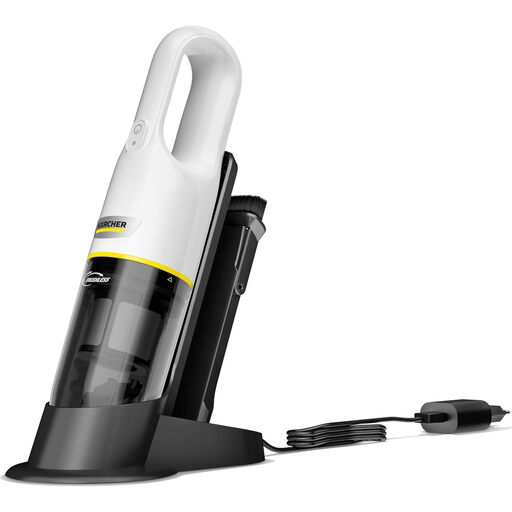
The listed 2-in-1 crevice tool is useful for cleaning dry dust from accessible crevices.
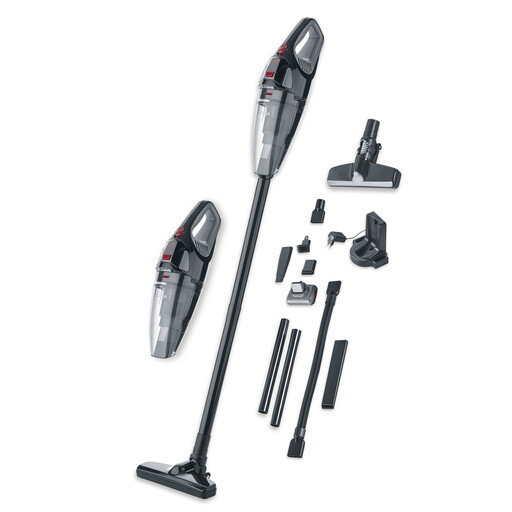
0.15-litre dust container; 0.55 kg; 7.2 V battery; 20 minutes’ run time; HEPA filter and steel mesh pre-filter; charging dock and adapter.
 No image available
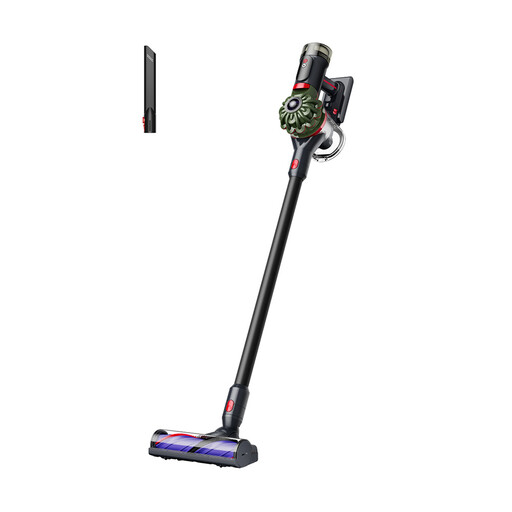
The listed crevice tool is useful for accessible gaps; according to the description, the vacuum can also be used as a handheld model.
Dyson states that the V8 documented here must not be used to pick up water or other liquids. Do not use it for wet cleaning.
 No image available
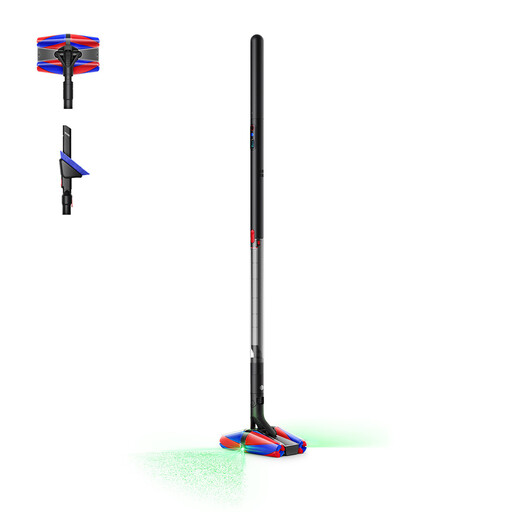
The listed crevice tool is designed for narrow gaps and hard floors.
Features include a rotating combination crevice tool and a magnetic charging dock.
 No image available
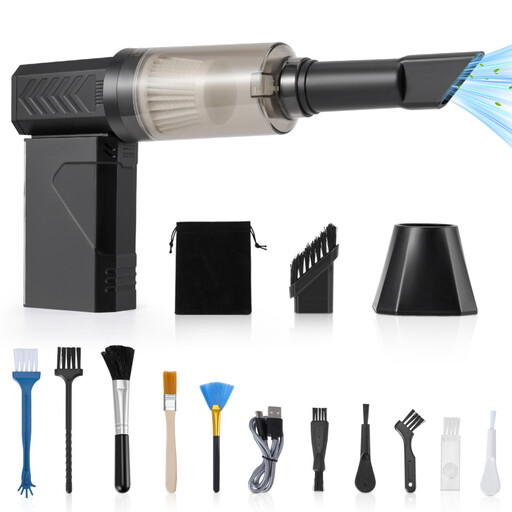
The title lists computer, car and sofa crevices as suitable uses.
Suction and blowing functions, adjustable speed and LED lighting are listed. The charging version is specified in the product name.
 No image available
For cleaning crevices and floors, the description lists accessories for hard-to-reach areas and both handheld and stick-vacuum use. The model is specified for wet and dry use.
18.5 V; 50 minutes’ run time; extension tube, floor nozzle, rotating turbo brush and crevice tool are listed.
No. Suitability for liquids depends on the model. Dyson says not to use the V8 documented here to pick up liquids, while BLACK+DECKER specifies this function for the WDA320J-QW and Makita for the DVC750L. Check the instructions for the specific vacuum; a wet-vacuum function doesn’t automatically mean it can reach every crevice.
Use the crevice tool designed for your model and follow its care instructions. Einhell says the dirt filter on the TE-HV 18/06 Li-Solo can be cleaned under running water. For the V8 documented here, Dyson says to leave the filter to dry for at least 24 hours after rinsing it, before putting it back in. Don’t assume these instructions apply to other filters.
First, check whether a battery and charger are included; they’re not included with the body-only versions from Einhell and Bosch DIY described here. The Verbraucherzentrale distinguishes between your statutory rights against the seller and a voluntary guarantee. In Germany, online purchases generally come with a 14-day right to cancel, starting from the day you receive the goods; statutory exceptions apply.
Electrical waste must not go in household rubbish; it must be collected separately. If the battery can be removed without damaging the vacuum, take it out before returning the appliance and dispose of it separately through a suitable battery collection scheme. The German Environment Agency lists recycling centres and retailers as return options.