People with narrow gaps between furniture
If dust collects beside or behind furniture, you’ll need a crevice tool that fits into the accessible gap. Measure the opening and check the shape and length of the attachment.


For dust in gaps you can reach from the side, choosing the right crevice tool is key. For floors beneath low furniture, the flexible wand and the height of the floor head matter more. A compact handheld vacuum can be handy for quick jobs around furniture, but it won’t necessarily replace a vacuum cleaner for whole floors. Measure the access gap where you’ll be cleaning, and check the accessories and runtime figures for the exact model variant.
If dust collects beside or behind furniture, you’ll need a crevice tool that fits into the accessible gap. Measure the opening and check the shape and length of the attachment.
If your main concern is removing dust from under furniture, consider the height of the complete floor head and how the wand moves. A flexible wand can make it easier to reach underneath, but it doesn’t tell you whether the floor head itself will fit under the furniture.
For tackling individual corners and areas around furniture, a lightweight, easy-to-handle appliance may matter more than a long runtime for larger floor areas. Check that the appliance, handle and attachment will fit into the space you need to clean.
Best for: cleaning narrow gaps you can reach from the side, as well as vacuuming floors.
Bear in mind: A crevice tool won’t necessarily solve the problem of limited clearance beneath furniture.
Best for: reaching dust on the floor under a sofa or cupboard.
Bear in mind: A flexible wand makes it easier to manoeuvre, but it won’t turn a wide floor head into a narrow crevice tool.
Best for: mainly cleaning individual, accessible areas around furniture and corners.
Bear in mind: A handheld vacuum isn’t necessarily designed to clean entire floor areas.
Bosch Hausgeräte lists a long, flexible crevice tool and a flexible wand for the BCS711EXT. Philips gives separate runtimes for energy-saving and Turbo modes for the XC5244/10; Rowenta’s 60-minute figure refers to the handheld vacuum in its standard position. These figures aren’t directly comparable.
| What you need | What to look for when buying | Who will find this especially important? |
|---|---|---|
| Access to narrow gaps | Measure the gap; check the shape, length and flexibility of the crevice tool, as well as what’s included with the model variant. | If I want to remove dust through a narrow gap at the side without moving furniture, having a crevice tool that fits is important to me. Around 31% of consumers say access to gaps is their main concern. |
| Floor space beneath low furniture | Measure the clearance and compare it with the height of the complete floor head in its working position. | If dust mainly collects under my sofa or cupboard, I need a design I can manoeuvre underneath. Around 25% of consumers prioritise access to the floor beneath furniture. |
| Ease of handling for quick jobs | Check the grip, the space needed for the appliance body and which attachments are actually included. | If I usually clean just a few areas around furniture or some corners, I want to be able to grab the vacuum and use it quickly and precisely. Around 19% of consumers prioritise ease of handling for quick jobs. |
| Runtime and ongoing care | Compare runtime figures only when the mode and set-up are comparable; check whether a spare battery is available and read the care instructions for the model variant. | If I vacuum repeatedly or for longer periods, usable runtime and the effort involved in maintenance matter to me. Around 13% of consumers focus primarily on the battery and maintenance. |
| Purchase price and accessory costs | Check the model variant and what’s included against the attachments you need. | If I want to choose a vacuum with the attachments I need for my gap, I compare what’s included with the exact model variant. Around 12% of consumers focus on the purchase price and accessory costs. |
A flexible wand mainly makes it easier to manoeuvre the floor head under furniture. For a narrow gap at the side, what matters is whether a suitable crevice tool can reach it.
First work out whether the dust is mainly on the floor or in a gap at the side, then check access to each separately.
The stated contents apply to the specific model variant. On the BLACK+DECKER product page, the accessory description and specifications don’t match.
Before ordering, check the full model number and what’s included in the box.
Manufacturers may quote runtimes for different operating modes. Philips gives runtime figures for two modes; Rowenta’s 60-minute figure is for the handheld vacuum in its standard position.
Only compare runtimes on the same basis, and take charging time and the availability of a compatible spare battery into account.
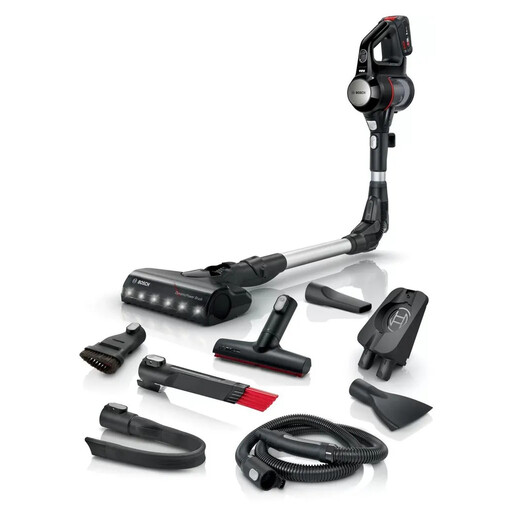
According to Bosch Hausgeräte, the Unlimited 7 BCS711EXT combines a flexible wand with a long, flexible crevice tool and an extension hose.
The Dustbuster Flexi PD1820L-QW is a handheld option for quick jobs in accessible corners around furniture.
The X-Force Flex 10.80 RH7A35E0 is designed for floor areas beneath furniture and is listed with a crevice tool.
The 5000 Series Flex XC5244/10 is aimed at households where floor areas beneath a sofa or table are hard to reach.
For the V12 Detect Slim, Dyson describes a low-profile hard floor head and lists model-specific accessories separately.
This selection includes cordless stick and handheld vacuums for accessible gaps and floor areas beneath furniture. For each model, check that its design and included accessories suit the space you need to reach.
 No image available
If you want to reach floor areas beneath furniture and clean gaps separately, Bosch lists this model with a flexible wand and a crevice tool. Check the height of the floor head and the contents of the box for the exact model variant.
 No image available
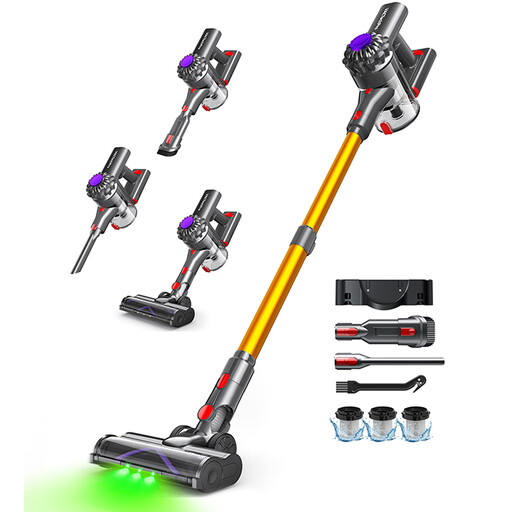
A crevice tool and telescopic tube are listed for reaching accessible tight spaces. The product name specifies 58 kPa, 60 min runtime, 6-in-1 functionality and a removable battery; check which operating mode the runtime refers to.
 No image available
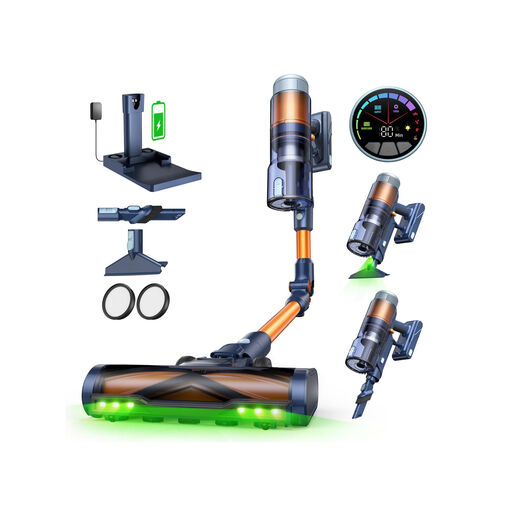
The flexible wand is designed to help you manoeuvre beneath furniture. The product name specifies 70 kPa, 80 min and a charging station; check which operating mode the runtime applies to and whether a crevice tool is also included.
 No image available
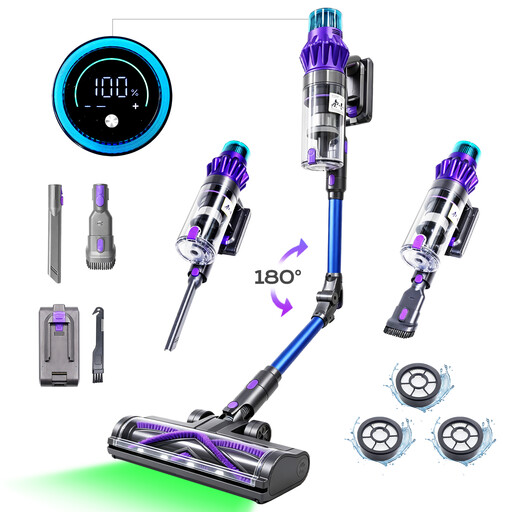
A crevice tool and a flexible suction tube are listed for different access points. The product name specifies 500 W, 75 kPa and 60 min; before comparing, check which mode the runtime applies to and whether the attachments are included with the variant you’ve selected.
 No image available
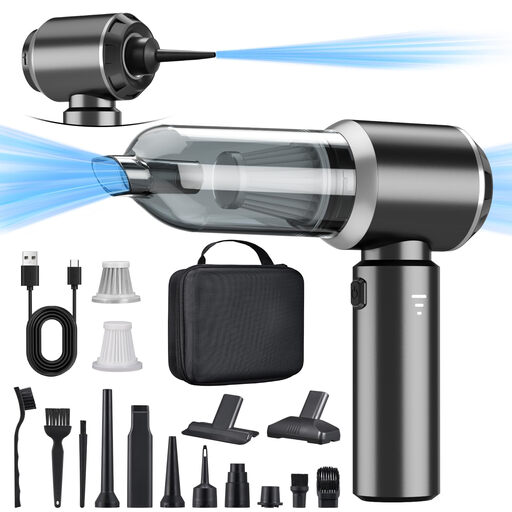
For quick jobs in small, accessible spaces, this cordless handheld vacuum is described as having suction and blowing functions, as well as an extension nozzle. The product name specifies 28,000 Pa; check that the attachments can actually reach the gap you need to clean.
Not necessarily. A flexible wand helps you manoeuvre the floor head beneath furniture. For a gap at the side, you’ll also need a suitable crevice tool; measure the opening and check the attachment’s dimensions.
That depends on the specific model variant. Check the charging accessories and instructions: the manufacturer lists a charging station for the BLACK+DECKER PD1820L-QW and a charging cradle for the Rowenta RH7A35E0.
Only compare runtimes when the operating mode and set-up are the same. Clean the bin and filters according to the instructions for your model variant; a removable battery only gives you a back-up if a compatible spare battery is available.
No. For a purchase in Germany, statutory claims for defects are generally made against the seller. Section 438 of the German Civil Code (BGB) generally sets a two-year period from delivery for ordinary movable goods. A manufacturer’s guarantee is separate and subject to its own terms.
No. In Germany, electrical waste is collected separately. Where you can do so without extensive dismantling, remove the battery and take it separately to a suitable battery collection point. You can take the appliance to a recycling centre or an appropriate take-back point.