
Lieferung heute & morgen

Qualitätsgarantie

Willkommens-Angebote freischalten: KOSTENLOSE Lieferung | Bis zu 80 % RABATT | Kostenlose 30-Tage-JoyPlus-Testphase
App herunterladen
A cordless vacuum cleaner promises freedom and convenience in your housework routine. But the market is flooded with marketing promises that often obscure more than they clarify. Many buyers quickly discover their new device doesn't deliver the expected performance. As your Joybuy Product Recommendation Officer, I'll help you identify the crucial features and sidestep the common pitfalls of buying a cordless vacuum.
Before we dive into the important technical specs, let's expose the marketing tricks that often lead to disappointment.
To avoid a bad buy, you should focus on objective, real-world parameters.
The cleaning performance of a cordless vacuum is a combination of several factors. Instead of relying solely on the Pascal rating, look for the following combination:
A cordless vacuum with long battery life is essential for uninterrupted cleaning. Check the manufacturer's specifications for the different power levels. A realistic runtime of at least 15 minutes in turbo mode is necessary for most demanding tasks. Models with a swappable battery offer additional flexibility and extend the device's lifespan, as a faulty battery can be easily replaced.
A good filtration system protects not only the motor but also your health.
Here are a few models that represent a smart choice for different user profiles, based on objective criteria.
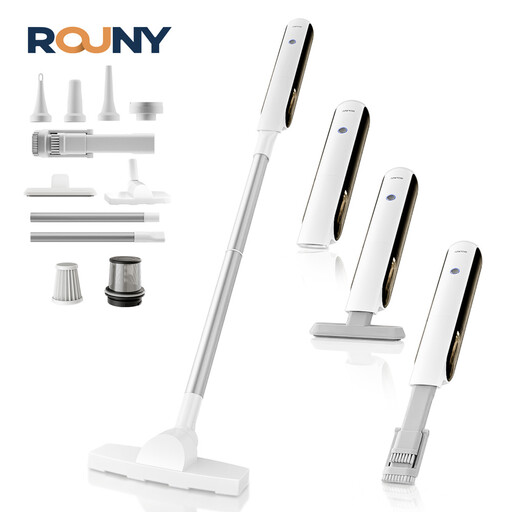
Why it's a good fit: Ideal for smaller apartments, the car, or as a secondary device. It combines a handheld vacuum with a stick attachment for light floor cleaning and is extremely lightweight at 0.5 kg. The 2-in-1 function with vacuuming and a blower is practical for hard-to-reach places like keyboards.
This model avoids the trap of exaggerated claims. It is clearly positioned as a compact device for targeted tasks, not as a full-fledged replacement for a large floor vacuum. The runtime of up to 30 minutes is realistic and sufficient for this purpose.
Versatility: The combination of a handheld and stick vacuum, along with the added blower function, makes it a multifunctional tool for small cleaning jobs.
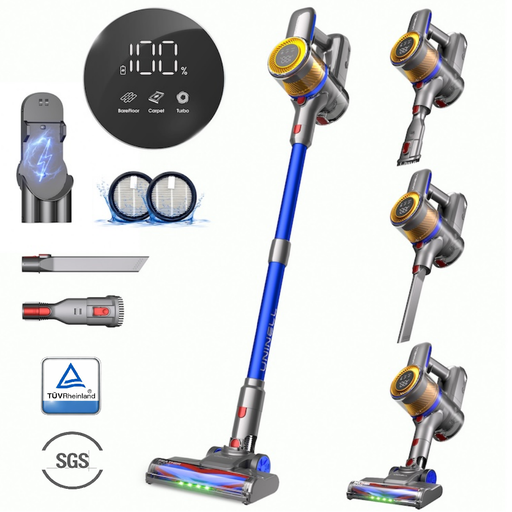
Why it's a good fit: Designed for the challenges of homes with pets or children. The combination of a 450W motor and a special V-shaped anti-tangle brush roll ensures effective pickup of pet hair without it getting tangled.
This model bypasses the suction power trap by offering not just a high Pa rating, but also a specially designed brush roll for pet hair. The runtime of up to 60 minutes and the swappable battery also address the problem of unrealistic runtime claims.
Anti-Tangle Brush Roll: The V-shaped brush significantly reduces maintenance, as hair is channelled directly into the dustbin instead of wrapping around the roll.
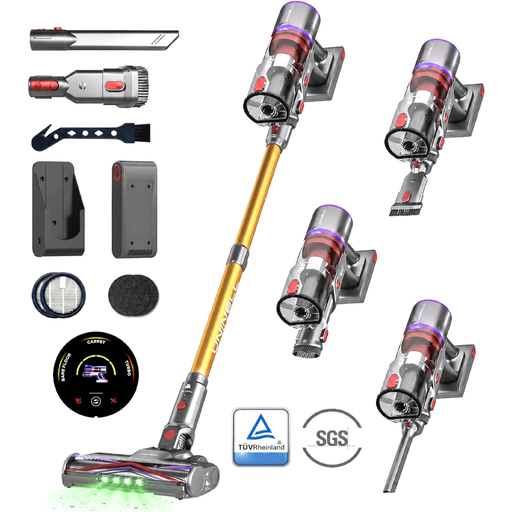
Why it's a good fit: For users who want to combine high performance with smart technology. It offers very high suction power (up to 60,000 Pa), a long runtime of up to 65 minutes, and intelligent AI battery management to optimise performance and lifespan.
The AI battery management ensures stable and efficient power delivery, avoiding the pitfall of rapidly declining battery performance. The 7-stage filtration system also addresses the problem of inadequate filtration, ensuring clean exhaust air.
Smart Touchscreen and AI Management: The LED display shows battery level, remaining runtime, and maintenance alerts in real-time. The intelligent battery management optimises performance and preserves battery health.
We have compiled a complete, up-to-date list of products that fully meet these strict selection criteria and safety standards.
The actual battery life depends heavily on the selected suction level. While runtimes of 40 to 60 minutes are realistic in eco mode, this often drops to 10 to 20 minutes in turbo mode. Check the manufacturer's specifications for the different modes and consider which level you will need most often for your floors and types of mess.
No, the Pascal rating alone is not the deciding factor. It is just one of several elements. High cleaning performance comes from the interplay of motor power (watts), the design of the floorhead (especially for carpets and pet hair), and an efficient, non-clogging filtration system.
This depends on the frequency of use and the amount of dust in your home. For washable filters, cleaning every few weeks is recommended. Non-washable HEPA filters should be replaced every 6 to 12 months, depending on the manufacturer's instructions, to maintain filtration performance, especially for allergy sufferers. A clogged filter reduces suction power and can overload the motor.