People with low shelves
If you mainly want to remove dry dust from hard-to-reach places, the available clearance beneath your shelves and how easily you can manoeuvre the specific nozzle are key.


For loose, dry dust under low shelves, consider a cordless dry vacuum with a bendable wand or a low-profile hard-floor nozzle, provided the whole appliance fits beneath the available clearance. Only clean damp muddy footprints with a wet-cleaning function that is explicitly approved for the model, or wipe them up separately. For example, Dyson does not allow the V8 to be used to pick up water or other liquids. Then compare the runtime in the mode you need, how easy it is to empty, and the availability of replacement parts.
If you mainly want to remove dry dust from hard-to-reach places, the available clearance beneath your shelves and how easily you can manoeuvre the specific nozzle are key.
If walks leave loose sand or the occasional damp muddy footprint indoors, it’s important to know whether the dirt is dry or wet.
If you regularly vacuum larger areas, it’s worth comparing runtime, how easy the dust container is to empty, and whether filters or batteries are available for the specific model.
First, establish whether the dirt is dry or wet. Then check that the vacuum fits beneath your shelves, followed by its runtime and maintenance requirements.
| What you need | What to check before buying | Who is this important to? |
|---|---|---|
| Dust under shelves | Measure the available height and depth; check the nozzle and how you manoeuvre the whole appliance. | If my shelves are low, I want to reach the dust without having to bend down too far. Around 28% of consumers prioritise reach under shelves. |
| Loose, dry dirt | Check your floor type and whether the supplied nozzle is suitable for hard floors or carpets. | If a walk leaves mainly dry sand or loose dirt behind, effective dry cleaning matters to me. Around 22% of consumers prioritise picking up loose, dry dirt. |
| Damp muddy footprints | Check that wet cleaning is approved, and that the appliance and attachment are suitable for your floor type. | If damp marks or sticky stains are a regular problem, I want to know how to clean them from my floors. Around 22% of consumers prioritise wet cleaning. |
| Runtime and ease of use | Check the runtime for the suction setting and nozzle you need, as well as the weight and whether it has a replaceable battery. | If I vacuum often or for long periods, I want the appliance to be comfortable to manoeuvre and to know how long it will last for my needs. Around 17% of consumers prioritise endurance and ease of use. |
| Maintenance and replacement parts | Check the care instructions and whether replacement filters and batteries are available for the exact model. | If filter care and replacement parts are important to me, I want to know what’s involved for the specific model. Around 11% of consumers prioritise maintenance and replacement parts. |
Approval for dry vacuuming doesn’t mean an appliance can pick up liquids. With combination appliances, dry and wet cleaning may require different attachments.
Before buying, distinguish loose, dry dirt from damp marks, and check which functions are approved for the specific model.
A separate wet-cleaning attachment or an extra mopping step means more handling and maintenance.
A bendable wand or low-profile nozzle on its own doesn’t tell you how far you can manoeuvre the whole appliance beneath your shelves.
Measure the available clearance and check it against the nozzle and how the appliance is handled.
Runtime depends on the model and the suction setting selected. For example, Bosch home appliances lists different maximum runtimes for Eco, Auto and Turbo on the Unlimited 7 BKS711MALL. Rowenta’s runtime figure for the RH9A36WV, meanwhile, is based on Eco mode when used as a handheld vacuum.
Compare runtimes for the mode and nozzle you’ll use, and check which batteries are included with the model.
Unlimited models with a bendable wand may be worth considering for cleaning under low shelves; check the specification of the exact model.
X-Force Flex models with a flexible joint may be an option for cleaning under furniture; the fit of the specific appliance is what matters.
A low-profile hard-floor nozzle may be useful for cleaning dry dust under furniture; the specific nozzle and model variant are key.
The LVAC-300 may be worth considering when comparing hard-floor cleaning, stated runtime and available replacement filters.
When looking at PURE-ONE models, distinguish the S70 from the variants specifically described as having a bendable wand.
The products below include cordless appliances for dry cleaning under furniture, as well as models explicitly specified for wet and dry cleaning. For damp marks, check that wet cleaning is approved for the specific model; for low shelves, check that the appliance will actually fit.
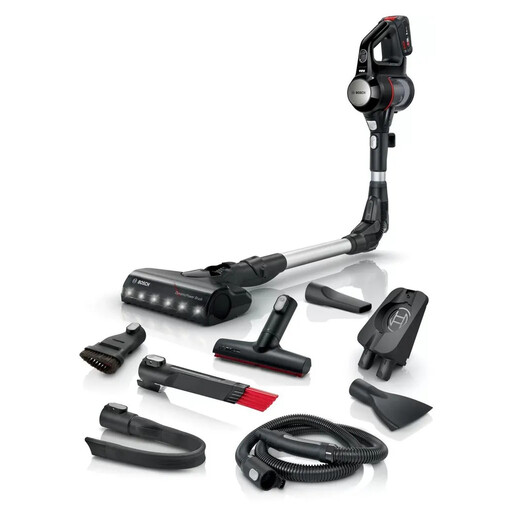 No image available
The bendable-wand version may be suitable for picking up dry dust under low furniture; check that the nozzle and appliance fit under your shelves.
Do not use to pick up water, wet materials or liquids. Damp marks need to be cleaned separately with a suitable method.
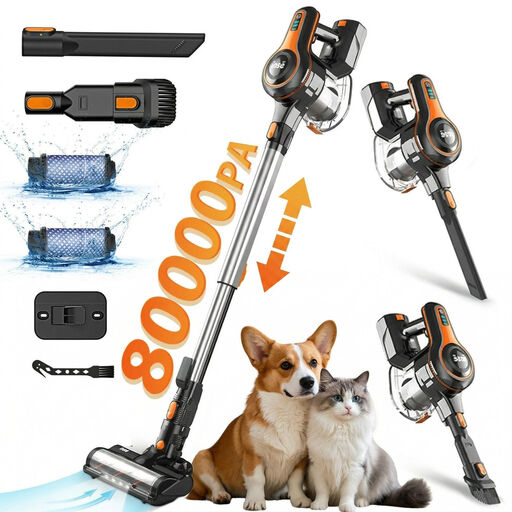 No image available
The swivelling head and lights may be useful for cleaning under furniture; check the dimensions and how easily you can manoeuvre it beneath your shelves.
The product title lists up to 55 minutes of runtime and a 1.2-l container.
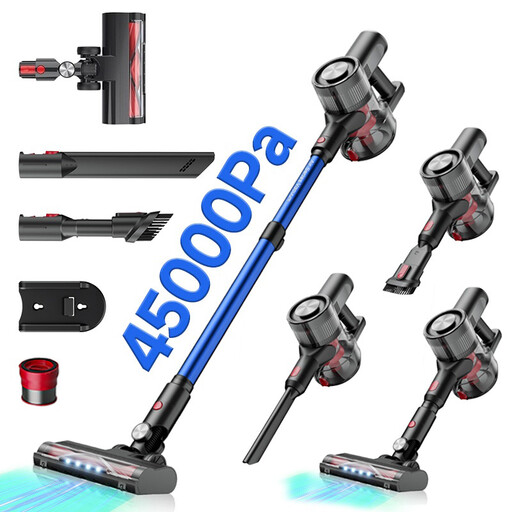 No image available
The extendable wand makes this model an option for picking up dust under low furniture; check the dimensions and how easily you can manoeuvre it beneath your shelves.
The product title lists a removable battery.
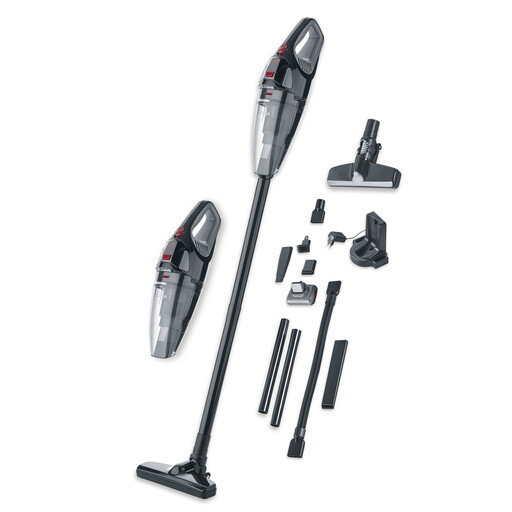 No image available
The product title describes this model as a wet and dry vacuum cleaner. Before picking up damp muddy footprints, check the instructions and confirm it’s approved for your floor type.
The product title lists 18.5 V.
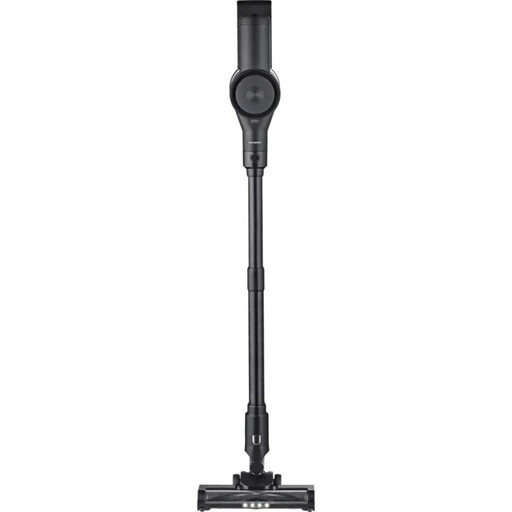 No image available
The product title specifies wet and dry cleaning. Before cleaning damp marks, check the instructions and confirm it’s approved for your floor type.
The product title lists 400 W and up to 60 minutes of runtime.
Only use a dry-cleaning nozzle for this if the manufacturer explicitly approves it for the specific model. For example, Dyson does not allow the cordless V8 to pick up water or other liquids. For damp marks on a suitable hard floor, you could use a purpose-designed wet-cleaning attachment or mop separately.
Measure the available clearance at the entrance and further back under the shelf. Then check the height of the supplied nozzle and whether you can manoeuvre the whole appliance in that position. A bendable wand or low-profile nozzle alone doesn’t guarantee it will fit.
Follow the instructions for the exact model. For the Dyson V8, Dyson recommends rinsing the filter in cold water and leaving it to dry for at least 24 hours before refitting it. This drying time doesn’t automatically apply to other appliances.
In Germany, your statutory rights if a product is faulty are against the seller; a manufacturer’s warranty is an additional voluntary service with its own terms and conditions. The Verbraucherzentrale explains that you can initially request that the seller puts things right by repairing or replacing the product.
No. The German Environment Agency explains that waste electrical appliances in Germany must be collected separately, for example at a recycling centre. Where this can be done without extensive dismantling, removable batteries should be taken separately to an appropriate battery collection point.