Shared houses with low beds
If you want to reach lint well under the bed, measure the clearance and check that the floorhead and lowered vacuum can fit underneath. A flex tube or lie-flat design alone does not guarantee a good fit.


First, measure the clearance and depth under the beds: the floorhead and vacuum need to fit through the actual gap. A flex tube can make it easier to guide the vacuum under furniture; a model that lies flat is another option, particularly on hard floors. Bosch and Philips describe flex tubes on certain models, while Dyson describes the lie-flat design of the Omni-glide. Even so, always check the exact model variant, floorhead and runtime in the mode you need.
If you want to reach lint well under the bed, measure the clearance and check that the floorhead and lowered vacuum can fit underneath. A flex tube or lie-flat design alone does not guarantee a good fit.
If you want to clean hard floors and carpets in several rooms, check which floorheads are included and how long the battery lasts on the suction setting you actually use.
If you vacuum at different times or want to minimise contact with dust when emptying the bin, consider the noise figures, how the bin is emptied and the effort involved in maintaining the filters.
A good fit if: You want to guide the tube under furniture without bending down too far; Bosch and Philips describe this type of tube on certain models.
Bear in mind: The joint alone does not tell you whether the floorhead and vacuum will fit through the clearance under your bed.
A good fit if: There is little clearance under the bed and the floor is hard; Dyson describes this design on the Omni-glide.
Bear in mind: Check whether the specific floorhead is also suitable for carpets and other floor types in your shared house.
A good fit if: There is enough clearance under the beds and you want one vacuum to clean different floor types and other rooms.
Bear in mind: Being suitable for general cleaning does not prove that the vacuum will fit under a low bed.
Break the buying decision down into two checks: will the floorhead fit under the beds, and does the equipment cover the floor types you want to clean together? This comparison covers the five most common priorities.
| Priority | What to check when buying | Who is this important to? |
|---|---|---|
| Getting under low beds | Measure the clearance and depth; check the floorhead and lowered vacuum on the exact model variant. | If I want to remove lint from under a low bed, the floorhead and vacuum need to fit underneath. Around 34% of consumers put this reachability first. |
| Cleaning the different floor types | Check the flooring under the beds and in the rooms; compare the included floorheads with these surfaces. | If I want to share a vacuum for hard floors and carpets, I look for the right equipment for both. Around 20% of consumers prioritise different floor types. |
| Runtime for shared use | Compare runtime on each suction setting; check the availability and compatibility of a spare battery. | If we’re cleaning several rooms one after another, runtime in the mode we use is crucial to me. Around 20% of consumers put runtime first. |
| Noise in a shared house | Compare the sound power levels of the specific models; agree on suitable times for cleaning. | If other people are at home, I want to take the noise level of the specific vacuum into account. Around 13% of consumers prioritise minimising disruption. |
| Emptying and maintenance | Check how to empty the vacuum and the care instructions; make sure replacement filters and batteries are compatible with the model. | If we share the vacuum, I want to be able to organise emptying and filter maintenance easily. Around 13% of consumers put easy maintenance and emptying first. |
The floorhead and motor unit also need to fit through the clearance under the bed.
Measure the narrowest gap and compare it with the fitted floorhead and lowered vacuum on the exact model variant.
Philips gives a runtime of up to 60 minutes in Eco mode and 15 minutes in Turbo mode for the XC5242/10. These are the manufacturer’s figures for this model.
Compare the runtime in the mode you’re likely to use, and check which spare battery is compatible with the full model number.
A spare battery may be an additional purchase and must be compatible with the exact model variant.
The German Environment Agency points out that high suction power cannot be judged by wattage alone; the vacuum, airflow path and floorhead all play a part.
Compare the floorheads for your floor types and, where available, independent cleaning tests.
A station does not automatically solve the problem of getting the floorhead and vacuum under the bed.
Check that you have space for it and that the consumables are suitable for your shared house.
Depending on the model, dust bags may be an ongoing consumable cost.
The Unlimited range includes models with different features. For fitting under a bed, the exact model variant matters.
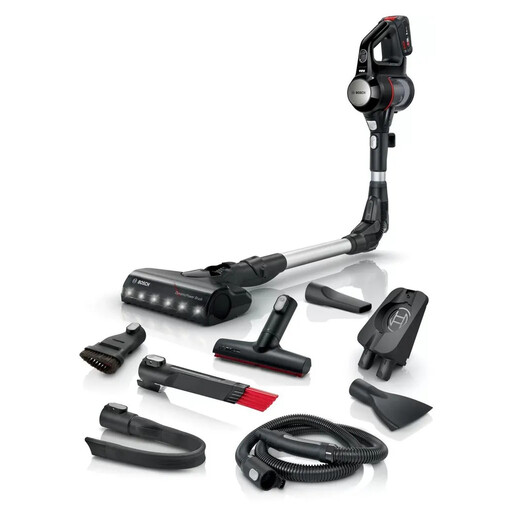
The 5000 Series Flex XC5242/10 is a specific model with a bendable tube.
The Omni-glide is a lie-flat option for hard floors, as described by Dyson.
This selection includes cordless vacuums with a flex tube, bendable tube or lie-flat function, as well as versatile models for cleaning floors in a shared house. Check that the vacuum fits under your beds and that the exact model variant has the features you need.
 No image available
The flex tube is designed to help you guide the vacuum under furniture; still, check that the design will fit under your bed.
The description lists a replaceable 3.0-Ah battery and an AllFloor nozzle with LED, which is described as suitable for different surfaces.
 No image available
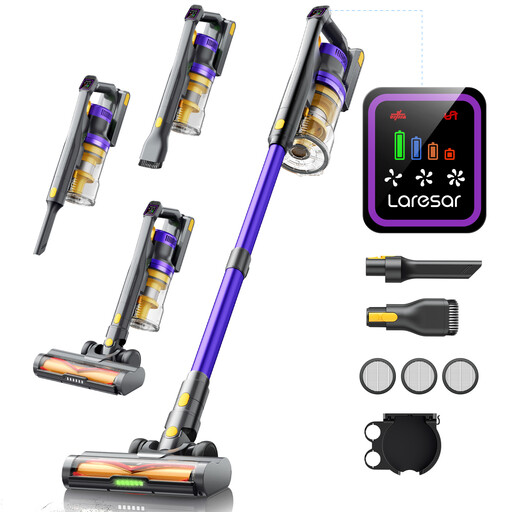
The description lists hard floors and carpets as suitable surfaces; to clean under the bed, the floorhead and vacuum need to fit through the available gap.
The product name lists 55 kPa, 550 W, a 60-minute runtime and a 2-l bin. Check the runtime on the suction setting you want to use.
A green LED on the floorhead is also mentioned.
 No image available
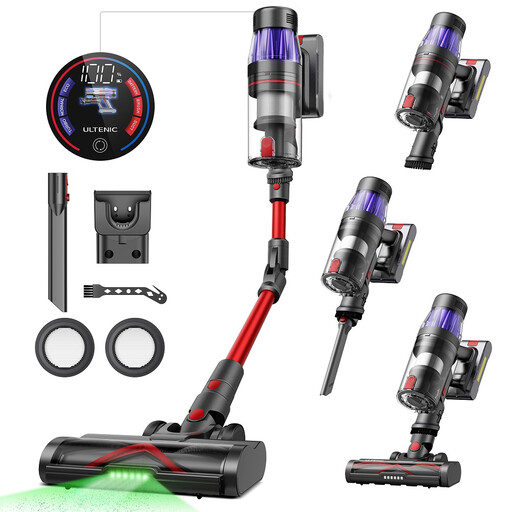
The description says the bendable tube is designed for cleaning under beds and sofas; check that it fits with the floorhead attached.
The floorhead is described as suitable for hard floors and carpets. The stated runtime is up to 60 minutes on low and 20 minutes on high.
The description also lists 50,000 Pa, a removable battery and three suction settings.
 No image available
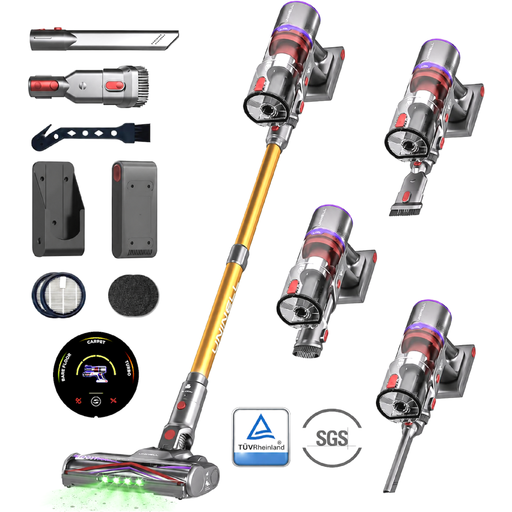
The description lists a 180° lie-flat design for cleaning under low furniture. Measure the clearance under the bed and check that the floorhead will fit through.
Hard floors and carpets are listed as suitable surfaces. The product name gives a runtime of up to 65 minutes and 60,000 Pa.
The description also mentions conversion to a handheld vacuum and included accessories.
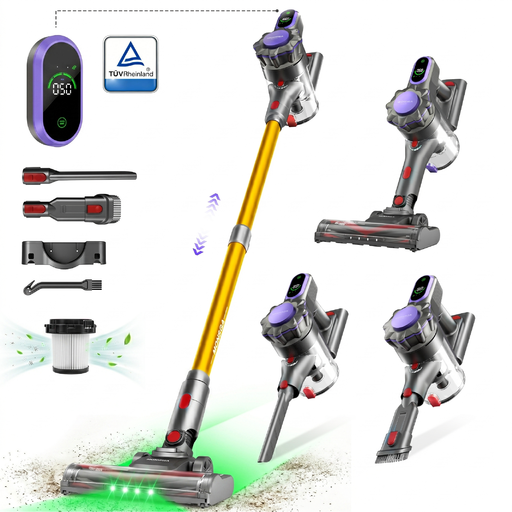 No image available
The description lists a 180° lie-flat function for cleaning under furniture. Check the actual clearance before buying.
Hard-floor and carpet modes are listed, along with a runtime of up to 55 minutes in hard-floor mode.
The description also lists an anti-tangle roller brush, a removable battery and a wall mount with charging function. The product name includes 550 W and 55 kPa.
Measure the smallest gap beneath the bed frame and look out for obstacles further back. Compare the measurements with the fitted floorhead and the lowest part of the vacuum when lowered; a flex tube or lie-flat design alone does not guarantee a good fit.
Compare the runtime of the exact model variant on the suction setting you’re likely to use. For example, Philips gives a runtime of up to 60 minutes in Eco mode and 15 minutes in Turbo mode for the XC5242/10; these are the manufacturer’s figures for this model.
Agree on who will check and clean the bin and filters in line with the manufacturer’s instructions. Before ordering, check which replacement filters and batteries are compatible with the full model number; the German Environment Agency recommends asking whether replacement batteries are available.
No. Your statutory rights apply against the seller; a warranty is an additional voluntary promise with its own terms. If there is a fault, repair or replacement may be available in the first instance as a remedy. The consumer advice centre explains the seller’s obligations.
An old battery must not go in household waste. The German Environment Agency recommends using collection boxes in shops or local-authority collection points. Before returning an old appliance, you should remove the battery if you can do so easily.