
Lieferung heute & morgen

Qualitätsgarantie

Willkommens-Angebote freischalten: KOSTENLOSE Lieferung | Bis zu 80 % RABATT | Kostenlose 30-Tage-JoyPlus-Testphase
App herunterladen
Daily interdental cleaning is an essential part of oral hygiene. However, many find traditional dental floss cumbersome to use, especially with braces, bridges, or implants. A cordless water flosser offers a practical and effective alternative. These devices, also known as water flossers, use a pulsating jet of water to remove food particles and plaque from hard-to-reach areas.
This article serves as a comprehensive guide. It explains the key features to consider when making your selection and presents a curated list of models with different specialities to help you make an informed decision.
The market is filled with a wide variety of devices. To find the right model for your needs, you should compare a few technical specifications. The following points are particularly important.
Since this is a cordless device, battery life is a crucial factor. A long operating time per charge increases convenience and makes the device a reliable travel water flosser. Pay attention to the battery capacity, which is specified in milliampere-hours (mAh)—a higher value generally means longer use. Modern devices are often charged via a USB cable, which makes charging on the go, for example with a laptop or a power bank, straightforward.
The volume of the water tank determines how long you can use the device continuously before it needs to be refilled. A portable water flosser often has a smaller tank (approx. 150–200 ml) to remain compact and lightweight. Larger models (over 300 ml) offer the convenience of a complete cleaning session without refilling but are correspondingly bulkier. Also, check if the tank is easy to remove for cleaning and filling.
A good interdental cleaner should have adjustable pressure settings. This is especially important for people with sensitive gums or for those who wear braces. Multiple modes (e.g., Normal, Soft, Pulse) allow for a cleaning experience tailored to individual needs. Specialised attachments, such as orthodontic tips or tongue scrapers, further expand the device's functionality.
Based on the criteria mentioned above, we have compiled a selection of devices that stand out for their specific features.
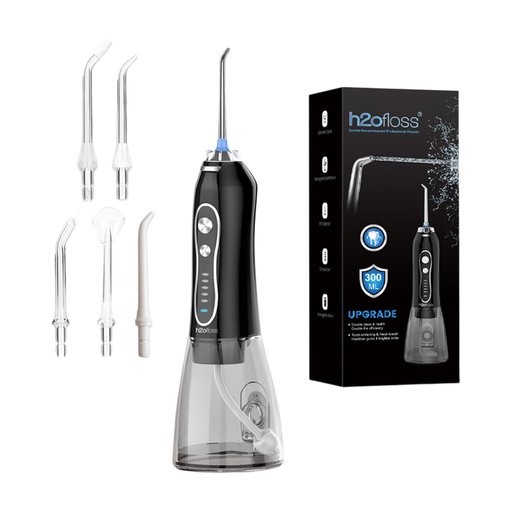
Why it stands out: This model combines a high-capacity battery with a generous water tank, making it a long-lasting option for both home and travel.
Pros:
Who it's for? For users who value long battery life and a large water tank to avoid constant recharging or refilling. The variety of modes and nozzles makes it a flexible all-rounder.
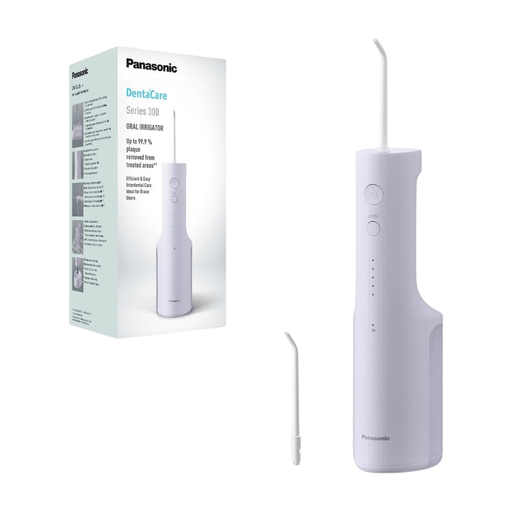
Why it stands out: The foldable design makes this device extremely compact and an ideal companion for travel.
Pros:
Who it's for? Ideal for frequent travellers or those with limited bathroom space. The smart, foldable design and low weight make it the perfect travel water flosser.
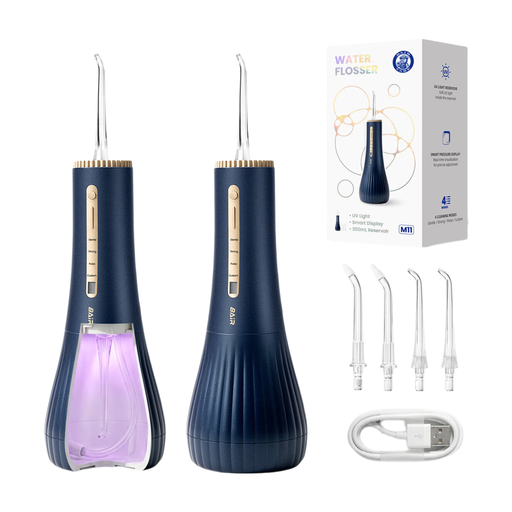
Why it stands out: This model integrates a UV sanitisation feature for hygienic nozzle storage and has an extra-large water tank.
Pros:
Who it's for? For users who place a high value on hygiene and convenience. The large tank, UV feature, and USB-C port make it a modern and powerful device for daily use.
The models presented here already cover a broad spectrum of needs. However, if you are looking for other devices, specialised attachments, or different interdental cleaning products, it's worth taking a look at our more comprehensive category.
Discover a wider selection in our Dental & Oral Floss category.
A water flosser is an effective tool for removing food particles and plaque from between the teeth. It is often considered a more comfortable alternative or supplement to traditional dental floss, especially for those with braces, implants, or tightly spaced teeth. For a personalised recommendation for your own oral care routine, it is advisable to consult with a dentist.
For wearers of fixed braces, thorough cleaning around the brackets and wires is particularly important. Models with adjustable water pressure and a special orthodontic tip are well-suited for this purpose. A gentle pressure mode prevents excessive force on the appliance, while the specialised tip helps to clean hard-to-reach areas with precision.
Most manufacturers recommend using it once daily as part of your evening oral hygiene routine. The exact frequency and technique should follow the manufacturer's instructions as well as the recommendations of your dentist.