
Lieferung heute & morgen

Qualitätsgarantie

Willkommens-Angebote freischalten: KOSTENLOSE Lieferung | Bis zu 80 % RABATT | Kostenlose 30-Tage-JoyPlus-Testphase
App herunterladen
A cordless water flosser promises a simple and effective addition to your daily dental care routine, especially for cleaning between teeth, around braces, or implants. However, the market is flooded with devices making bold advertising claims. Many buyers soon discover that their new device is impractical or fails to deliver the expected performance. To help you make an informed decision, we'll highlight the three most common pitfalls and show you which technical features truly matter.
Before you invest in a new electric water flosser, you should be wary of these common problems that often only become apparent after the purchase:
To avoid a bad buy, you should base your choice on objective criteria. Pay attention to the following three core parameters to find a portable water flosser that fits your lifestyle.
A reliable cordless water flosser is essential for wireless convenience. Instead of just looking at the advertised battery life in days, it's worth checking the battery capacity in milliampere-hours (mAh). Values of 1500 mAh or more indicate a solid runtime. The charging port is just as important. A modern USB-C port is now standard and allows you to charge the device with the same cable you likely already use for your smartphone or other gadgets. This reduces cable clutter, especially for a travel water flosser.
The volume of the water tank determines how long you can use the device without interruption.
Make sure the tank is fully detachable and has a large opening. This is the only way to effectively remove limescale deposits and bacterial films, ensuring long-term hygienic use.
A good water flosser should adapt to you, not the other way around. Instead of a single, powerful mode, multiple pressure levels are essential.
Additional specialised nozzles, such as an orthodontic tip for a water flosser for braces or a periodontal tip for targeted cleaning of gum pockets with implants, offer significant added value. A 360-degree rotating nozzle also makes it easier to reach the back molars.
Based on the criteria above, we have identified a few models that are suitable for different needs and user profiles.
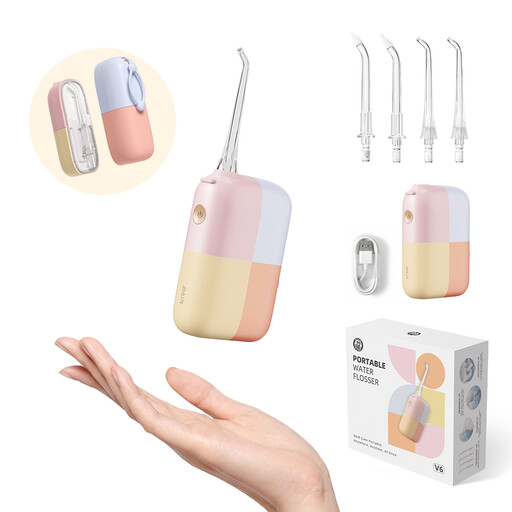
Why This Fits Their Persona: This model is designed for those who place maximum value on portability. When collapsed, it's barely larger than a smartphone and fits into any bag. The nozzles are stored directly inside the device, which prevents them from getting lost during travel.
The patented magnetic water tank can be completely detached and opened. This innovatively solves the problem of unhygienic, hard-to-clean tanks (Pitfall 2).
Extremely compact collapsible design (10 cm); integrated nozzle storage; magnetic, easy-to-clean tank; battery life of up to 30 days.
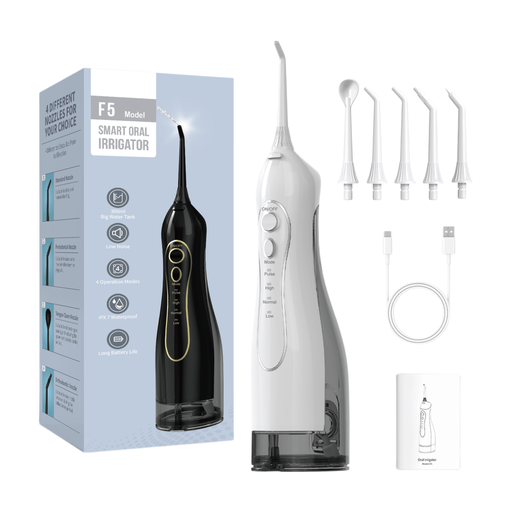
Why This Fits Their Persona: Ideal for users with braces, implants, or sensitive gums. The combination of five pressure levels and four different nozzles (including an orthodontic tip and a gum care tip) allows for highly personalised and gentle cleaning.
This model avoids the pitfall of focusing solely on high pressure (Pitfall 3). With a pressure range of 40–140 PSI and five modes, it offers a wide spectrum from gentle to strong, rather than just aiming for maximum force.
Five adjustable pressure modes; four specialised nozzles included; large 300 ml water tank; 2000 mAh battery for up to 40 days of use.
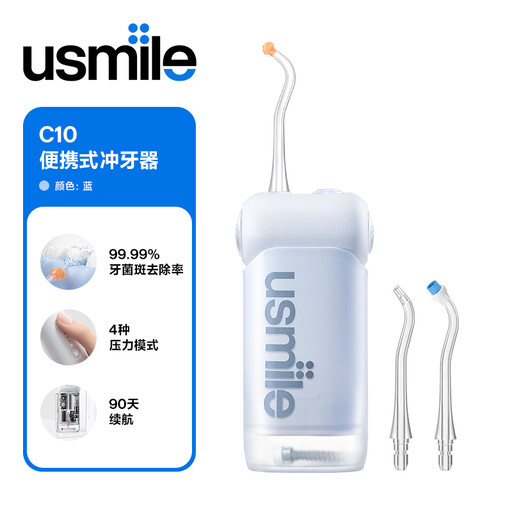
Why This Fits Their Persona: For anyone tired of constant recharging. The manufacturer's stated battery life of up to 95 days on a single charge sets a high standard, making the device extremely low-maintenance for daily use and long trips.
This model directly addresses the pitfall of misleading battery claims (Pitfall 1). The exceptionally long runtime offers a level of reliability that many other devices lack.
Up to 95 days of battery life; four cleaning modes including a gentle mode; compact design with a 180 ml tank; IPX7 waterproof.
We have compiled a complete, up-to-date list of products that fully meet these strict selection criteria and comply with safety regulations.
Some manufacturers allow the use of mouthwash as long as it is non-corrosive, non-alcoholic, and non-oily. However, it is important to check the manufacturer's instructions, as certain additives can damage the device's internal components. After using mouthwash, the device should always be thoroughly rinsed with clean water to remove any residue.
For optimal hygiene, you should completely empty the water tank after each use and let it air dry. Clean the detachable tank thoroughly at least once a week with warm water and mild soap. To remove limescale buildup inside the device, you can run a mixture of water and white vinegar (2:1 ratio) through it every 1-3 months, followed by a rinse cycle with clean water.
For most users, once-daily use is recommended, preferably in the evening after brushing your teeth. This helps remove any remaining food particles and plaque from between the teeth that the toothbrush couldn't reach. For specific needs, such as fixed braces, more frequent use after meals may be beneficial. It is advisable to start with a low pressure setting and gradually increase it.