
Lieferung heute & morgen

Qualitätsgarantie

Willkommens-Angebote freischalten: KOSTENLOSE Lieferung | Bis zu 80 % RABATT | Kostenlose 30-Tage-JoyPlus-Testphase
App herunterladen
A cordless water flosser is a practical tool for daily oral hygiene, especially for cleaning between teeth and around braces or implants. But the market is crowded, and not every device delivers on its promises. Many buyers only discover after a few weeks that their new device has flaws that severely limit its everyday usability.
This guide reveals the three most common pitfalls when buying a cordless water flosser and explains which technical features you should look for to make an informed decision.
When choosing a portable water flosser, crucial details are often overlooked that only prove problematic during use.
To avoid the problems mentioned above, you should check three core specifications before buying. These define the real-world usability of a portable water flosser.
A high-performance battery is the heart of any travel water flosser. Look for models whose battery life is specified in days or weeks, based on typical use (e.g., once daily). A runtime of 30 days or more is a good benchmark for reliability. A modern charging port is just as important. A USB-C port is now standard and allows you to charge the device with the same cable you use for your smartphone or laptop—a crucial advantage for oral hygiene on the go.
The volume of the water tank determines how long you can use the device without interruption. For a complete cleaning of interdental spaces, a water tank with at least 250 ml is recommended. A detachable tank not only makes refilling easier but also simplifies hygienic cleaning to prevent limescale and bacteria buildup. A more compact device might be easier to handle, but a tank that's too small significantly diminishes its utility.
Water pressure, often specified in PSI (Pound-force per square inch), describes the strength of the water stream. A good electric interdental cleaner should offer an adjustable pressure range, for example, from 40 to 140 PSI. This allows for gentle cleaning of sensitive areas as well as an intensive clean for stubborn plaque. Multiple cleaning modes (e.g., 'Soft', 'Standard', 'Pulse') and specialised tips, such as a water flosser for braces, are indicators of a well-designed and versatile product.
Based on the criteria above, we have identified several products that offer a suitable solution for different user profiles.
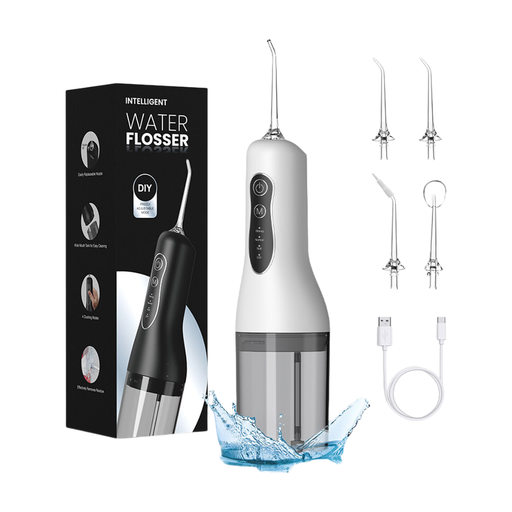
Why This Fits Their Persona: The ultra-compact design and a manufacturer-stated battery life of up to 50 days make this device the ideal companion for business trips or holidays, without compromising on cleaning performance.
It eliminates the worry of a dead battery on the go. The long runtime and compact format resolve the conflict between performance and portability.
Up to 50-day battery life (manufacturer's claim), 260 ml tank, and a customisable DIY mode for individual water pressure.
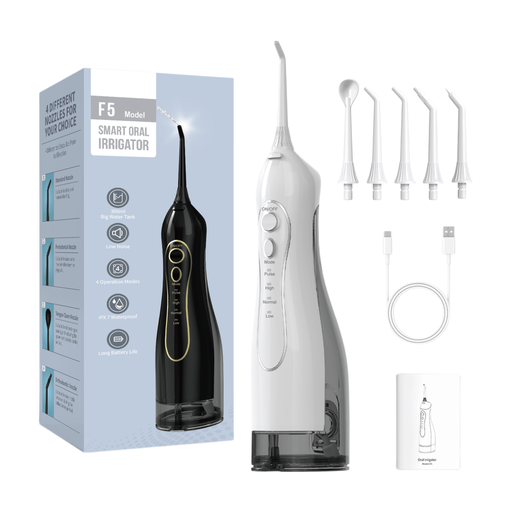
Why This Fits Their Persona: With a large 300 ml tank and five cleaning modes, including a special nozzle for braces, this model is ideal for daily, thorough cleaning at home without constant interruptions.
Solves the problem of constant refilling and offers the right pressure for every need thanks to its five modes—from gentle to intense.
Large 300 ml water tank for a single, uninterrupted use and 5 cleaning modes, including an orthodontic nozzle.
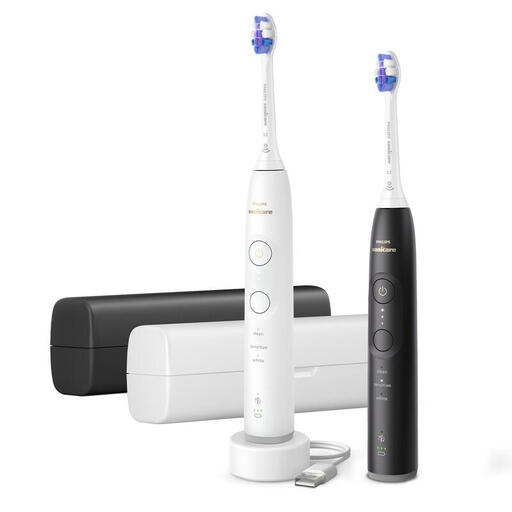
Why This Fits Their Persona: A water flosser cleans between the teeth, but tooth surfaces need equally effective care. This sonic toothbrush forms the foundation of a complete oral hygiene routine, complementing the action of the water flosser.
Avoids the pitfall of relying on just one tool. The combination of a sonic toothbrush and a water flosser ensures a comprehensive clean for both surfaces and interdental spaces.
According to the manufacturer, it delivers up to 62,000 brush head movements per minute for thorough surface cleaning and plaque removal.
We have compiled a complete, real-time list of products that fully satisfy these strict selection criteria and UK safety regulations.
A water flosser is a highly effective supplement to daily oral care, especially for removing food debris and massaging the gums. It cleans areas that a toothbrush struggles to reach. Whether it can completely replace dental floss depends on individual teeth alignment and the dentist's recommendations. For the tightest interdental spaces, mechanical cleaning with dental floss may still be beneficial.
For most users, using it once a day, preferably in the evening after brushing, is sufficient. This helps remove food particles and plaque that have accumulated between the teeth throughout the day. For specific needs, such as with braces, more frequent use may be appropriate in consultation with an orthodontist.
Yes, provided the device has adjustable pressure levels. If you have sensitive gums, start with the lowest setting and slowly increase the pressure. Models with special orthodontic tips are ideal for those with braces, as the water jet can specifically clean around brackets and wires without causing damage.