
Lieferung heute & morgen

Qualitätsgarantie
App herunterladen
Kategorien
Cleaning hard floors like parquet, laminate, or tile presents recurring challenges for any household, especially those with children or pets. Spills, food crumbs, muddy tracks, and pet hair often require a multi-step process: first vacuuming, then mopping. A cordless wet dry vacuum is an appliance that combines these tasks. It vacuums dry debris and mops with fresh water in a single pass, offering a significant time-saving advantage. These devices, also known as cordless wet dry vacuums, are designed for efficient floor care.
Choosing the right model depends on specific technical parameters that should align with your household's unique needs.
The core component of a wet dry vacuum is its rotating brush roll. Models vary in the design and material of the brush. Some devices feature special hair-detangling designs that minimise the wrapping of long hair or pet hair. Another key feature is edge cleaning. Vacuums with an edge-to-edge brush design can more effectively pick up dirt along baseboards and in corners.
A hygienic cleaning result is significantly influenced by the tank system. Nearly all modern devices use a two-tank system. The fresh water tank continuously supplies the brush with clean water, while the collected dirty water is directed into a separate dirty water tank. This prevents spreading dirt back onto the floor, a key advantage over traditional mopping. The capacity of these tanks determines the total area you can clean before needing to refill or empty them.
As cordless devices, battery life is a crucial factor for cleaning coverage. Manufacturer specifications for runtime typically refer to the standard or eco mode. Intensive use or turbo mode can result in a shorter actual runtime. The charging time and the functionality of the charging dock should also be considered. Some docks are for charging only, while others integrate additional features like self-cleaning.
Wet dry vacuums with self-cleaning offer a significant convenience upgrade. After cleaning, the device is placed in its dock, where a cleaning cycle is initiated at the touch of a button. This automatically flushes the brush roll and internal tubing. Models with hot air drying can further reduce the build-up of odours and bacteria in the brush. Weight, manoeuvrability via a flexible swivel head, and the ability for the device to lay flat to get under furniture are other important aspects of handling.
Based on the technical criteria mentioned above, here is a selection of models that each focus on different strengths.
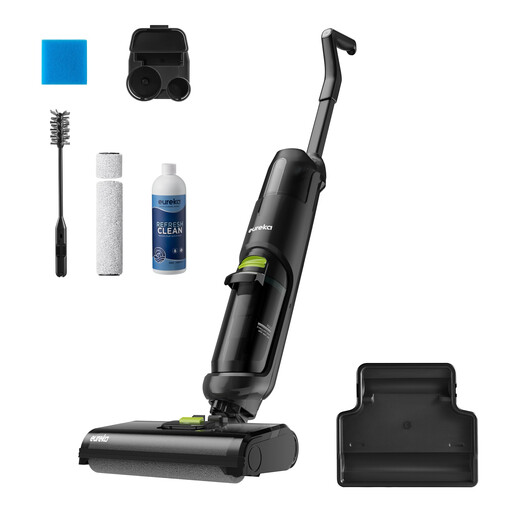
Why we recommend this product
The Eureka NEW400 focuses on effortless handling. Its self-propulsion feature assists with forward movement, reducing the physical effort required for cleaning. Combined with its flexible brush head, this makes it easy to manoeuvre on sealed hard floors. The device vacuums and mops simultaneously (3-in-1 vacuuming, mopping, and drying) and uses a standard dual-tank system to separate fresh and dirty water.
Pros
Who it's for This model is designed for users who value an effortless and straightforward operation for the daily cleaning of standard hard floors.
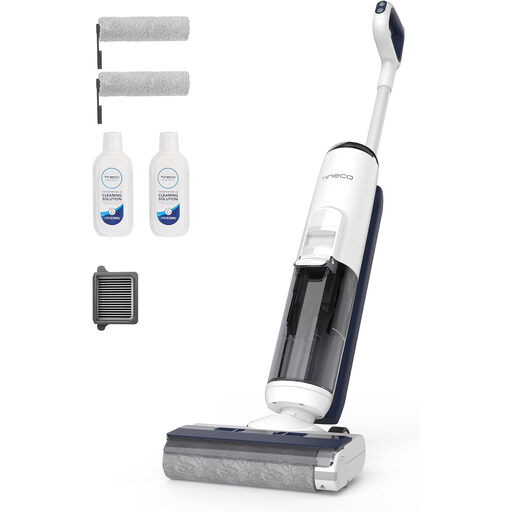
Why we recommend this product
The Tineco iFLOOR 5 Breeze Complete stands out with its design for thorough edge cleaning. According to the manufacturer, the brush cleans to within 0.5 cm of walls and baseboards. Weighing 4.3 kg, the device is relatively lightweight. The "Complete" version comes with an expanded accessory kit that includes extra brush rolls and cleaning solution, supporting long-term maintenance and operation.
Pros
Who it's for This model is aimed at users who prioritise gap-free cleaning right into corners and along edges, and who are looking for a lightweight, agile hard floor cleaner for laminate and parquet.
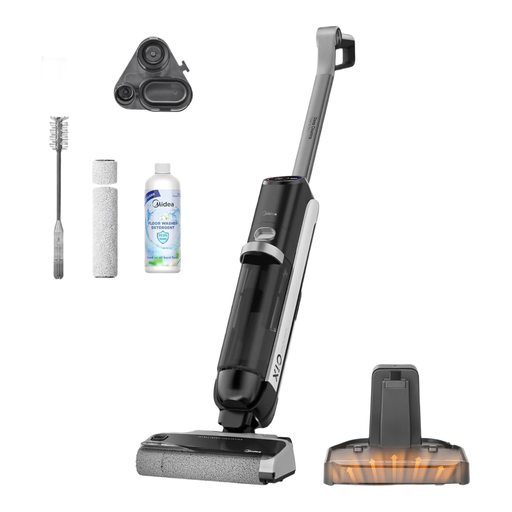
Why we recommend this product
The Midea X10 Smart integrates several advanced technologies. An intelligent dirt detection system automatically adjusts suction power and water flow to the floor's dirt level, which can optimise battery consumption. The self-cleaning station features 60°C hot air drying, which dries the brush roll after cleaning to prevent odours. Furthermore, the device can be tilted 170° to facilitate cleaning under low-profile furniture.
Pros
Who it's for This model is aimed at tech-savvy users seeking a fully automated and hygienic cleaning solution with advanced convenience features like dirt detection and hot air drying.
A cordless wet dry vacuum is a specialised solution for combined wet and dry cleaning of hard floors. Depending on your flooring and cleaning needs, other types of devices may also be suitable. For carpets or dry-only cleaning, for example, classic cordless stick vacuums or robot vacuums are excellent alternatives. You can find an overview of different technologies and models in our Vacuum Cleaner Types category.
1. Is a cordless wet dry vacuum suitable for parquet and laminate floors? Yes, most cordless wet dry vacuums are designed for sealed hard floors, including parquet and laminate. The devices release only a controlled amount of moisture, which is typically suctioned up immediately. However, it is always advisable to check the flooring manufacturer's recommendations and avoid using the device on unsealed or oiled wood floors.
2. How does the self-cleaning function on a wet dry vacuum work? After use, the wet dry vacuum with self-cleaning is placed in its charging dock. At the touch of a button, clean water from the fresh water tank is flushed through the brush roll and the internal suction channels. The dirty water released in this process is then transferred to the dirty water tank. This automated cycle cleans the components that came into contact with dirt.
3. Can a cordless wet dry vacuum also pick up pet hair? Yes, a cordless wet dry vacuum is generally capable of picking up pet hair from hard floors. Models with special anti-tangle brushes or integrated combs are particularly well-suited for this, as they reduce hair wrapping around the brush roll and thus simplify maintenance.