
Lieferung heute & morgen

Qualitätsgarantie

Willkommens-Angebote freischalten: KOSTENLOSE Lieferung | Bis zu 80 % RABATT | Kostenlose 30-Tage-JoyPlus-Testphase
App herunterladen
A cordless wet and dry vacuum cleaner is designed to pick up dust, crumbs, pet hair and spills without you having to switch between appliances. The combination of vacuuming and mopping is especially appealing in homes with hard floors, children or pets. However, product descriptions often include figures and features that can vary in their usefulness in everyday life.
Figures such as 155 AW, 200 AW or 25 kPa describe different technical measurements. The Airwatt rating refers to combined airflow power, while kilopascals measure suction pressure. So a single peak figure doesn’t automatically tell you how well the appliance will perform on carpets, in crevices or on hard floors.
Also look for:
A vacuum cleaner with 60 minutes’ run time will generally achieve this figure under specific operating conditions, often at a low power setting and without intensive use of the motorised brush. Run time can be considerably shorter at maximum suction power.
For larger homes, the key is to consider battery capacity, charging time, floor coverage and usable run time together. The Deerma T30W XT, for example, lists a run time of up to 60 minutes and a battery made up of seven 2,500 mAh cells. If you have a home of up to 300 m², it’s still important to check which mode this figure applies to.
A cordless vacuum cleaner with a mopping function may have either a damp mop attachment or a separate tank for collecting dirty water. For hard floors, a clean water tank, a dirty water tank and controlled water flow are useful features. A basic mop attachment is better suited to light dirt and won’t necessarily replace a wet and dry vacuum cleaner for tougher stains.
For pet hair, a motorised brush and an anti-tangle brush are particularly useful. The brush should not only pick up hair but also minimise how much gets wrapped around the roller. Also check whether the appliance includes a mini turbo brush for upholstery or a crevice tool.
According to the product description, the Deerma T30W XT comes with a 450-watt motor, 155 AW suction power, 25 kPa suction pressure and a TÜV-certified brush designed to prevent hair tangles. These are manufacturer or product specifications, so consider them alongside the features, bin capacity and battery performance.
A vacuum cleaner with a HEPA filter can trap fine particles in its filtration system. When choosing a model, it’s also important to check how many filtration stages it has, whether the filters can be cleaned and whether replacement filters are available. The Deerma T30W XT is listed with six-stage HEPA filtration and nine-cone cyclone filtration.
Clean the filters according to the manufacturer’s instructions and let them dry completely after vacuuming. After wet cleaning, empty or rinse the dirty water tank and rollers after every use. This helps prevent odours and maintain airflow.
A dust bin with a capacity of 0.5 to 0.8 litres may be sufficient for everyday use. A larger bin is more convenient if you have pets or a large home, as you’ll need to stop less often. Wet and dry vacuum cleaners for hard floors often have separate water tanks. Check whether they’re easy to remove and whether your flooring is suitable for wet cleaning, as set out in the instructions.
A vacuum cleaner with LED dust detection can make fine dust easier to see using a green light. This can help you see where you’re vacuuming, but it doesn’t tell you anything about suction power on its own.
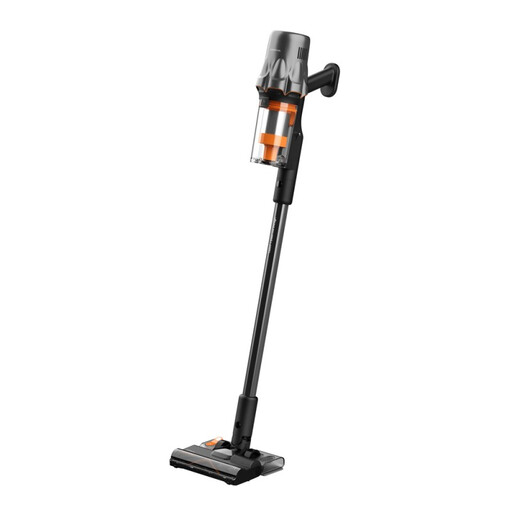
Why it suits this profile: This model combines cordless dry vacuuming with a mopping function and four suction settings. Its stated run time of up to 60 minutes makes it worth considering for larger living spaces.
The product details list the run time alongside battery specifications and four power settings. An anti-tangle brush also helps tackle a common problem with hair getting caught.
155 AW suction power, six-stage HEPA filtration, LED dust detection and a 0.56-litre dust bin.
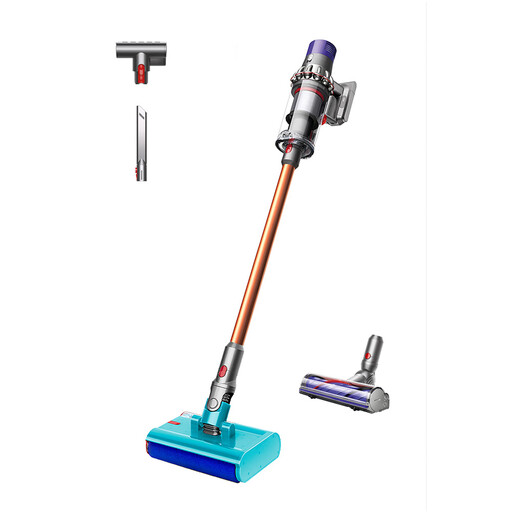
Why it suits this profile: This system is designed to clean hard floors using clean water and comes with separate attachments for wet cleaning, carpets, upholstery and crevices.
The stated run time is given separately for Eco and Max modes. This makes it easier to assess the performance figures than a single, general run-time claim would.
0.76-litre bin, 60 minutes’ Eco run time according to the product details, and a filtration system stated to trap 99.99% of particles down to 0.1 microns.
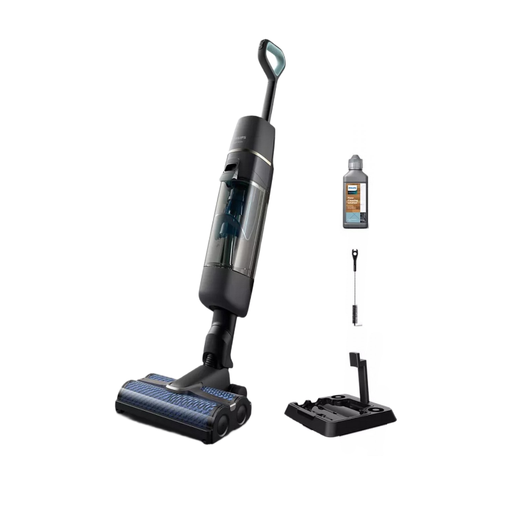
Why it suits this profile: Two rotating brushes, three cleaning modes and separate water tanks are designed for regular wet cleaning of hard floors in family homes.
Cleaning performance isn’t described in terms of suction power alone. Normal, Intensive and Water Absorption modes cater to different cleaning situations.
670 ml clean water tank, 600 ml dirty water tank, LCD display and automatic self-cleaning, according to the product description.
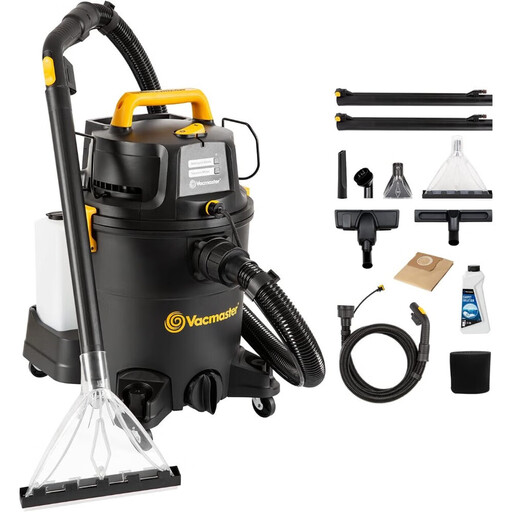
Why it suits this profile: This corded model is aimed at users who need large-capacity tanks, carpet cleaning and upholstery care for the home, car or garage.
It runs on mains power rather than a limited-capacity battery. This makes it suitable for longer cleaning jobs, but it isn’t cordless.
23-litre capacity, 1,300-watt motor, HEPA exhaust filter and functions for wet, dry and carpet cleaning.
We’ve put together a complete, regularly updated list of products that meet these strict selection criteria and fully comply with the safety regulations in force in the EU.
Run time depends on the suction setting, brush motor, mopping function and battery condition. Manufacturer claims such as “up to 60 minutes” often refer to a lower-power mode. If you have a large home, check whether a spare battery is available and how long charging takes.
It depends on the design of the appliance. Some models combine both functions in a single pass, while others switch between dry and wet modes. For appliances with water tanks, fill and use the clean and dirty water tanks as instructed, then empty them after use.
As well as the purchase price, you’ll need to budget for electricity, filters, brushes, cleaning rollers and, where applicable, cleaning products. Check that replacement parts are available and compare their prices before you buy. A washable filter can help reduce ongoing costs, but it still needs replacing when the material wears out.