
Lieferung heute & morgen

Qualitätsgarantie

Willkommens-Angebote freischalten: KOSTENLOSE Lieferung | Bis zu 80 % RABATT | Kostenlose 30-Tage-JoyPlus-Testphase
App herunterladen
A cordless wet and dry vacuum cleaner can pick up dry crumbs, dust and liquids in a single pass. Models with a mopping function are therefore appealing to families, pet owners and busy households. However, product claims vary considerably from one appliance to another. It is not just a high wattage or Pascal rating that matters, but how the brush roll, tanks, battery and maintenance requirements work together.
Figures such as watts, kPa or air watts do not fully describe how clean a hard floor will be after cleaning. A wet and dry vacuum cleaner with a mopping function also needs a well-guided brush roll, controlled water flow and reliable collection of dirty water. Without these components, streaks or damp residue may be left behind.
The stated runtime often refers to a specific mode. During intensive cleaning, when dealing with heavier soiling or when active water collection is enabled, the actual operating time may be shorter. Buyers should therefore check whether the runtime is suitable for their floor area and how long a full recharge takes.
A self-cleaning vacuum mop rinses the brush and internal lines after use. The dirty-water tank, filter and roller still need to be emptied, rinsed and dried. If these parts remain damp, unpleasant odours may develop. A self-cleaning station makes maintenance easier, but it does not make the system maintenance-free.
Check which floor types the appliance is designed for. Tiles, vinyl, laminate and sealed wood are explicitly listed for many models. Unsealed parquet, carpets or sensitive surfaces, on the other hand, may not be suitable.
A good hard-floor cleaner should pick up dry dirt and return liquid in a controlled manner. With a vacuum cleaner and mop in one, these features are also important:
Larger tanks mean fewer interruptions, but they generally increase the weight. A compact model may be sufficient for smaller flats. In larger households, around 600 to 750 millilitres of clean water and a similarly sized dirty-water tank are practical, provided these specifications are actually stated in the product description.
Compare runtime, charging time and weight together. A model with a long runtime may be heavier, while a lightweight cordless vacuum mop may need charging more frequently. Displays showing the battery level, cleaning mode and maintenance requirements make planning easier. For families and pet owners, an easily accessible brush roll and tanks that can be removed effortlessly are also useful.
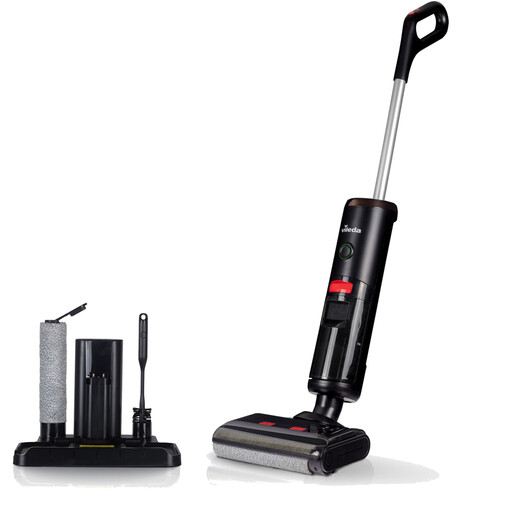
Why this product suits this profile: According to the product information, this model combines vacuuming and mopping for hard floors and offers a runtime of 35 to 45 minutes. The 750 ml clean-water tank is suitable for several cleaning sessions.
The runtime is given as a range rather than highlighting a single maximum figure. The separate-tank design and self-cleaning function are also specified.
220 W motor according to the product information, 750 ml clean-water tank, 600 ml dirty-water tank and washable filter.
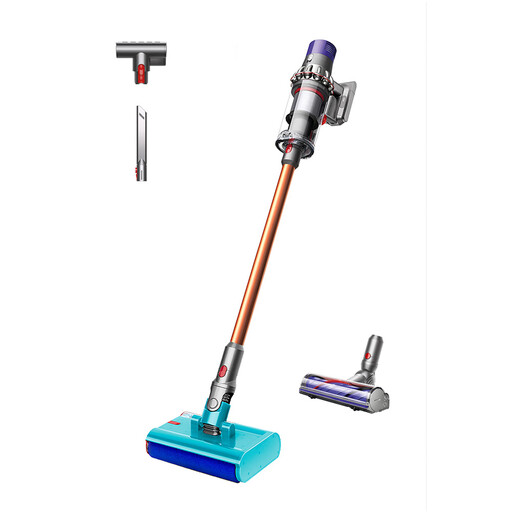
Why this product suits this profile: The product description lists a motorised wet-cleaning head for hard floors, as well as a Motorbar cleaner head for dry dirt on different floor types.
Wet and dry cleaning is carried out using different attachments. This allows each application to be better adapted to the floor type and level of soiling.
3.3 kg net weight, 0.76-litre container and up to 60 minutes of runtime in Eco mode according to the product information.
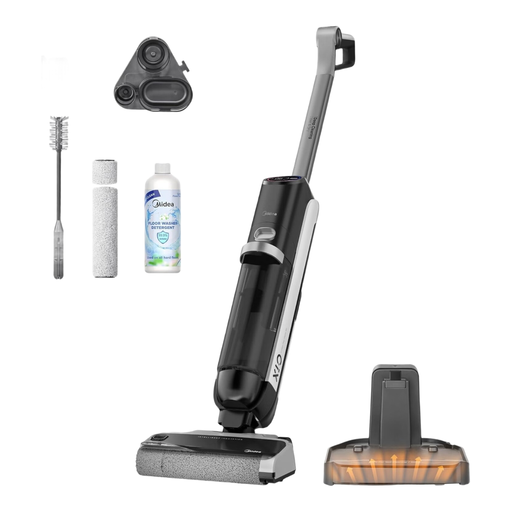
Why this product suits this profile: This appliance is aimed at households that value edge cleaning, hair management and a self-cleaning station. The 170-degree recline is designed for cleaning underneath furniture.
The product information lists an anti-tangle brush and a dedicated edge brush. Hot-air drying of the roller is also included, but it does not replace rinsing the tanks.
Self-cleaning station with 60-degree hot-air drying according to the product description, LED display and 170-degree recline.
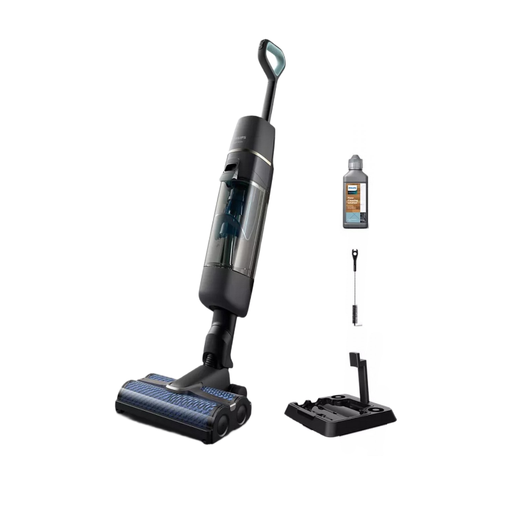
Why this product suits this profile: According to the product information, three cleaning modes allow you to choose between Normal, Intensive and water collection. The stated coverage is up to 180 square metres per charge.
The product data specifies both battery and tank capacity: 25 minutes of runtime, 670 ml of clean water and 600 ml of dirty water. This makes it easier to assess whether it is suitable for your own floor area.
LCD display, three modes, separate tanks and automatic self-cleaning according to the product description.
We have put together a complete, regularly updated list of products that fully meet these strict selection criteria and the safety regulations applicable in the EU.
After every wet-cleaning session, you should empty and rinse the dirty-water tank. The brush roll and filter must be dried in accordance with the instruction manual. Only use approved cleaning products: some models allow clear water only, while others require a brand-specific solution.
Running costs also include replacement rollers, filters, cleaning solution and, if necessary, a battery replacement later on. Check that these parts are available before buying. When dealing with pet hair, regularly checking the anti-hair brush is more important than choosing the highest possible maximum power.
That depends on the model. Many appliances are designed for spilled drinks, damp dirt and mopping hard floors, but not for deep puddles or hot, flammable or chemical liquids. The specific restrictions in the instruction manual are decisive.
Runtime depends on the cleaning mode, brush resistance and battery condition. When choosing a product, compare the stated runtime in the relevant mode with the size of your home. A long charging time can be significant if you use the appliance every day.
Some appliances list sealed wood as a suitable surface. Unsealed or particularly sensitive parquet should not automatically be cleaned with a wet vacuum cleaner for hard floors. The key factors are the manufacturer’s approval, water output and keeping residual moisture to a minimum.