
Lieferung heute & morgen

Qualitätsgarantie

Willkommens-Angebote freischalten: KOSTENLOSE Lieferung | Bis zu 80 % RABATT | Kostenlose 30-Tage-JoyPlus-Testphase
App herunterladen
A cordless wet and dry vacuum cleaner can combine vacuuming and mopping in a single step. This is particularly appealing for households with tiles, vinyl, laminate or sealed wood. Families, pet owners and busy professionals will benefit most when spills, crumbs and hair are a regular occurrence.
However, these machines differ significantly. A high wattage figure alone tells you little about real-world cleaning performance. Likewise, a long run time is often only achievable in the most economical mode. Before you buy, it’s worth examining the design, tank layout and the actual maintenance required.
Claims like “up to 60 minutes” usually refer to an Eco or standard mode. When tackling heavier soiling, the run time can drop dramatically. For example, the Dyson Cyclone V10 Submarine offers up to 60 minutes in Eco mode, but only up to 5 minutes in Max mode. When making your decision, it’s important to consider which mode you’ll actually use day to day and how large the area you need to clean is.
A self-cleaning wet vacuum can rinse the brush bar and internal pipes after use. However, you still need to empty, rinse and dry the dirty water tank, filter and brush roller. If you skip these steps, you can expect odours, residue build-up or reduced performance.
Many machines are designed exclusively for sealed hard floors. Unsealed wood, delicate surfaces, carpets or very rough floors may be unsuitable. A cordless vacuum with a mopping function also doesn’t automatically replace a traditional vacuum cleaner for all tasks.
Always compare run time together with the cleaning mode and charging time. Models like the Hoover HW5 offer up to 30 minutes in SMART mode according to product specifications, while the Philips XW7110/01 achieves up to 25 minutes. A full charge can take several hours for both types of machine.
For smaller flats, a shorter run time is often sufficient. In a larger household, you should consider the stated floor area coverage. The Philips AquaTrio XW7110/01 claims a range of up to 180 square metres per charge. These figures should be treated as a guide, as they depend on floor type, movement patterns and the level of soiling.
A wet and dry vacuum with a mopping function should keep clean water and collected dirty water separate. This allows you to clean with fresh water while liquid and dirt are collected in a separate container.
Practical reference figures from product specifications:
Larger tanks reduce interruptions, but often increase the weight of the machine. For homes with lots of furniture, a lighter model may be easier to manoeuvre.
Look for cleaning that reaches as close to the edges as possible, a brush roller that’s easy to access, and a clear display for battery or maintenance status. Anti-tangle systems are helpful for pet hair, but they don’t eliminate the need to manually check the roller.
Drying is also important. The Eureka FloorShine 880 features a 5-minute hot air drying programme after self-cleaning, according to the product description. The Tineco Floor One Stretch S6 is said to have a FlashDry self-cleaning function at 70 °C lasting 5 minutes. Such features can reduce maintenance effort, but they don’t replace emptying the dirty water tank.
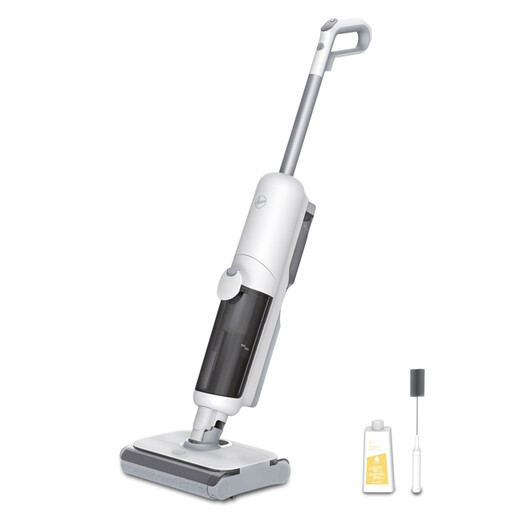
Why this product suits the profile: The Hoover HW5 combines vacuuming and mopping on hard floors with three modes and a stated run time of up to 30 minutes in SMART mode.
The run time is stated separately for SMART, PARQUET and MAX modes. The clean and dirty water tanks are also specified at 750 ml and 600 ml respectively.
Three cleaning modes, dual-roller system, LED display and automatic roller cleaning.
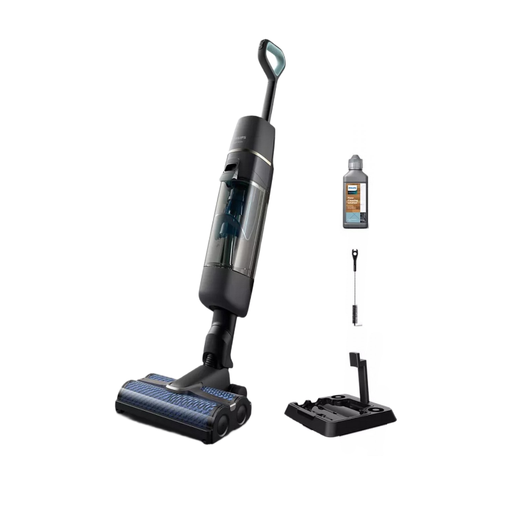
Why this product suits the profile: This model offers three cleaning modes, an LCD display and automatic cleaning of the brushes and internal components.
Normal, Intensive and Water Pick-up modes are clearly separated. The dirty water separation prevents already-collected water from being used for mopping again.
670 ml clean water tank, 600 ml dirty water tank, LCD status display and stated floor area coverage of up to 180 m².
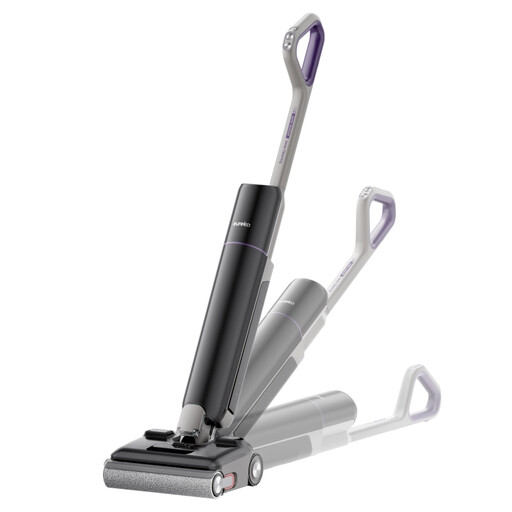
Why this product suits the profile: This machine is aimed at households with frequent cleaning needs and offers up to 60 minutes of run time according to product specifications, plus a 180-degree flat design.
The stated run time is combined with a hot water rinse followed by warm air drying. The flat design makes it easier to clean under low furniture.
24,000 Pa according to product specifications, 180° lie-flat function, three-sided edge cleaning and anti-tangle brush.
We’ve put together a full, regularly updated list of products that fully meet these strict selection criteria and the safety regulations in force in the EU.
Before first use, prepare the battery, clean water tank and dirty water tank according to the instructions. Only use approved cleaning agents. Some machines are designed for water only or a specific cleaning solution. Using the wrong additives can cause foaming, residue build-up or damage.
Ongoing costs mainly include electricity, cleaning solution, replacement rollers and filters. A machine with a larger tank can reduce water consumption per clean, while an intensive mode will require more battery charge. After each use, empty and dry the dirty water tank and brush roller.
Many models are designed for dry particles and liquids on hard floors. However, always check the instruction manual. Hot ash, sharp objects, flammable liquids and fine construction dust are not suitable for the machines mentioned here.
The run time depends on the mode, brush movement and level of soiling. Product specifications in this selection range from around 25 to 60 minutes. In Intensive or Max mode, the run time is usually shorter. Charging time is often around four hours.
Self-cleaning can make post-mopping maintenance easier because the brush roller and internal pipes are rinsed. However, it doesn’t replace emptying the dirty water tank, cleaning the filters and fully drying the removable parts. For households that need to clean daily, the feature can still be very convenient.